North Pole
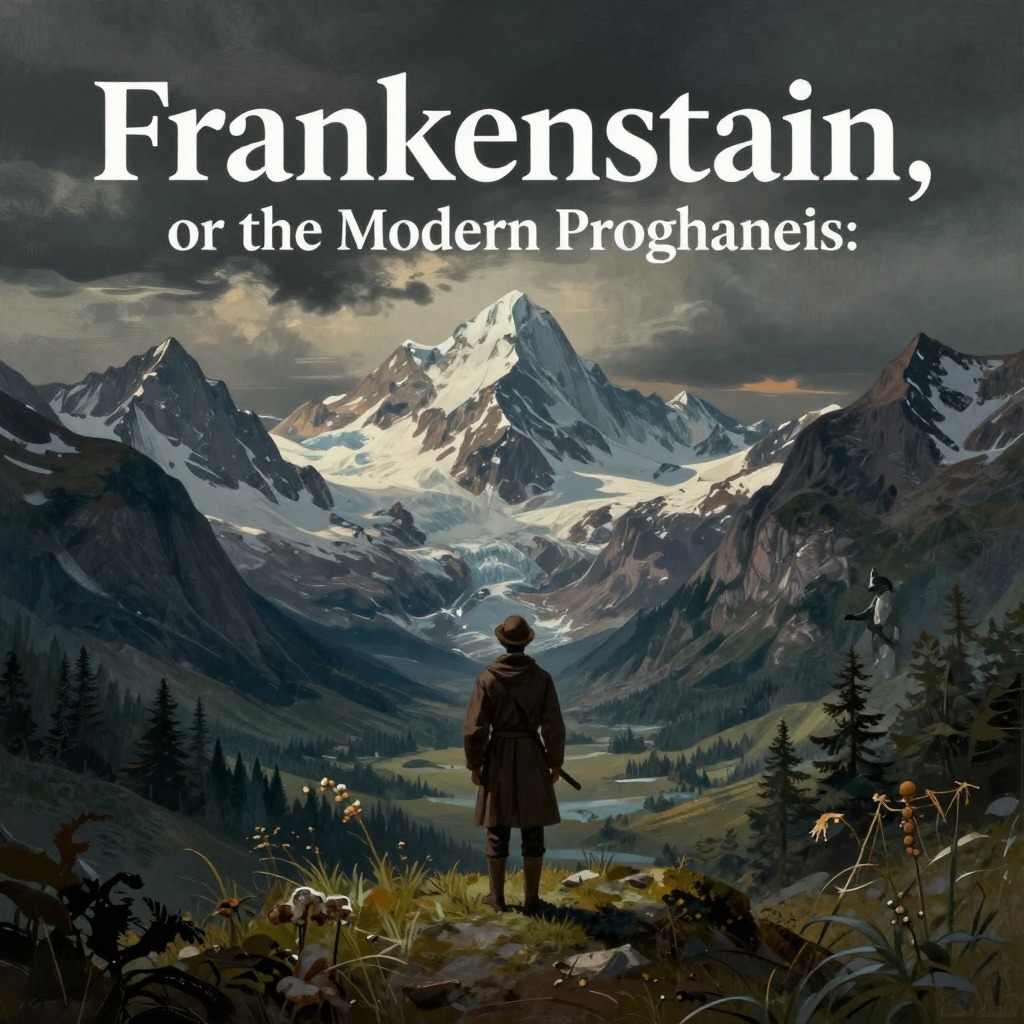
Frankenstein, or the Modern PrometheusThe North Pole is the ultimate geographical and symbolic destination in Mary Shelley's Frankenstein, serving as the object of Robert Walton's ambitious Arctic expedition, the setting for the novel's framing narrative, and a stark emblem of the sublime, inhuman cold that mirrors the emotional desolation of both Victor Frankenstein and his creature. It is the region where Walton hopes to discover a passage near the pole to those countries, to ascertain the secret of the magnet, and to tread a land never before imprinted by the foot of man. The pole itself is imagined as a region of eternal light, a land of beauty and delight, a stark contrast to the frost and desolation that Walton actually encounters. The entire narrative of Victor Frankenstein's creation and its consequences is framed within Walton's letters to his sister, Margaret Saville, written from the frozen wastes of the Arctic, making the North Pole the novel's ultimate frame and the site of its most profound confrontations with ambition, isolation, and the limits of human endurance.
Walton's Ambition and the Pole as a Goal
Robert Walton's entire expedition is driven by a passionate, almost obsessive desire to reach the North Pole. He writes to his sister that the pole is the seat of frost and desolation, yet it presents itself to his imagination as the region of beauty and delight, where the sun is forever visible. He believes that by discovering a passage near the pole, he will confer an inestimable benefit on all mankind. This ambition is the favorite dream of his early years, and he has dedicated himself to this great enterprise for six years, inuring his body to hardship and studying mathematics, medicine, and physical science. The pole represents the ultimate goal of his quest for glory and knowledge, a goal that he pursues with a fervor that Victor Frankenstein later recognizes as a form of madness. Walton's ship is ultimately surrounded by vast and irregular plains of ice, and he is forced to turn back, his hopes of reaching the pole blasted by cowardice and indecision.
The Pole as a Setting for the Framing Narrative
The North Pole is the physical setting for the novel's entire framing narrative. It is here that Walton's ship becomes trapped in ice, and it is here that he and his crew first encounter the gigantic, monstrous figure traveling across the ice on a sledge. This apparition, which excites their unqualified wonder, is the creature. Shortly after, they rescue a nearly frozen and emaciated Victor Frankenstein, who is pursuing the creature. The entire story of Victor's creation, his family's destruction, and his relentless pursuit of the monster is told to Walton within the confines of the ship, surrounded by the Arctic ice. The pole thus becomes the stage for the final act of the drama, where the creator and his creation meet their ultimate fates. It is in this desolate setting that Victor dies, and the creature, after a final, heart-wrenching speech, vows to die and leaps from the cabin window onto an ice raft, borne away by the waves and lost in darkness and distance.
The Pole as a Symbol of Isolation and Desolation
The North Pole functions as a powerful symbol of the profound isolation and emotional desolation experienced by both Victor and his creature. The frozen, barren landscape mirrors Victor's internal state after the deaths of his loved ones, a state of deep and dark deathlike solitude. The creature, too, finds refuge in the desert mountains and dreary glaciers, the caves of ice being his only dwelling. The pole represents the ultimate, uninhabitable extreme, a place where human connection is impossible. The creature's final journey is towards the most northern extremity of the globe, where he plans to collect his funeral pile and consume himself to ashes. The cold and frost of the Arctic are the final, fitting environment for a being who has been rejected by all humanity and who now seeks only oblivion. The pole is not just a place; it is the physical manifestation of the emotional and spiritual coldness that defines the end of the novel.
The Pole and the Sublime
The North Pole, and the Arctic landscape in general, is a prime example of the sublime in Frankenstein. The vast, irregular plains of ice, the floating sheets of ice, the thunder of the ground sea, and the immense and rugged mountains of ice all inspire a mixture of awe, terror, and wonder. Walton describes the scene as terribly appalling, yet his courage and hopes do not desert him. Victor, too, finds a kind of terrible majesty in the storm that rages over Mont Blanc, a scene that elevates his spirits. The sublime landscape of the pole, however, is ultimately indifferent to human suffering. It is a force of nature that can crush a ship or provide a path for a fleeing monster. The pole represents the ultimate, untamed power of nature, a power that both attracts and destroys the ambitious men who seek to conquer it. It is the final, silent witness to the tragedy of Victor Frankenstein and his creation.