Orkney Islands
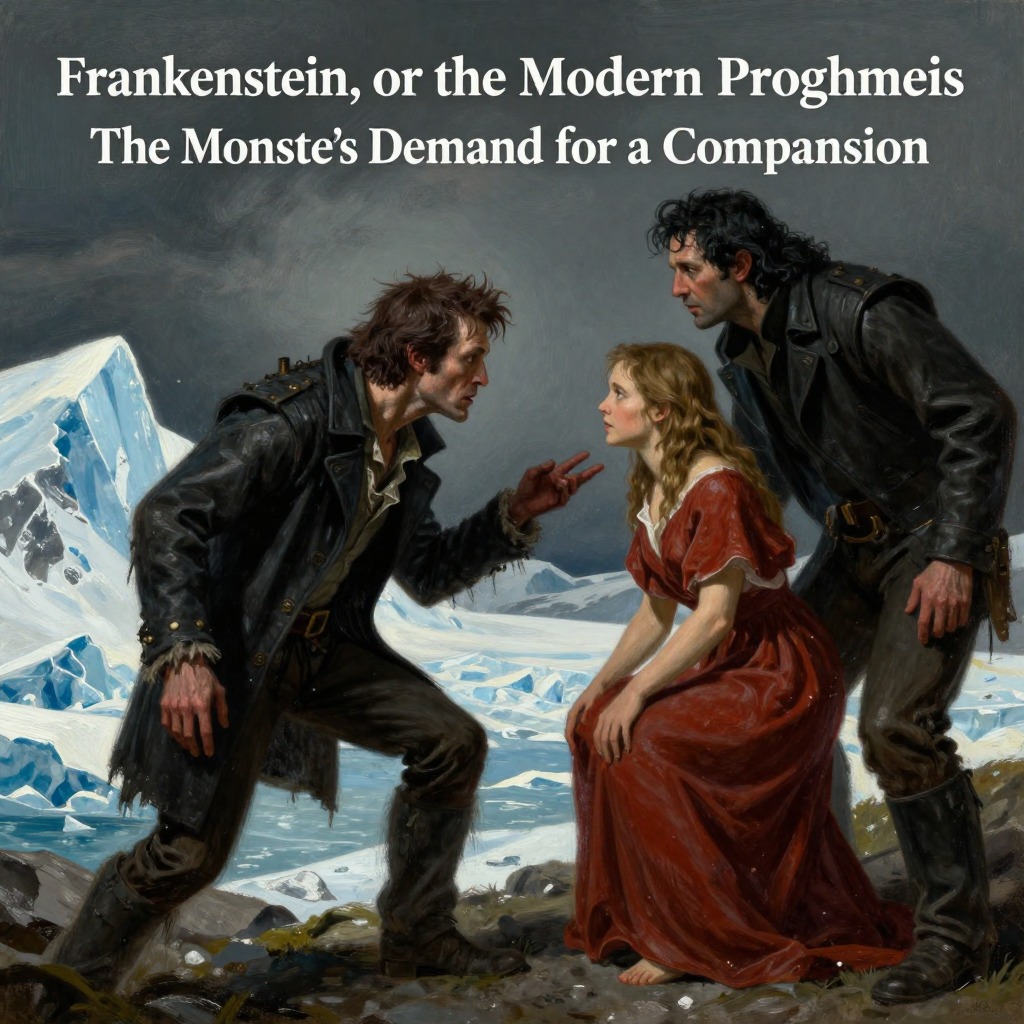
Frankenstein, or the Modern PrometheusThe Orkney Islands, a barren archipelago off the northern coast of Scotland, become the stage for one of the most harrowing episodes in Victor Frankenstein's narrative. It is here, in a landscape of stark isolation and relentless natural hostility, that Victor retreats to complete the detestable task he has sworn to the monster: the creation of a female companion. The choice of the Orkneys is deliberate; Victor seeks a place so remote and inhospitable that his gruesome work will remain unseen and undisturbed, a fitting locale for what he calls his "filthy process."
Geography and Isolation
The island Victor selects is described as "hardly more than a rock whose high sides were continually beaten upon by the waves." The soil is barren, affording only scant pasture for a few miserable cows and oatmeal for its five inhabitants, whose "gaunt and scraggy limbs" testify to their impoverished fare. Vegetables, bread, and even fresh water must be procured from the mainland, five miles distant. On the entire island there are but three miserable huts; one, vacant upon Victor's arrival, he hires. The structure contains only two rooms, exhibiting "all the squalidness of the most miserable penury": the thatch has fallen in, the walls are unplastered, and the door is off its hinges. Victor orders repairs, buys some furniture, and takes possession, an incident that would have occasioned surprise had not the cottagers' senses been "benumbed by want and squalid poverty." He lives "ungazed at and unmolested, hardly thanked for the pittance of food and clothes" he gives, so much does suffering blunt even the coarsest human sensations.
Victor's Labors and Moral Crisis
In this retreat, Victor devotes his mornings to labor, but the work becomes "every day more horrible and irksome." Unlike his first creation, which was driven by an "enthusiastic frenzy" that blinded him to horror, he now proceeds "in cold blood," his heart often sickening at the work of his hands. The solitude is absolute; nothing can call his attention from the scene in which he is engaged. He grows restless and nervous, every moment fearing to meet his persecutor. Sometimes he sits with his eyes fixed on the ground, afraid to raise them lest they encounter the dreaded object. He fears to wander from the sight of his fellow creatures, lest when alone the monster should come to claim his companion. Yet he works on, his labor considerably advanced, looking toward its completion with "a tremulous and eager hope" intermixed with "obscure forebodings of evil."
One evening, as Victor sits idle in his laboratory, a train of reflection leads him to consider the consequences of his actions. He recalls that three years before, engaged in the same manner, he created a fiend whose "unparalleled barbarity" desolated his heart. Now he is about to form another being whose dispositions he is equally ignorant of; she might become "ten thousand times more malignant than her mate." She might refuse to comply with a compact made before her creation; the two might hate each other; she might turn with disgust from the monster to the superior beauty of man. Even if they leave Europe for the deserts of the new world, one of the first results of their sympathies would be children, and "a race of devils would be propagated upon the earth." Victor shudders to think that future ages might curse him as their pest, whose selfishness bought its own peace at the price of the existence of the whole human race.
The Destruction and Its Immediate Aftermath
As Victor trembles, he looks up and sees by the light of the moon the monster at the casement, a "ghastly grin" wrinkling his lips as he gazes on his creator fulfilling the allotted task. The monster's countenance expresses "the utmost extent of malice and treachery." Victor, "trembling with passion," tears to pieces the thing on which he is engaged. The wretch, seeing the destruction of the creature on whose future existence he depended for happiness, withdraws with "a howl of devilish despair and revenge." Victor leaves the room, locks the door, and makes a solemn vow never to resume his labors. The monster soon reappears, confronting Victor and declaring, "I will be with you on your wedding-night." Victor, now firm in his refusal, watches the monster depart in his boat, which shoots across the waters "with an arrowy swiftness."
Consequences and Narrative Significance
The destruction of the female creature on the Orkney Islands is the pivotal act that seals the fates of Victor's remaining loved ones. The monster's wedding-night threat is immediately fulfilled with the murder of Henry Clerval, whose body is discovered on the Irish coast where Victor lands after fleeing the Orkneys in a small skiff. Victor is subsequently imprisoned in Ireland, charged with Clerval's murder, and endures a prolonged fever and delirium. The Orkney episode thus marks the point of no return in Victor's tragedy: his attempt to prevent a greater evil—the propagation of a race of devils—directly triggers the monster's most devastating revenge, leading to the murders of Clerval, Elizabeth, and ultimately the death of Alphonse Frankenstein. The barren, windswept islands, with their "monotonous yet ever-changing scene" of roaring waves and stony beaches, become the symbolic landscape of Victor's moral failure and the birthplace of his final, irreversible ruin.