Paradise Lost
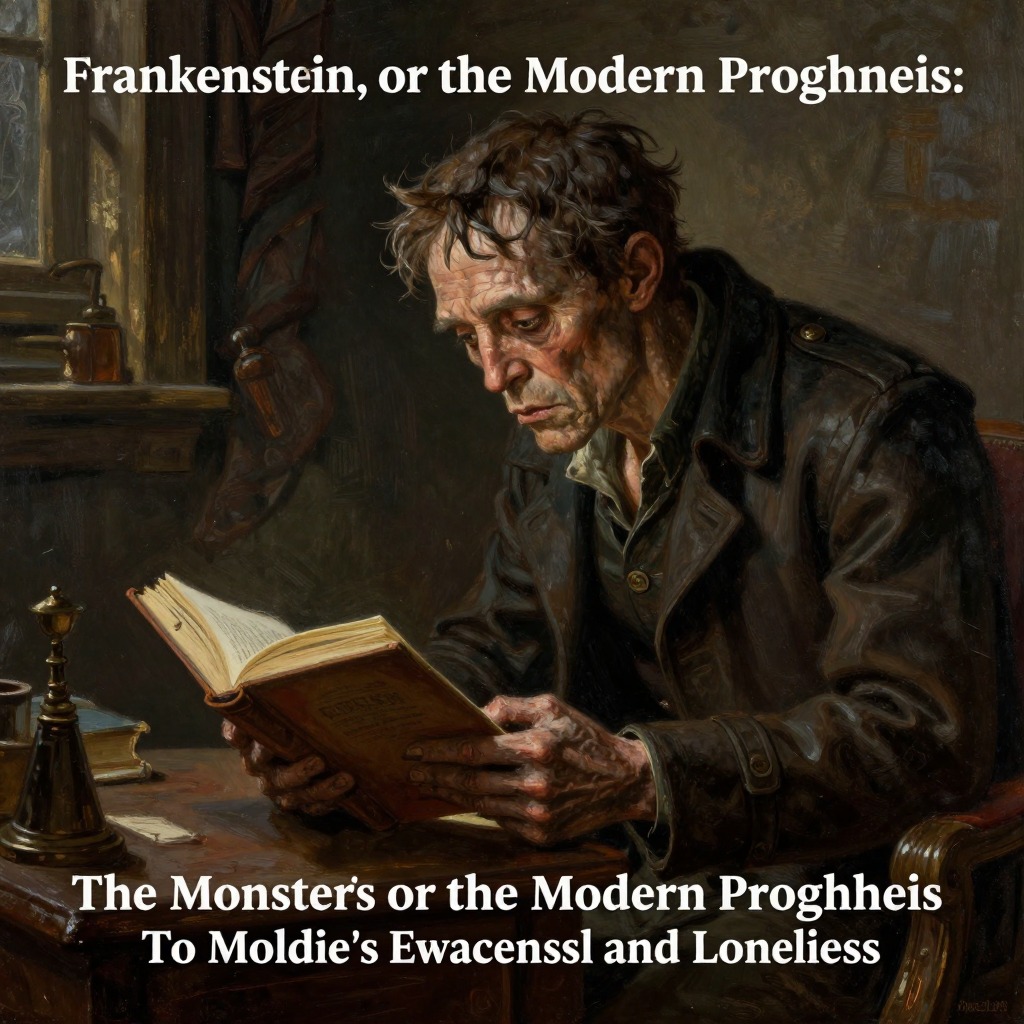
Frankenstein, or the Modern PrometheusParadise Lost, John Milton's epic poem of creation, rebellion, and fall, functions within Mary Shelley's Frankenstein as the monster's most significant literary discovery and the primary framework through which he interprets his own tragic existence. The creature finds a copy of the poem in a leathern portmanteau alongside Plutarch's Lives and The Sorrows of Werter, and he reads it as a true history, not as fiction. The poem's depiction of an omnipotent God warring with his creatures excites in him every feeling of wonder and awe, and he repeatedly refers its situations to his own, forging a devastating self-understanding through its parallels and contrasts.
Discovery and Reading as True History
The monster discovers the volume of Paradise Lost in a leathern portmanteau he finds on the ground during one of his nocturnal visits to the neighbouring wood. The books inside are written in the language whose elements he has acquired at the cottage of the De Laceys, and he eagerly seizes the prize and returns with it to his hovel. He reads the poem with the same conviction of truth with which he reads the other volumes that have fallen into his hands, treating Milton's narrative not as imaginative literature but as a factual account of the cosmos. This reading produces in him an infinity of new images and feelings, sometimes raising him to ecstasy but more frequently sinking him into the lowest dejection.
Identification with Adam and Satan
The monster's reading of Paradise Lost forces upon him a series of painful comparisons. Like Adam, he is apparently united by no link to any other being in existence, a solitary creature without a pre-existing community. But the contrast is far more striking than the similarity. Adam came forth from the hands of God a perfect creature, happy and prosperous, guarded by the especial care of his Creator, and allowed to converse with and acquire knowledge from beings of a superior nature. The monster, by contrast, is wretched, helpless, and alone. Many times he considers Satan as the fitter emblem of his condition, for often, like him, when he views the bliss of his protectors, the bitter gall of envy rises within him. The fallen angel had companions, fellow devils, to admire and encourage him, but the monster is solitary and abhorred. He explicitly articulates this identification to his creator on the glacier, declaring, "I ought to be thy Adam, but I am rather the fallen angel, whom thou drivest from joy for no misdeed."
Reinforcement by Victor's Journal
The monster's reading of Paradise Lost is powerfully reinforced by another discovery: Victor Frankenstein's journal, which he finds in the pocket of the dress he took from the laboratory. The journal minutely describes every step Victor took in the progress of his work, mingling the history of the creation with accounts of domestic occurrences. The monster sickens as he reads the whole detail of that series of disgusting circumstances which produced him, the minutest description of his odious and loathsome person given in language that painted Victor's own horrors and rendered the monster's indelible. This written record confirms what Paradise Lost had suggested: that his creator turned from him in disgust. He exclaims in agony, "Hateful day when I received life! Accursed creator! Why did you form a monster so hideous that even YOU turned from me in disgust?" The poem's theological framework of a benevolent God creating a perfect Adam is inverted by the journal's evidence of a horrified creator producing an abomination.
Thematic Significance and Intertextual Role
Paradise Lost functions in Frankenstein as more than a literary allusion; it is the monster's primary tool for self-understanding and the text through which he articulates his grievance against his creator. The poem provides the vocabulary of creation, fall, and rebellion that structures the monster's own narrative. Where Adam could appeal to a just God, the monster finds only a creator who abandoned him. Where Satan had a community of fellow rebels, the monster is utterly alone. The intertext thus deepens the novel's exploration of the creator's responsibility, the nature of evil, and the relationship between knowledge and suffering. The monster's reading of Paradise Lost, combined with Victor's journal, transforms him from a mere brute into a self-conscious, tragic figure who understands his own damnation in the most exalted literary terms available to him.