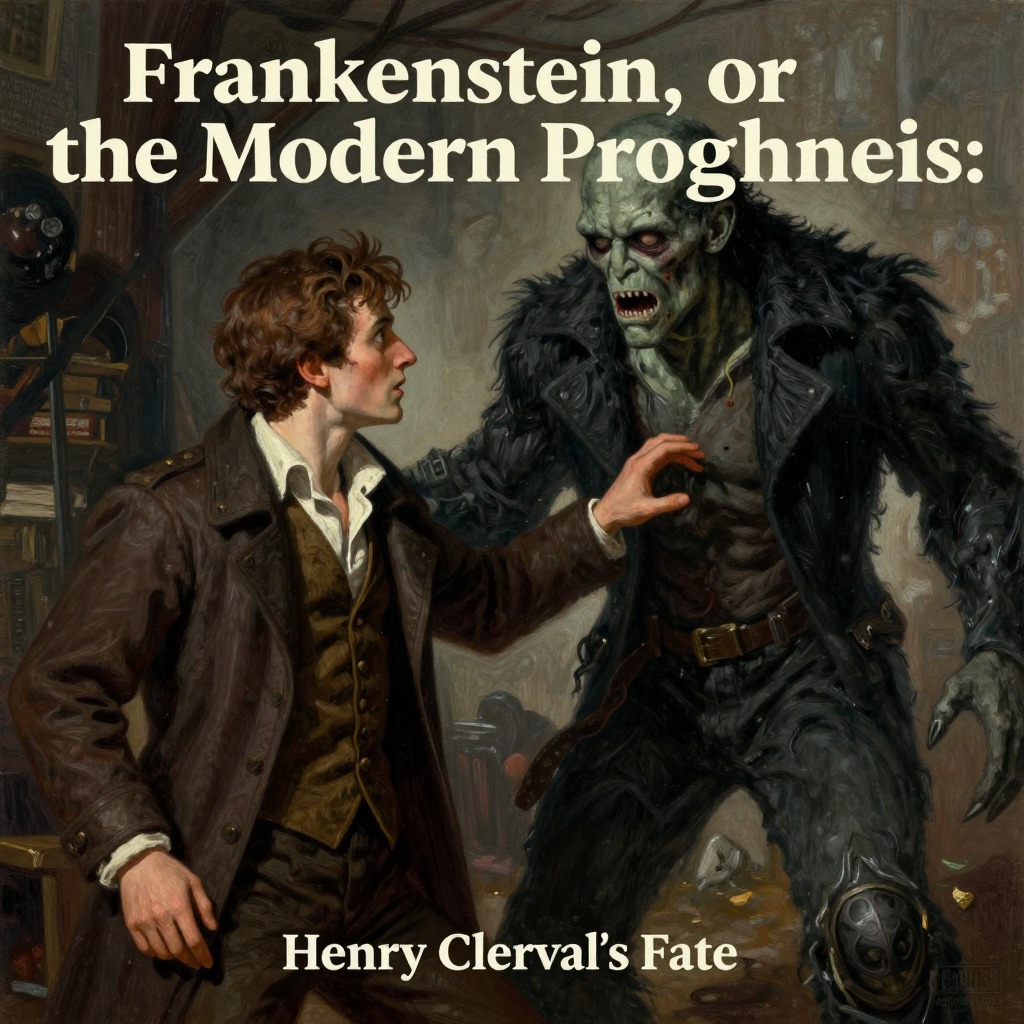
Victor Frankenstein and Henry Clerval
Frankenstein, or the Modern PrometheusVictor Frankenstein and Henry Clerval are bound by a friendship that begins in childhood and endures through the most harrowing transformations of Victor's life. Clerval, the son of a Geneva merchant, is a boy of singular talent and fancy, deeply read in books of chivalry and romance, who composes heroic songs and writes tales of enchantment and knightly adventure. Where Victor is consumed by the secrets of heaven and earth, Clerval occupies himself with the moral relations of things—the virtues of heroes, the actions of men, and the dream of becoming one of those recorded in story as a gallant and adventurous benefactor of humanity. Their companionship is forged in harmony, and the diversity of their characters draws them nearer together, with Clerval's presence calling forth the better feelings of Victor's heart and teaching him again to love the aspect of nature and the cheerful faces of children.
Childhood and Early Bond
Victor and Clerval are brought up together in Geneva, strangers to any species of disunion or dispute. Clerval's literary and adventurous temperament contrasts with Victor's scientific bent, yet the two unite in the closest friendship. When Victor departs for the University of Ingolstadt, Clerval spends the last evening with him, deeply feeling the misfortune of being debarred from a liberal education by his narrow-minded father, who sees only idleness and ruin in his son's aspirations. At dawn, Clerval presses Victor's hand once more, and the farewell is marked by mutual reluctance and affection.
Clerval's Arrival in Ingolstadt and Victor's Recovery
Clerval appears unexpectedly in Ingolstadt at the moment of Victor's greatest crisis—immediately after the animation of the monster. Victor, wandering the streets in a state of horror, sees the Swiss diligence stop and perceives Clerval alighting. Nothing could equal Victor's delight; Clerval's presence brings back thoughts of his father, Elizabeth, and all the scenes of home, and for the first time in many months Victor feels calm and serene joy. But Clerval quickly observes how ill Victor appears—thin, pale, as if he had been watching for several nights. Victor's subsequent nervous fever, which confines him for several months, is attended by Clerval alone, who spares Victor's father and Elizabeth the grief of knowing the extent of the disorder by concealing it. Clerval becomes Victor's only nurse, and his unbounded and unremitting attentions are what restore Victor to life. During the fever, Victor raves incessantly about the monster, and though Clerval at first believes these are the wanderings of a disturbed imagination, the pertinacity with which Victor recurs to the same subject persuades him that the disorder owes its origin to some uncommon and terrible event.
Shared Travel and Contrasting Spirits
After Victor's recovery, the two friends travel together through the Rhine country, England, and Scotland. Clerval is alive to every new scene, joyful at the beauties of the setting sun and the golden sunrise reflected in the Rhine, while Victor remains occupied by gloomy thoughts, haunted by a curse that shuts up every avenue to enjoyment. Clerval's design is to visit India, believing that his knowledge of its various languages and his views of its society will enable him to assist European colonization and trade. In London, Clerval desires the intercourse of men of genius and talent, while Victor visits natural philosophers only for the information needed to complete his promise to the monster. Clerval's presence is a check on Victor's despair, and Victor often refuses to accompany him, alleging another engagement, so that he may remain alone to collect materials for his new creation—a task that is to him like the torture of single drops of water continually falling on the head.
Clerval's Murder and Victor's Grief
The monster's vengeance culminates in the murder of Henry Clerval. Victor, having destroyed the female creature on the Orkney Islands, is driven by a storm to the coast of Ireland, where he is taken before a magistrate. When the body of a handsome young man, about five and twenty years of age, is discovered with the black mark of fingers on his neck, Victor is led to view the corpse and finds it is the lifeless form of Henry Clerval. He gasps for breath, throws himself on the body, and exclaims, "Have my murderous machinations deprived you also, my dearest Henry, of life? Two I have already destroyed; other victims await their destiny; but you, Clerval, my friend, my benefactor—" The human frame can no longer support the agonies, and Victor is carried out in strong convulsions, suffering a fever that leaves him for two months on the point of death. In his ravings, he calls himself the murderer of William, of Justine, and of Clerval. The image of Clerval is forever before him, ghastly and murdered, and the agitation into which these reflections throw him makes his friends dread a dangerous relapse.
Thematic Significance
Clerval represents the humane, social, and morally engaged life that Victor abandons in his solitary pursuit of forbidden knowledge. His murder is the monster's most personal blow against Victor, destroying the friend who had been Victor's nurse, moral compass, and link to the ordinary joys of existence. In his final advice to Walton, Victor speaks of Clerval as irreplaceable, asking, "Can any man be to me as Clerval was?" The loss of Clerval, along with Elizabeth and his father, completes Victor's desolation and drives him to a single-minded pursuit of revenge that consumes the remainder of his life.