Dangerous Knowledge
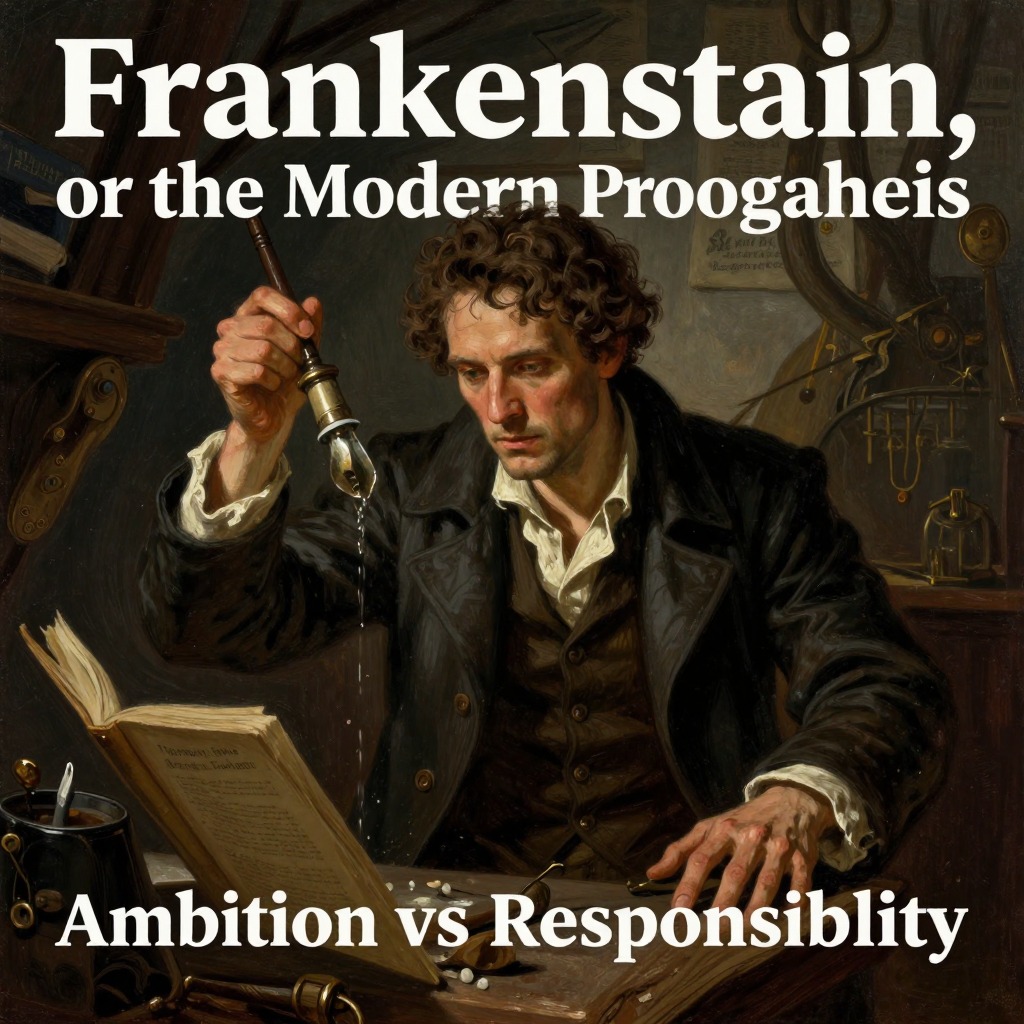
Frankenstein, or the Modern PrometheusIn Mary Shelley's Frankenstein, dangerous knowledge is not merely a theme but the engine of the entire tragedy. It is the pursuit of forbidden, ultimate truths—the secrets of life and death—that drives Victor Frankenstein to his ruin and unleashes a monster upon the world. The novel systematically demonstrates that knowledge, when sought with reckless ambition and without ethical restraint, transforms from a noble aspiration into a destructive, corrupting force that annihilates its pursuer and everyone he loves.
The Allure and the Warning
Victor Frankenstein's downfall begins with his youthful, unguided passion for forbidden knowledge. As a boy, he discovers the works of Cornelius Agrippa, Paracelsus, and Albertus Magnus, and despite his father's dismissive remark that Agrippa is "sad trash," Victor devours these texts, which promise the elixir of life and the philosopher's stone. This early encounter sets him on a path of solitary, self-directed study, mingling "a thousand contradictory theories" with an "ardent imagination and childish reasoning." The novel's most explicit warning about this pursuit comes directly from Victor himself, who, after recounting his discovery of the principle of life, tells Walton: "Learn from me, if not by my precepts, at least by my example, how dangerous is the acquirement of knowledge and how much happier that man is who believes his native town to be the world, than he who aspires to become greater than his nature will allow." This is not a retrospective moralizing but the core thesis of the book, established before the full horror of the creation is even described.
The Creation and Its Immediate Consequences
The moment of creation itself is the catastrophic climax of Victor's dangerous knowledge. After two years of obsessive, secret labor, during which he collects bones from charnel-houses and disturbs "with profane fingers, the tremendous secrets of the human frame," he finally infuses life into his assembled creature. But the instant the "dull yellow eye" opens, the beauty of his dream vanishes, replaced by "breathless horror and disgust." The knowledge he had so ardently sought yields not triumph but immediate revulsion. The consequences cascade without pause: Victor falls into a nervous fever, the monster flees, and within a short time, Victor's youngest brother, William, is murdered. The monster, in his own narrative, confirms that the knowledge of his own hideousness—learned by seeing his reflection in a pool—fills him with "the bitterest sensations of despondence and mortification." The knowledge of his own deformity, a direct result of Victor's science, becomes the seed of his rage.
The Spiral of Destruction: Knowledge as a Weapon and a Curse
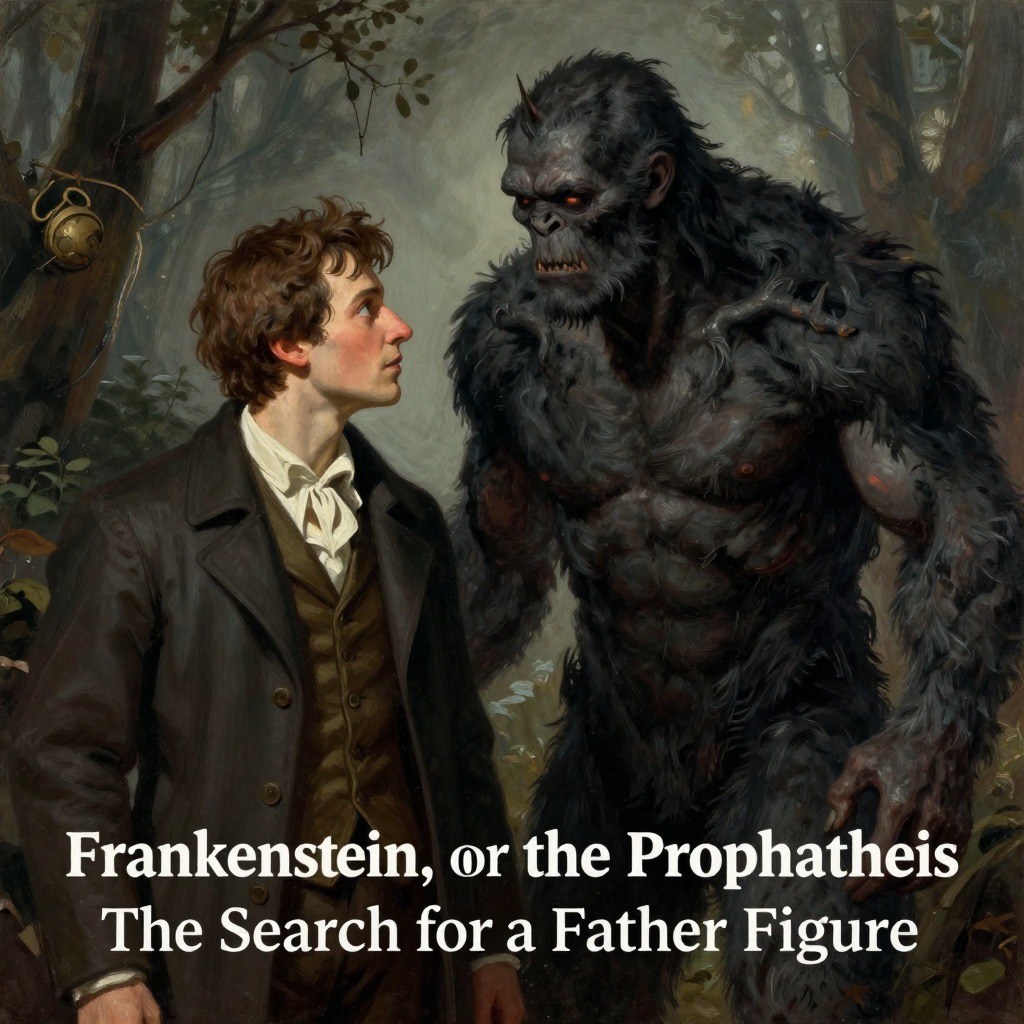
Dangerous knowledge does not remain confined to the laboratory; it becomes a weapon of revenge and a source of escalating misery. The monster, having educated himself by listening to the De Lacey family and reading Paradise Lost, Plutarch's Lives, and The Sorrows of Werter, uses his understanding of human society and injustice to justify his campaign of terror. He learns from Victor's own journal—the detailed record of his creation—the full horror of his origin, which he calls "that series of disgusting circumstances." This knowledge fuels his self-loathing and his desire for vengeance. He frames Justine Moritz for William's murder by placing the miniature portrait of Caroline Beaufort in her pocket, a calculated act that requires a sophisticated understanding of human law and prejudice. The trial and execution of Justine, an innocent, are direct consequences of the monster's learned cunning, and Victor, paralyzed by the knowledge that he is the true cause, can only watch in agony. The monster later explicitly states his motive: "I am malicious because I am miserable." His misery is a product of his knowledge of his own isolation and deformity, a knowledge Victor's science created.
The Final Reckoning and the Legacy of the Warning
The theme of dangerous knowledge culminates in Victor's final, desperate pursuit of the monster across the Arctic wastes, and in his dying words to Walton. Victor, having lost everyone he loved—William, Justine, Clerval, Elizabeth, and his father—recognizes that his quest for knowledge was a form of madness. He warns Walton, who is himself on a dangerous voyage of discovery, to avoid the same fate: "Seek happiness in tranquillity and avoid ambition, even if it be only the apparently innocent one of distinguishing yourself in science and discoveries." Yet even in this final warning, Victor acknowledges the seductive power of the knowledge he pursued, admitting that he once believed himself "destined for some great enterprise." The monster, in his final appearance, echoes this theme, declaring that he will build his own funeral pyre and die, so that "the very remembrance of us both will speedily vanish." The knowledge that created him, and the knowledge that drove him to murder, will end with him. The novel thus closes with a double warning: the danger lies not only in the pursuit of forbidden knowledge but also in the failure to take responsibility for the consequences of that knowledge once it is acquired.