I ought to be thy Adam, but I am rather the fallen angel
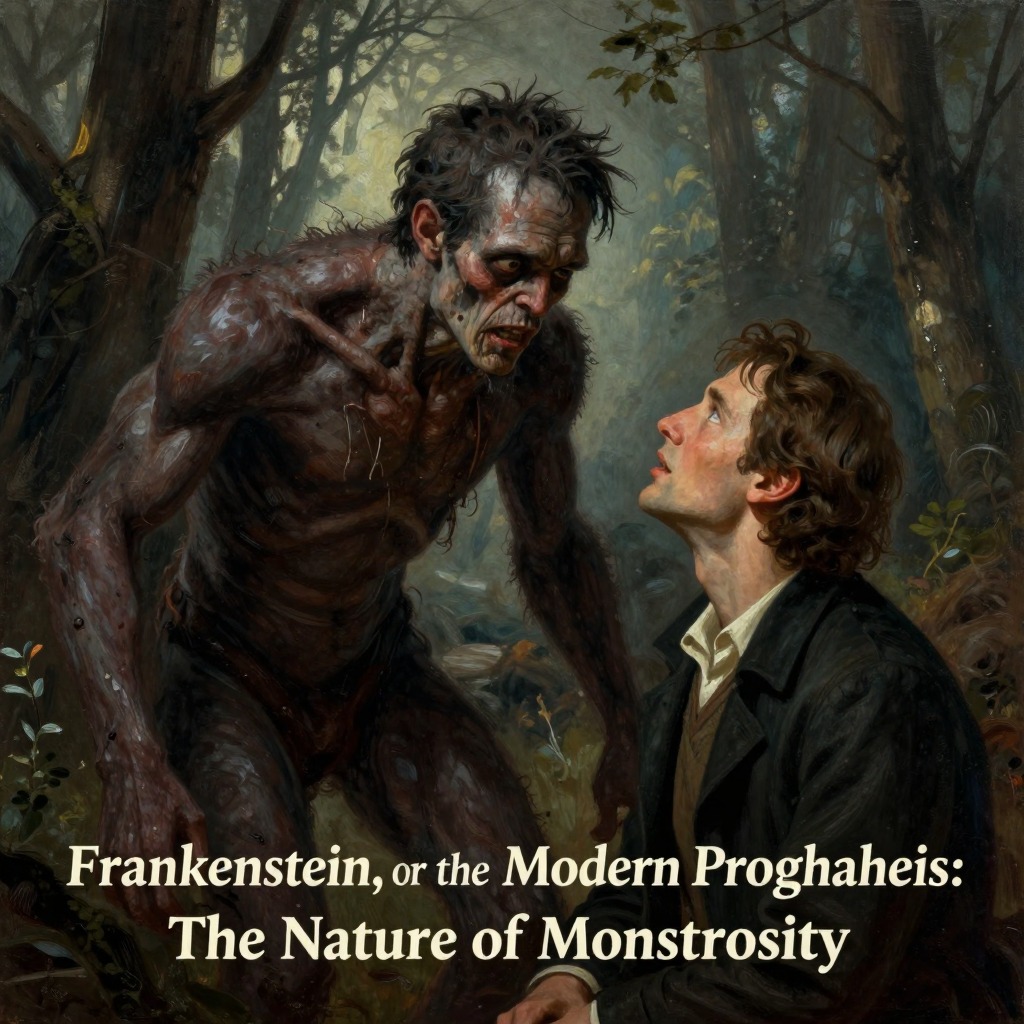
Frankenstein, or the Modern PrometheusIn the climactic confrontation on the glacier of Montanvert, the monster utters a line that distills the entire tragedy of his existence: "I ought to be thy Adam, but I am rather the fallen angel, whom thou drivest from joy for no misdeed." The sentence, spoken to Victor Frankenstein on the sea of ice, is the creature's most explicit statement of his own origin and his fall. He claims the role of Adam — the first man, created perfect by God, placed in a garden, and given a companion — but recognizes that he has been cast instead as Satan, expelled from happiness not for any sin he committed but because his creator abandoned him. The line is the hinge on which the monster's moral identity turns: he was born benevolent and became a fiend only after being denied every form of human sympathy.
The Monster's Self-Conception as Adam
The monster's identification with Adam is rooted in his reading of John Milton's Paradise Lost, which he discovered among the books in a leathern portmanteau. He read the epic as a true history and found in it a mirror for his own condition. Like Adam, he was a new creation, united by no link to any other being. But the resemblance ended there. Adam had come forth from the hands of God a perfect creature, happy and prosperous, guarded by the especial care of his Creator, allowed to converse with beings of a superior nature. The monster, by contrast, was wretched, helpless, and alone. The comparison sharpened his sense of deprivation: he had been given life but denied the love and community that made life worth living.
The Fallen Angel and the Turn to Vengeance
Yet the monster also recognized that he was not Adam but Satan. "Many times I considered Satan as the fitter emblem of my condition," he told Victor, "for often, like him, when I viewed the bliss of my protectors, the bitter gall of envy rose within me." The line he speaks on the glacier — "I ought to be thy Adam, but I am rather the fallen angel" — is the culmination of this self-analysis. He insists that his original nature was good: "I was benevolent and good; misery made me a fiend." The fall was not his fault but his creator's. Victor had driven him from joy for no misdeed, and the rejection he suffered from every human being he encountered — from the villagers who attacked him, from the De Lacey family who fled in horror, from the rustic who shot him after he saved a drowning girl — transformed his innate love into hatred. "I am malicious because I am miserable," he told Victor, and the line on the glacier is the theological version of that same claim: he is the fallen angel because his creator refused to be his God.
The Demand for a Companion and the Ethics of Creation
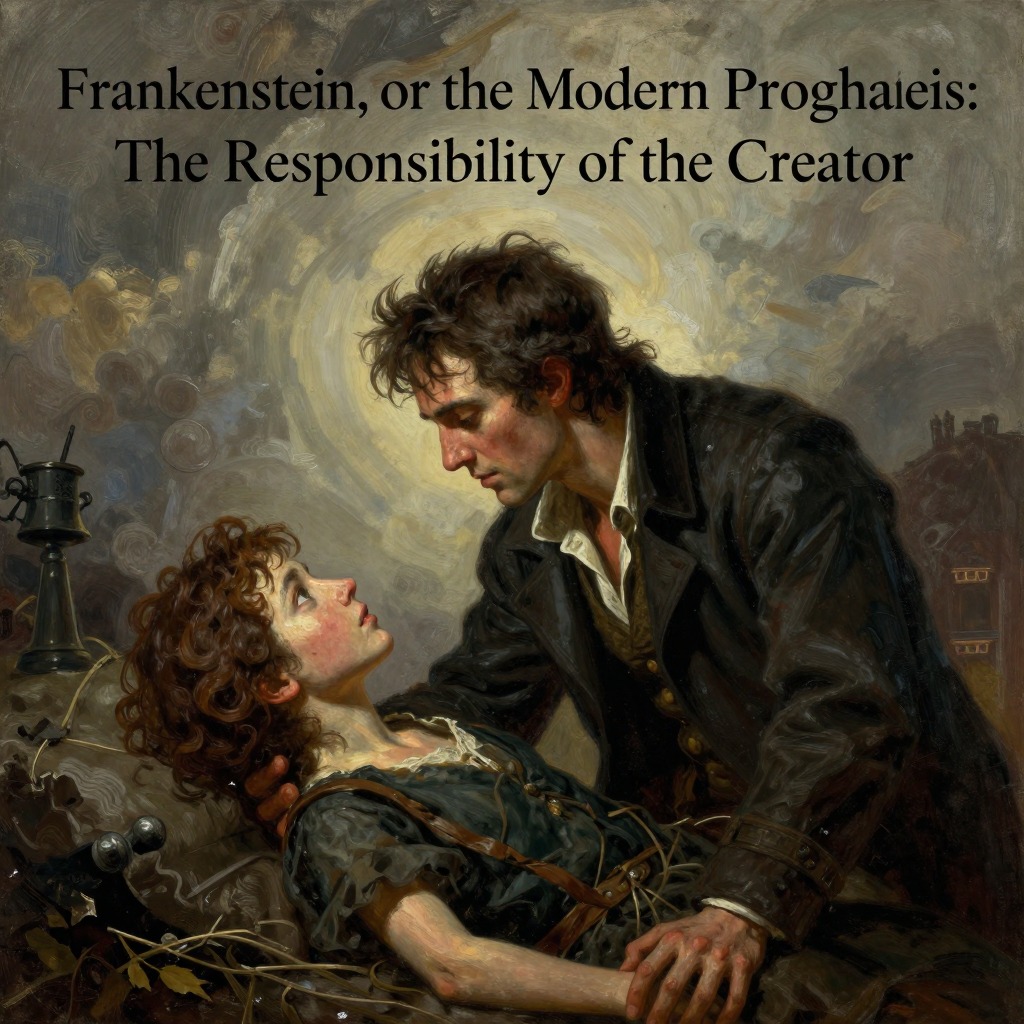
The monster's self-description as Adam rather than Satan is also a demand. If Victor would fulfill his duty as a creator and make him a female companion, the monster could still become what he ought to have been. "Make me happy," he pleaded, "and I shall again be virtuous." The line "I ought to be thy Adam" is thus an ethical claim: the creator owes his creature the conditions for happiness. Victor, however, refused. He saw in the monster only a demon and could not recognize that his own abandonment had produced the very evil he condemned. The monster's final words to Walton, after Victor's death, echo the same structure of thought: he had been "nourished with high thoughts of honour and devotion," but crime had degraded him beneath the meanest animal. "The fallen angel becomes a malignant devil," he said, "yet even that enemy of God and man had friends and associates in his desolation; I am alone." The line on the glacier thus reverberates through the entire narrative, marking the monster's tragic trajectory from a being who might have been Adam to one who became, in his own eyes, a figure more solitary and more damned than Satan himself.
The Line as Narrative and Thematic Keystone
The phrase "I ought to be thy Adam, but I am rather the fallen angel" is not merely a literary allusion; it is the monster's most compressed and powerful statement of his identity and his grievance. It appears at the exact moment when Victor, having heard the creature's full story, is moved to compassion but still cannot overcome his horror. The line forces Victor — and the reader — to confront the possibility that the monster's wickedness is not innate but produced by the very rejection that Victor himself initiated. It is the moral center of the novel's argument about the responsibilities of a creator. Victor's failure to be a proper God to his creature is the original sin from which all the subsequent murders flow. The monster, in claiming the name of Adam, is also indicting Victor for failing to be a true creator — for making a being and then refusing to be its providence, its companion, or its judge.