The Sorrows of Werter
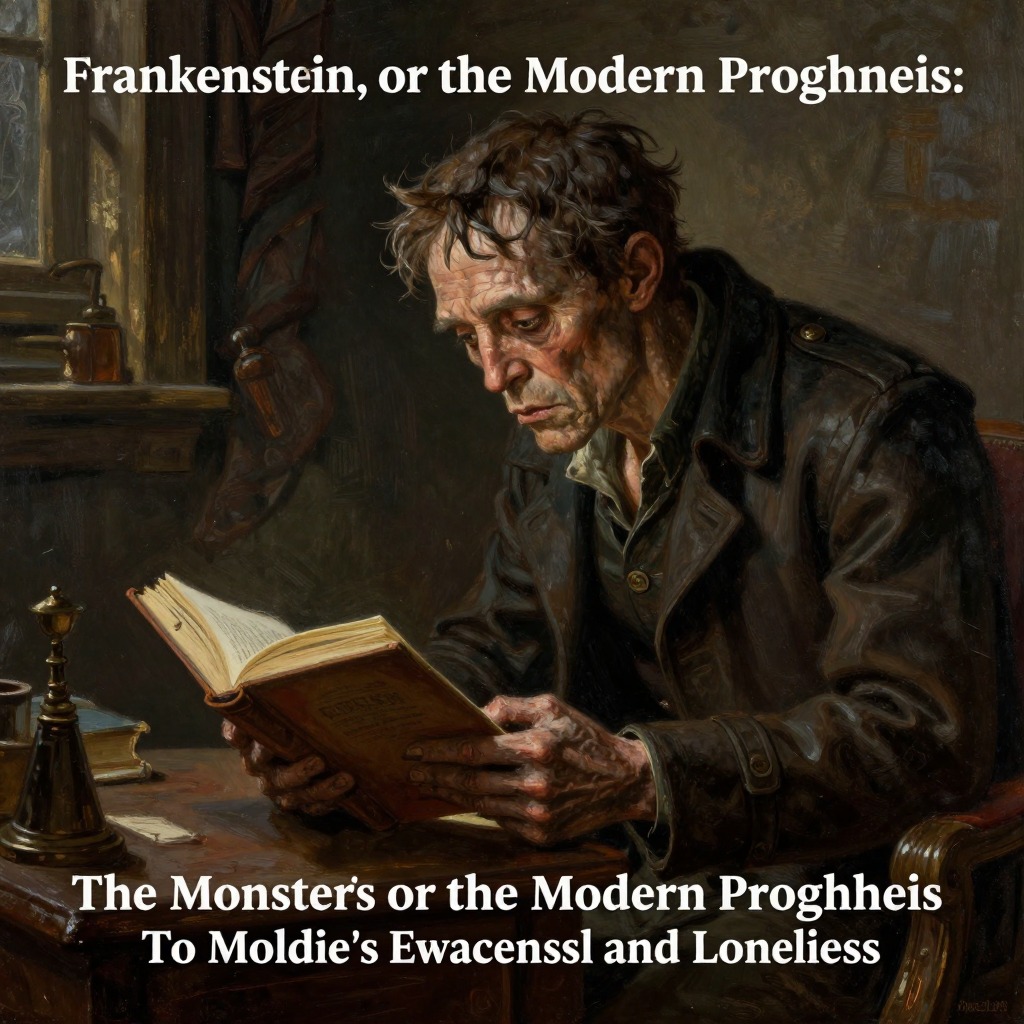
Frankenstein, or the Modern PrometheusThe Sorrows of Werter is a novel that the monster discovers in a leathern portmanteau during his time living in the hovel attached to the De Laceys' cottage. Along with a volume of Plutarch's Lives and a copy of Paradise Lost, this book becomes one of the monster's most treasured possessions, providing him with a never-ending source of speculation and astonishment. The monster reads the book with intense personal application, finding in its pages a mirror for his own condition and a source of both ecstasy and dejection.
Discovery and Reading
One night, while collecting food and fuel in the neighboring wood, the monster finds a leathern portmanteau containing several articles of dress and some books. He eagerly seizes the prize and returns with it to his hovel. The books are written in the language whose elements he has acquired at the cottage, and he now continually studies and exercises his mind upon these histories while his protectors are occupied with their ordinary tasks. The Sorrows of Werter, along with the other volumes, produces in him an infinity of new images and feelings, sometimes raising him to ecstasy but more frequently sinking him into the lowest dejection.
Emotional and Intellectual Impact
The monster finds in The Sorrows of Werter a never-ending source of speculation and astonishment. The gentle and domestic manners it describes, combined with lofty sentiments and feelings that have for their object something out of self, accord well with his experience among his protectors and with the wants that are forever alive in his own bosom. He considers Werter himself a more divine being than he has ever beheld or imagined, a character that contains no pretension but sinks deep. The disquisitions upon death and suicide are calculated to fill him with wonder; he does not pretend to enter into the merits of the case, yet he inclines toward the opinions of the hero, whose extinction he weeps without precisely understanding it. As he reads, he applies much personally to his own feelings and condition, finding himself similar yet strangely unlike the beings concerning whom he reads. He sympathizes with and partly understands them, but he is unformed in mind, dependent on none and related to none. The path of his departure is free, and there is none to lament his annihilation. His person is hideous and his stature gigantic, and the questions "Who was I? What was I? Whence did I come? What was my destination?" continually recur, but he is unable to solve them.
Contrast with Other Books
The effect of The Sorrows of Werter on the monster is markedly different from that of Plutarch's Lives. From Werter's imaginations he learns despondency and gloom, while Plutarch teaches him high thoughts and elevates him above the wretched sphere of his own reflections to admire and love the heroes of past ages. Paradise Lost, in turn, excites different and far deeper emotions, moving every feeling of wonder and awe as he reads it as a true history and often refers its situations to his own. The Sorrows of Werter thus occupies a distinct place in the monster's education, feeding his melancholy and his sense of isolation even as it provides him with a language for his suffering.
Significance in the Monster's Development
The reading of The Sorrows of Werter deepens the monster's awareness of his own wretchedness and his longing for companionship. The book's exploration of suicide and despair resonates with his own feelings of being an outcast, and its hero's emotional intensity mirrors the monster's own capacity for profound feeling. This literary encounter, combined with his discovery of Victor Frankenstein's journal and the history of the De Laceys, solidifies his understanding of his own tragic condition and fuels his desire for sympathy and connection, even as it also contributes to the bitterness that ultimately drives his vengeful actions.