Case–Robin arranged marriage
Gang Up: A Bikerland NovelCase–Robin arranged marriage is a political mating arrangement imposed on Robin after Titus’s death and the resulting struggle over leadership of the Family. Case treats Robin’s future as part of consolidating power, while Robin responds by concealing her feelings and negotiating how much of herself she must surrender; the available account establishes an impending ceremony, not a completed marriage.
Formation in a Succession Crisis
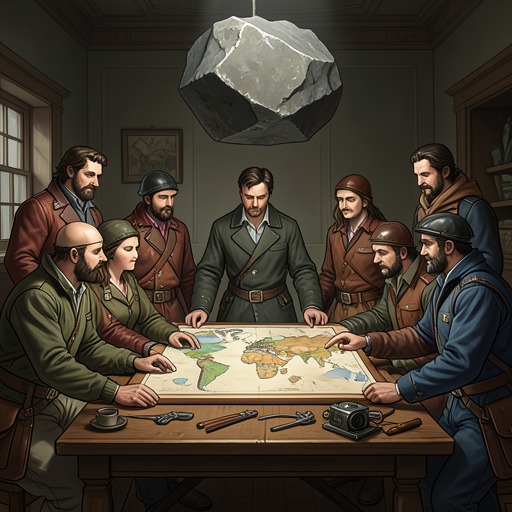
Titus’s death leaves the Family vulnerable at the very moment that Case and Troy are contesting how it should be run. Their rivalry is common knowledge, and the peace with Brall and the Cauldron remains precarious: so far, neither side has shed blood. The crisis makes marriage and mating arrangements part of the political struggle, rather than merely private choices.
Case first discusses Troy’s future with him in terms of control over property and succession. He directs Troy to mate Sandra after a year, explaining that she must observe a period of mourning and that Troy will then control the region’s largest estate. Troy challenges the proposal by asking what Case gains from arranging his mother’s future. Robin is present and understands that the men have begun to count her among the acquisitions being assigned. When Case turns to her, he makes clear that she is part of the same calculation.
The arrangement also follows Case’s decision to end his sexual relationship with Abigail. He tells her that their intimacy is over because he has to be with Robin, adding that he will treat Robin well. The statement makes the match consequential for more than the two people named in it: Case’s choice redirects his relationship with Abigail while placing Robin in a position defined by his authority.
Kinship Rules and the Right of Clan
The match takes place in a society where reproductive control is justified through competing rules. Titus had protected Robin from Troy, who wanted to invoke the Family’s right of clan against her. The right is described as a means of continuing a threatened bloodline through pregnancy, not as marriage: marriage between members of the same Family is forbidden, including between stepsiblings. The distinction matters because the arrangement with Case is presented as a mating ceremony, while the right of clan is a separate and explicitly reproductive claim.
The rules are framed against the demographic devastation of the Long War. Robin has heard estimates that as much as ninety-five percent of the population disappeared, and rebuilding the human population is given as the reason for preventing marriage within the same bloodline. Yet the right of clan can override ordinary protection when a clan is considered sufficiently threatened. Robin knows that Troy has repeatedly described wanting to use that right against her; Titus’s death therefore turns a former fear into immediate terror. Case’s declared claim comes amid this system, but the evidence does not equate his arrangement with Troy’s threatened abuse of the right of clan.
Robin’s Concealment and Case’s Approach
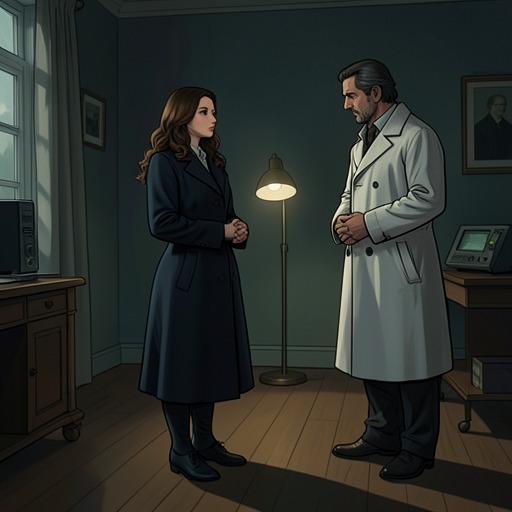
When Case later asks whether Robin has a man, she denies having one at first, then says that there is something else. Case assumes she had a suitor who withdrew after Robin and Case were declared. Robin knows that such a suitor would risk his life by trying to claim something from the Family’s leadership, but she allows Case to keep believing the explanation. Her evasions protect a private truth without directly challenging the public arrangement.
Case says Robin need not identify the supposed man, but insists that the matter must end by their mating ceremony and suggests it should end sooner. Robin agrees because she wants him to stop pressing her. Her assent is therefore not clear evidence of freely chosen affection: she is managing a dangerous conversation by telling Case what he wants to hear. The distinction between what she says and what she feels gives the arrangement its central tension.
Case, for his part, presents himself as willing to accommodate her. He says he does not intend to hurt her, apologizes that they have to begin this way, and promises that their sexual relationship will be satisfying. He also praises her beauty and touches her cheek. The exchange mixes reassurance and flirtation with the unmistakable fact that their future has already been declared and a ceremony is expected. His gentleness changes the tone of the encounter, but it does not erase the imbalance in how the match was made.
Political Reach and Unresolved Outcome
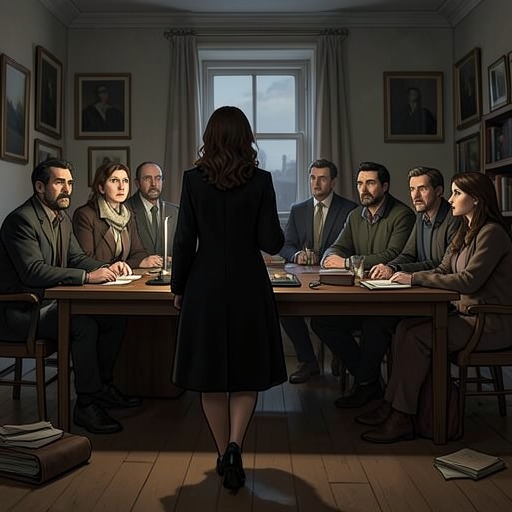
The arrangement belongs to the Family’s wider practice of turning women’s mating and marriage into matters of authority. Later, the settlement with the Cauldron gives its members the option to marry into the Family and grants them preference for newly matured Family girls. That policy concerns the alliance rather than Case and Robin specifically, but it shows how intimate arrangements remain bound to political membership and the distribution of power.
By the time the Family and the Cauldron set terms to meet in open battle, Case’s stated plan is to wipe out Brall’s forces and end the conflict. The eventual agreement instead gives the Cauldron a role in trade and territorial defense while the Family retains control of Temple. These political developments supply the larger context for Case’s pairing with Robin: personal arrangements unfold alongside efforts to secure leadership, territory, and alliances.
The evidence leaves the relationship at the threshold of its ceremony. Robin has been declared for Case, and Case expects their mating to proceed, but no completed marriage or settled emotional resolution is established here. The arrangement’s significance lies in that unresolved boundary: it promises a household bond while exposing how little room Robin initially has to define the terms herself.