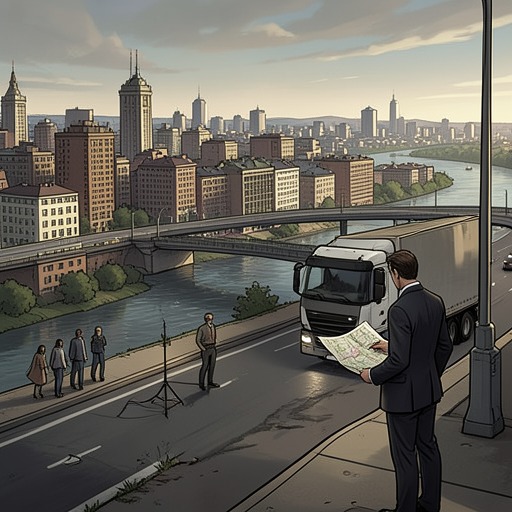
Cauldron's Assault on the Spring
Gang Up: A Bikerland NovelCauldron’s Assault on the Spring is both a tactical victory and a turning point in Brall’s campaign against the Family. By taking the spring, he gains control of a clean, nearby water source that could weaken the Family if denied to them; by entering the cave after the fighting, he discovers Robin held captive there. The battle’s strategic result thus becomes entangled with the fate of one person before Brall has even left the captured ground.
The attack and its outcome
The assault began near dusk. The spring was heavily guarded by well-armed Family men, but the low sun worked against the defenders: its light was in their eyes, while Brall had surprise on his side. Those advantages made the attack swift. The fight was brief and bloody, ending with two of Brall’s men and five of the Family’s dead. The remaining defenders surrendered, and Brall had them put in chains.
The difference in losses records the battle’s cost without obscuring its decisive outcome. Brall did not merely reach the spring or force the defenders away from it; he captured the position and its surviving garrison. The prisoners immediately became part of the aftermath. Brall could sell them back or hold them as hostages in a trade for peace, so the surrender gave him leverage beyond the ground won in the assault.
Water, prisoners, and the terms of conquest
The spring’s value came from its source: a stream flowing out of a cave deep in the rocks, its water clean and untouched by the land’s radiation. After the fighting, Brall’s men cleared the rooms, and Brall walked through them himself to survey what he now owned. The Family had other sources of water, but none as close or readily available. Without a steady supply, they would grow weaker. Capturing this spring therefore offered Brall a way to pressure them through an essential resource, not simply a symbol of territory.
Yet his plans for the defeated people were not those of a conqueror intent on removing every man. He wanted to rule them, and recognized that taking all their men away would not win their gratitude. His proposed clemency was limited and practical: prisoners could be returned or exchanged, rather than retained indefinitely. That distinction shapes the victory’s political stakes. The chains establish Brall’s immediate power; the possibility of release leaves room for a settlement that might help him govern those he has conquered.
The cave and Robin’s discovery
Once his men had cleared the rooms, Brall went into the cave. He stepped through small pools of blood and over emptied shotgun shells and bullet cases. In the enclosed darkness, the trickle of water filled the space, while the cave’s cool air offered relief from the heat outside. These details place the source of the spring amid the residue of the assault: the water continues to run through a chamber newly marked by violence.
A soft, troubled moan drew Brall farther in, toward a light. In a back corner, he found Robin locked away with her hands tied behind her back. The discovery changes the meaning of his passage through the cave. He had entered to inspect a possession and its strategic value; he now confronted a captive whose presence his men had not reported. His thoughts turn immediately to whether she is hurt, frightened, or possibly shot or killed. The narrative makes his concern personal and urgent, distinct from his assessment of prisoners as bargaining leverage.
From conquest to rescue
Brall’s first response includes anger that he had not been told Robin was there, but that anger subsides. He takes deep, calm breaths and directs himself to approach rationally: Robin is scared and alone, and he should comfort her. The shift matters because the battle has placed him in a position of authority over both the spring and the people found within it, while his conduct toward Robin is framed not as a negotiation over a captive but as an effort to reassure her.
The assault therefore closes on two forms of possession that the scene does not treat as equivalent. Brall surveys the water as something he now owns and considers how the captured men can be used in a future bargain. Robin, bound in the cave, prompts a different response: concern for her safety and an impulse to comfort her. The juxtaposition leaves the military victory unresolved in human terms. Brall has won the spring, but the discovery at its source redirects the scene from the mechanics of conquest toward Robin’s captivity and his response to it.