Family Marriage Approval Rule
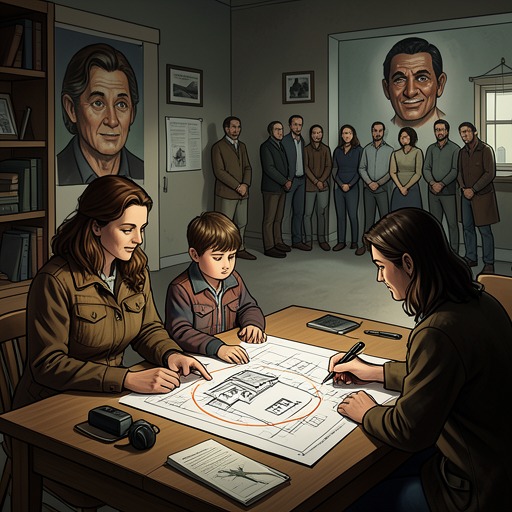
Gang Up: A Bikerland NovelThe Family Marriage Approval Rule makes Sandra, the Family’s Matron, the final authority on whether a woman may marry into the Family. Its stated test is not simply whether a man wants a wife: a woman must display eagerness and submission, anticipate her husband’s needs, and be prepared to cook, clean, and maintain a respectable home. The rule gives marriage a gatekeeper and a domestic standard, binding women’s place in the Family to service and obedience.
Authority and Criteria
Titus directed the Family’s overall strategy: whom to attack or trade with, and where to fortify or retreat. Sandra’s authority operated in a different but complementary sphere. She organized supplies and food for the warriors and, as Matron, decided whether a woman could be married into the group. The narrative thus presents Family rule not as a single office but as a division of power between strategic command and the management of household life.
Sandra’s criteria measure a prospective wife by her anticipated conduct. She was expected to be eager and submissive, recognize what her man needed, and cook and clean for him. The home was supposed to remain orderly and free of filth and distasteful activities, ready to receive riders who might have spent weeks or months away protecting the Family. Marriage approval therefore extended the Family’s expectations of domestic labor into a test of belonging: a woman had to demonstrate that she could make a returning warrior’s home into a haven.
A Wider System of Gendered Expectations
The approval rule sits alongside, but is not identical to, the Family’s broader sexual customs. The text says that any man in the Family could take any woman he wanted; Sandra’s final say applied specifically to whether a woman could be married in. This distinction makes her role a form of regulation within a system that otherwise grants men broad sexual power, rather than evidence that she controlled every sexual relationship.
The expectation of service also reached beyond marriage. Women were assigned routine maintenance while men were away: repairing roofs, clearing pipes, rebuilding damaged stairs and walls, and restoring insulation. When Robin and Abigail spread boiled pitch over the driveway leading to the Family’s garages, their work followed Titus’s insistence that returning riders deserved a firm, easy path into the safety of the Compound. The maxim that a strong home was a strong Family joined practical maintenance to a gendered order in which women were expected to anticipate and meet men’s needs.
The standard was reinforced through appearance and learned habits as well as labor. Robin wore heeled boots, as women were expected to do, and had begun practicing the walk before she was twelve. The account presents her pride in her appearance alongside her conviction that a woman should know her place and become a good wife to a strong man. Such details show how the rule’s ideal could be absorbed as ordinary common sense, not enforced only through an explicit marriage decision.
Kinship, Reproduction, and Coercion
The Family’s concern with marriage also appears against the demographic devastation of the Long War. Robin had heard estimates that as much as ninety-five percent of the population had disappeared. The account distinguishes marriage between close or step-relatives, which was forbidden, from the so-called right of clan: a reproductive claim that could be invoked when a clan felt its bloodline was threatened. That exception could involve a stepfather and stepdaughter or a stepbrother and stepsister, but was described as a means of producing a pregnancy, not a marriage.
This distinction matters to Robin’s fear of Troy. Titus had protected her from Troy’s repeated threats to invoke the right of clan against her; after Titus’s death, her fear became terror. The marriage approval rule does not itself authorize Troy’s claim, and Sandra’s authority over marriage should not be confused with that separate coercive practice. Together, however, these institutions show how the Family organized women’s intimate lives through different forms of male access, reproductive pressure, and conditional entry into marriage.
Political Uses and Limits
Marriage could also serve as a political arrangement. After Titus died, Case told Troy that he was to mate Sandra after a year had passed, allowing a period of mourning before the match. The scene presents a proposed union as part of the leadership settlement, but does not establish that Sandra’s approval rule was invoked or that the marriage took place. It nonetheless places marriage within the Family’s management of succession and public stability, not solely within private household life.
The later peace agreement with Brall offered members of the Cauldron the option of marrying into the Family and gave them special preference for newly matured Family girls. The offer connects marriage to alliance-building and the reorganization of life in Temple. The evidence does not say that this arrangement displaced Sandra’s authority or specify how the approval criteria would apply to Cauldron members; it does show that access to marriage could become a negotiated political benefit as well as a Matron’s domestic judgment. Across these contexts, the rule makes household order part of the Family’s larger system of governance.