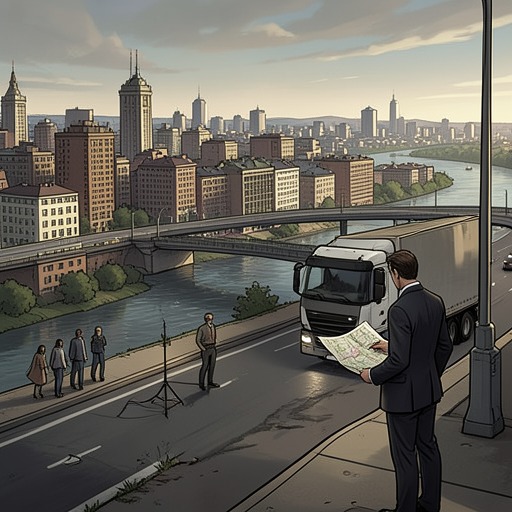
The spring
Gang Up: A Bikerland NovelThe spring is a rare uncontaminated water source in the irradiated wasteland around Temple, and its seizure by Brall becomes one of the decisive moves in the war with the Family. More than a natural feature, it is both a material resource and a mechanism of power: whoever controls it can sustain people, weaken an enemy, and determine the terms of negotiation. Its capture also leads directly to Brall’s discovery and rescue of Robin, joining the book’s struggle over survival to its struggles over possession, loyalty, and rule.
Setting and Material Nature
The spring originates in a cave deep within the surrounding rocks. Unlike much of the land, its water is clean and untouched by radiation, making it unusually valuable in a world shaped by the Long War’s devastation. Temple itself stands in the hot badlands of what once was Texas, one of only a handful of known settlements, while the nearest city, Dallas, represents a more orderly society beyond the wasteland. In Temple, where the Family supplies the law and the Family’s leader had historically held the community together, access to reliable water is inseparable from political authority.
The spring’s importance is practical rather than symbolic alone. The Family possesses other sources that it can use, but this one is especially close and readily available. Brall recognizes that distinction immediately after taking it: without steady, regular water, the Family will weaken. The spring therefore converts environmental scarcity into military leverage. Its value comes from its location, purity, and dependable flow, not merely from the fact that water exists there.
Capture During the War
Brall attacks the spring near dusk, when the defending Family men have the setting sun in their eyes. The guards are well armed, but the timing gives Brall surprise and a tactical advantage. The fight is brief and bloody. Brall loses two men, while the Family loses five; the remaining defenders surrender and are placed in chains.
The treatment of the prisoners shows that the spring is part of a larger political calculation. Brall considers selling them back or using them as hostages to exchange for peace. His conquest is accompanied by a measured form of clemency because he wants to rule the people whose territory he is taking, not strip the community of every man and leave it unable to function. Control of the spring thus serves two purposes at once: it threatens the Family’s physical endurance and gives Brall bargaining material for the settlement he hopes to impose.
The Cave and Robin’s Discovery
After his men clear the area, Brall surveys the rooms around the spring himself. He enters the cave through darkness, stepping across small pools of blood and spent shotgun shells and bullet cases. The cool air and the steady trickling of water contrast with the heat outside and the violence that has just occurred. The spring’s material presence remains continuous while human control over it changes hands: water keeps flowing through the aftermath of battle, indifferent to the claims made upon it.
A troubled moan draws Brall farther into the cave, where he finds Robin locked in a back corner with her hands tied behind her. The discovery changes the meaning of the conquest for him. He is immediately alarmed that his men failed to tell him she was there and imagines that she may have been injured, frightened, shot, or killed. His first impulse is to take her against him and reassure her, but he forces himself to breathe deeply and approach calmly because he understands that she is frightened and alone.
The spring consequently becomes the site where strategic victory and intimate crisis meet. Brall has taken a resource capable of starving the Family into submission, yet the most urgent fact he encounters within it is Robin’s captivity. The cave is at once a military installation, a prison, and the place where Brall’s personal allegiance is reactivated by sight of the woman he wants to possess and protect.
Strategic and Narrative Significance
The spring exposes the resource structure beneath the Family–Cauldron conflict. Brall’s forces already depend on discipline to sustain more than seventy-five soldiers and roughly a hundred attached followers, including whores, merchants, life-partners, and other hangers-on. In such a precarious community, food and water are not background necessities; they are the conditions that make organized force possible. Capturing the spring strengthens Brall’s army while threatening the Family’s ability to maintain its fortified compound and its military readiness.
That pressure escalates the war toward open confrontation. After successive attacks and countermeasures, Case and Troy establish terms for a direct battle outside town, abandoning the slower process of consuming the opposing side through surprise attacks. The spring is part of the material logic behind that escalation: once water can be seized and used to weaken the enemy, the conflict becomes a contest over the infrastructure of survival rather than a series of isolated personal disputes.
The spring also complicates Brall’s image of power. He treats women as possessions and has used collective sexual violence as an instrument of Cauldron indoctrination, claiming that women such as Vivienne belong to the Cauldron and therefore to him. His reaction to Robin at the spring carries the same possessive structure, but it is interrupted by fear for her safety and a deliberate effort to comfort her. The water source reveals this contradiction without resolving it: Brall’s capacity to protect, negotiate, and organize is inseparable from his desire to own.
Broader Meaning
In the postwar wasteland, the spring condenses the book’s central material pressures. The Long War has frayed civilization, radiation has made the landscape dangerous, and Temple survives as an isolated settlement where law is whatever the Family decides. Against that background, clean water becomes a form of sovereignty. The spring can nourish a population, preserve an army, finance a negotiation through hostages, or force an enemy toward surrender.
Its importance is therefore cumulative rather than spectacular. The battle for it is short, but its consequences extend into logistics, political legitimacy, and the private loyalties exposed by Robin’s captivity. The spring’s clean water offers a momentary image of intact life within a damaged world, yet access to it is secured through blood, chains, and territorial domination. It is precisely this tension that makes the spring one of the narrative’s clearest objects: a natural source of renewal transformed by the surrounding society into an instrument of war.