
A Strong Home and a Shared Order
Gang Up: A Bikerland NovelThis flow traces how the story moves from the Family’s ideal of a secure home toward a broader and more interdependent model of community.
increasing Bearing strength in each event
 decreasing
Bearing strength in each eventdecreasingTitus’s Domestic Principle
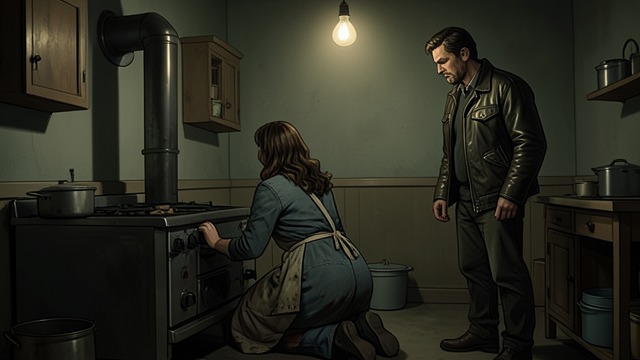
Home as Foundation
A governing belief
Titus teaches that a strong home sustains a strong Family. The idea links household maintenance, supplies, and the loyalty of the riders to the institution’s survival.
A gendered burden
Women are expected to maintain homes and support men who spend long periods away. The language of stability gives their labor meaning, while placing unequal responsibility on them.
The principle expresses a real need for continuity in a dangerous world. It also reveals how the Family’s order depends on work that its leaders do not share equally.
The Compound as Shelter
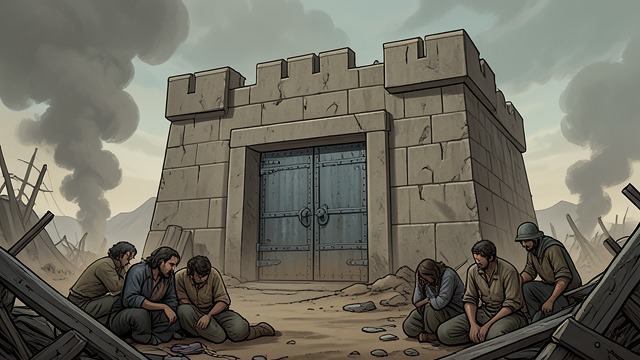
Building Against the Wastes
Reinforced refuge
The Family’s Compound uses reinforced structures and protected spaces to resist radiation and attack. Its design makes the Family’s center more secure than the improvised settlement around it.
A limited definition of home
Troy’s claim that only the Compound matters narrows the idea of community to the leadership’s property. Case argues that residents outside its walls are also part of the responsibility.
The physical boundary becomes a moral question. A secure home cannot fully serve Temple if protection stops at the edge of the institution.
The Fire Reaches Outward
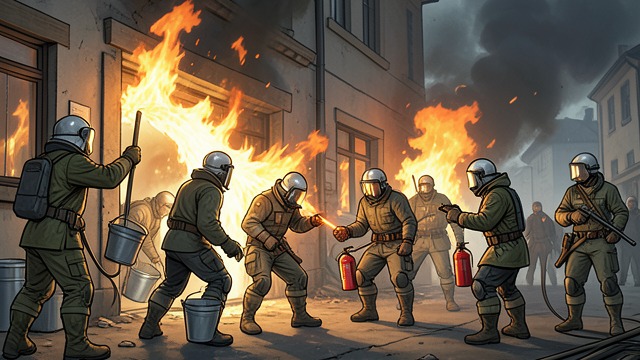
Home Beyond the Walls
A shared emergency
The explosions set fire to important structures and threaten residents across Temple. Case organizes a collective response rather than abandoning the town to protect only the Family’s buildings.
Shared labor across factions
Brall and his men join the effort, showing that people from rival organizations can contribute to the same home. The firefighters’ temporary cooperation is a practical form of community.
The crisis enlarges the meaning of protection. Home is not merely the fortified Compound but the network of people whose lives depend on its survival.
Trade Creates Interdependence
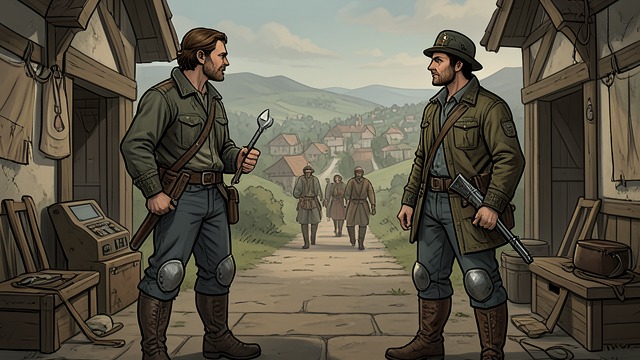
A Home with Open Roads
Different strengths
The Family can manage Temple and explore surrounding territory; the Cauldron can protect trade routes and provide disciplined security. Each group offers what the other needs.
Shared prosperity
The accord makes outside trade and local stability dependent on cooperation. Temple’s home is strengthened not by isolation but by managed connections to other communities.
The settlement revises Titus’s principle without discarding its concern for security. A strong home now requires relations beyond its walls as well as care within them.
A Dual-Gang Community
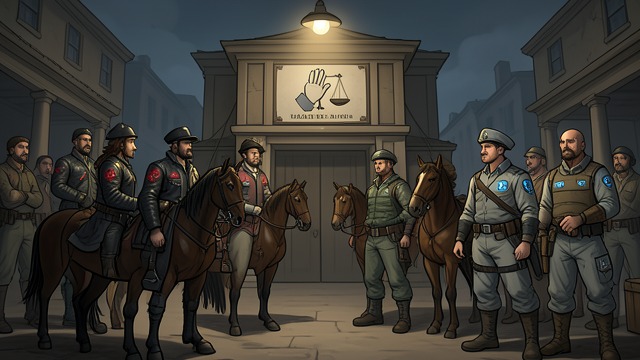
The New Meaning of Belonging
Distinct groups remain
The Family and the Cauldron keep their identities while sharing responsibility for Temple. Their continued difference becomes an element of the settlement rather than an immediate threat.
Peace as a structure
The alliance depends on contracts, duties, and mutual advantage, not on the fiction that every old rivalry has vanished. Residents and riders must continue to choose the arrangement through their conduct.
The new community is more plural but not free of hierarchy. Its achievement is a workable form of coexistence in a world where survival has usually been defined as domination.
during the account of Titus’s rule
before the explosions
during the night of the fires
during Case and Brall’s final meeting
after the treaty is announced
