
Temple’s Material Lifelines
Gang Up: A Bikerland NovelThis flow traces how land, water, trade, and infrastructure shape the struggle over Temple and the terms of its eventual alliance.
increasing Bearing strength in each event
 decreasing
Bearing strength in each eventdecreasingA Fertile Enclave

Value in a Scarred World
Scarcity around the town
The Long War has left much of the region irradiated and difficult to farm. Temple’s relatively fertile land makes it a valuable center for commerce and settlement.
A source of conflict
The Family’s control of roads and resources funds its rule, while Brall sees Temple as a base for the Cauldron’s expansion. The town’s value attracts the very forces that threaten it.
Temple’s geography is not backdrop but motive. Its land and location make political control materially consequential for every faction.
Tax and Protection
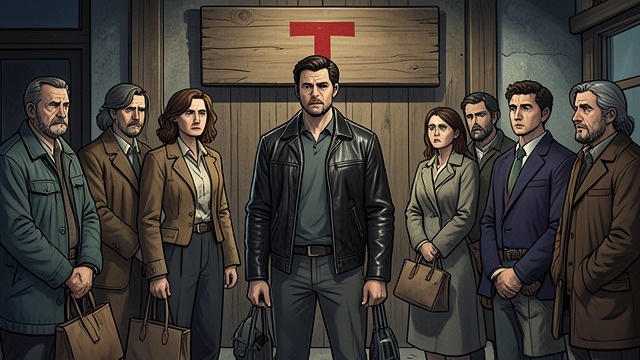
Revenue for Security
The collection
Case and Troy collect the Family Protection Tax from local businesses and residents. The Family promises protection in exchange for the resources needed to maintain its authority.
Unequal exchange
The system gives the Family control over access to safety and trade. Troy’s theft from the collection exposes how public revenue can be redirected into private power.
The tax links Temple’s economy to its political structure. When its leaders cannot agree on who owns the funds, the community’s protection system becomes another site of conflict.
The Grain and Garage
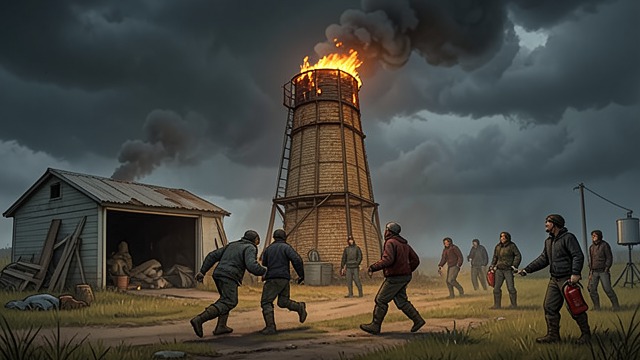
Infrastructure at Risk
Two crucial targets
The grain tower and long garage are hit in coordinated explosions. The attacks threaten food stores, vehicles, and the people responsible for keeping the town supplied.
A crisis for civilians
Case mobilizes residents to contain the fires, while Troy argues that the areas outside the Compound can be sacrificed. The dispute makes visible the difference between guarding an institution and protecting a town.
The destruction turns infrastructure into a measure of leadership. A ruler’s authority depends on whether the systems that sustain everyday life survive the conflict.
The Captured Spring
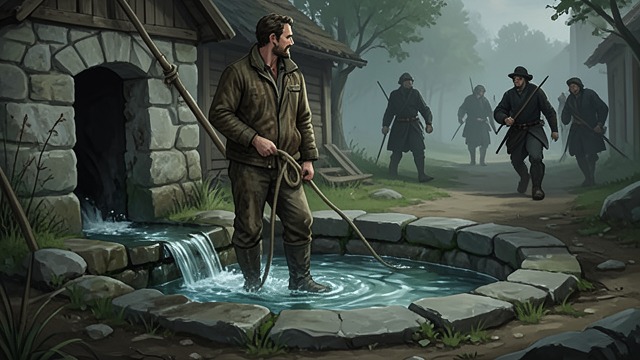
Water as Leverage
A strategic resource
The Cauldron attacks the spring and takes it from Family defenders. Its clean water source provides a meaningful advantage during the war.
A change in what victory means
The captured complex contains Robin, held by Troy. Brall’s discovery gives the assault a personal consequence that sits alongside its strategic purpose.
Control of water can weaken a settlement without a decisive battle. The spring’s capture therefore increases Brall’s leverage while also creating the conditions for a rescue.
Trade in the Accord
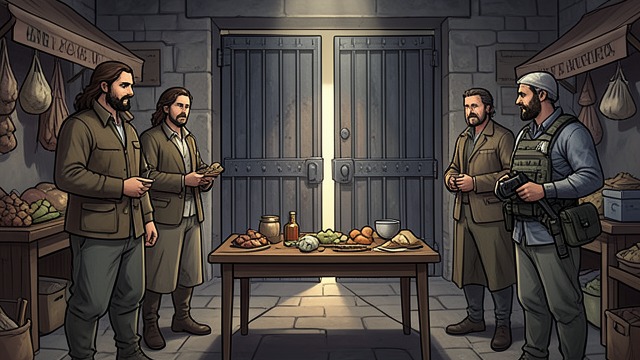
Resources Shared by Agreement
Divided responsibilities
The Cauldron takes on trade routes and outside security, while the Family retains Temple’s local administration and exploration work. Each group receives resources and responsibilities it can handle.
Interdependence established
Neither side can simply eliminate the other without damaging the economic system that supports Temple. The agreement gives both factions a reason to preserve peace.
Trade converts a military deadlock into a durable incentive. The treaty’s success depends on practical gains continuing to outweigh the old desire for exclusive control.
during the opening account of Temple
during Case and Troy’s visit to The Smoking Gun
during the night of the Compound explosions
during the Cauldron’s assault on the water source
during the final treaty meeting
