Blood needs blood
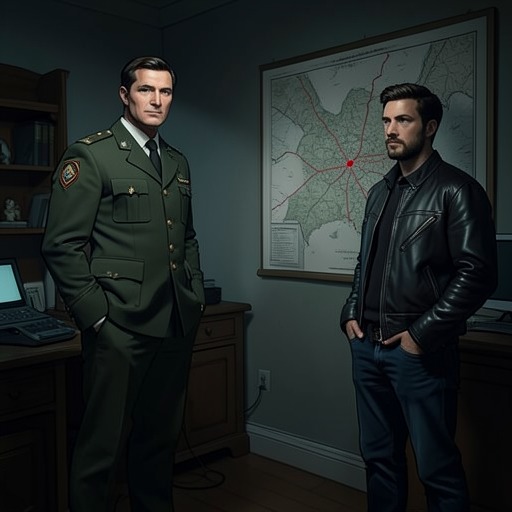
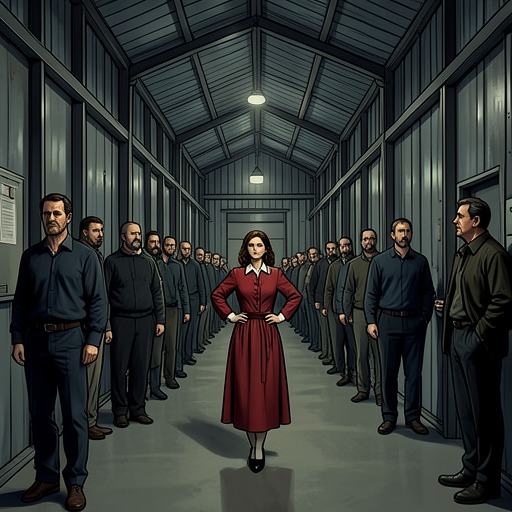
Gang Up: A Bikerland Novel“Blood needs blood” names the logic Brall invokes to make retaliation seem inevitable. Spoken at Carthage’s grave, the phrase turns grief into a rationale for continued conflict, even as a woman urges Brall to consider where that logic leads.
The phrase at Carthage’s grave
When Brall is urged to stop the fighting, he laughs bitterly and answers, “Blood needs blood. That’s how it’s always been.” His words present vengeance not as a choice made in the moment but as an old rule, apparently confirmed by experience. The certainty of “always” makes the rule sound inescapable; the scene, however, places it beside a direct challenge to that certainty.
The woman points to Carthage’s fate and asks where the fighting has got him. Brall hears more than anger in her reply: he recognizes a conviction that the violence has gone on too long. She leaves flowers at Carthage’s grave, while Brall continues the work of lowering and burying his friend. The gesture gives the exchange a physical focus: the dead man is not an abstraction in a debate about war, but the person whose loss Brall is trying to bear.
Grief, retaliation, and the conflict
The account makes clear that Brall’s anger is not directed at the woman who questions him. He is angry with the Family and grieves his friend’s death. As he buries Carthage, her question—what he wants—stays with him. The phrase therefore expresses his immediate commitment to a retaliatory logic, while the scene also shows that the appeal against it has reached him, even if it has not yet changed his course.
That exchange unfolds amid a wider contest shaped by deaths and material vulnerability. The Family’s leader has recently died, removing the man who had kept Brall at bay; in a later attack, the Family’s grain tower and first garage are struck, and Case interprets the assault as an attempt to starve them out. These events do not establish that every blow is caused by Brall’s maxim, but they show the conditions in which it can seem persuasive: political loss, threatened resources, and fear of what an opponent may do next.
A rule under pressure
The world surrounding the phrase has itself been shaped by the Long War, which left civilization frayed rather than wholly erased. Temple lies in the hot badlands of what was once Texas, far from the protected cities described by traders; there, the Family supplies the law. The same damaged setting makes survival and power inseparable from conflict, but the burial scene refuses to treat revenge as an answer without cost. Carthage is dead, and the woman’s question asks Brall to reckon with what further bloodshed can accomplish.
“Blood needs blood” thus works both as a credo and as a point of resistance. Brall uses it to defend the continuation of violence, while the grave and the unanswered question expose the circularity of that defense: another death gives the living a reason to demand another. The phrase’s force lies in that tension between a rule Brall believes has always governed the world and the possibility, left open by the scene, that he might choose what he wants instead.