Robin and Brall’s First Encounter
Gang Up: A Bikerland NovelRobin and Brall’s First Encounter begins as Robin enters a Temple general store expecting trouble and ends with her declaring her desire for Brall and the pair professing love. The encounter transforms her fear into an attachment she experiences as both bodily and startlingly unrestrained, establishing the beginning of their relationship.
Setting and Approach
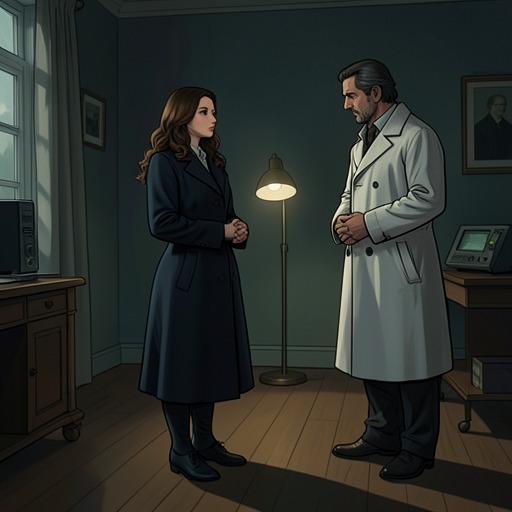
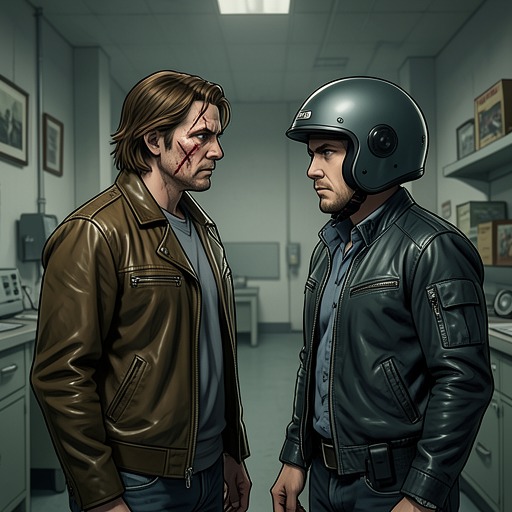
Robin and Abigail stop outside a general store in Temple. It is run by Calhoun, a former Family rider who lost a leg in a raid and used his decommission pay to buy the shop. His Family connections have helped him drive away anyone else trying to open a general store, making the business part of Temple’s existing power structure. Inside, Brall’s presence immediately changes the character of the stop. Abigail identifies him, and Robin enters with no certainty about what will happen.
Robin expects nothing good from Brall. She hopes to move around the store and gather what she needs before he finds the will to speak to her. Instead, he approaches at once, displaying a confidence that leaves her little time to settle into her cautious plan. Robin manages only a small greeting. The gap between her apprehension and his assured approach sets the scene’s first tension: she anticipates an encounter she cannot control, while Brall behaves as though the conversation will proceed on his terms.
A Sudden Change in Desire
Brall’s approach becomes physical when he places a hand on Robin’s shoulder. Its size and roughness make her acutely conscious of how small she feels beside him—smaller, she thinks, even than she had felt beside Troy. His hand moves down her body, fingers catching at the skin exposed through holes in her dress. The contact does not simply heighten her alarm: Robin suddenly wishes she were dressed in her best clothes, as though impressing Brall has become more urgent than the caution that brought her into the store.
That reversal gathers speed inside her. Robin begins imagining that Brall might take her away and make her his woman, bride, and everything; the thought of bearing his children overwhelms her, even as she registers how abruptly these desires have taken hold. When she tells him she wants him, the words arrive before she can weigh their consequences or consider how her conduct might reflect on the women of the Family. For once, she acts without running through the rules and judgments that ordinarily restrain her, and declares that she does not care who knows. The encounter’s decisive turn is therefore not merely that Brall touches her, but that Robin experiences desire as an impulse powerful enough to break through her habitual calculation.
Physical Escalation and Mutual Declaration
Brall responds to Robin’s declaration with a rough kiss. His size and strength, which had first made her feel unusually small, now intensify her attraction: the narration emphasizes that she loves his bulk and the force of his presence. Robin then drives him against the back of the store. The reversal makes her intention unmistakable; Brall appears to think she is resisting him, but she is instead initiating a sexual encounter.
Robin performs oral sex on Brall, and the narration presents her response as intensely pleasurable and freely given in that moment. She takes him into her mouth without ceremony, while Brall’s reaction—his voice shuddering as he invokes the Lord—briefly makes him seem vulnerable beneath his imposing confidence. The scene thus shifts the encounter from a one-sided approach to reciprocal physical action: Brall first touches her, but Robin soon acts with a decisiveness that surprises even herself.
Afterward, Robin asks whether it is all right for her to feel what she feels and whether Brall feels it too. He confirms that he does, then tells her, “I love you. I want you to be mine.” Robin answers, “I am yours. I love you too.” Her response is not presented as a lie: she believes she means it more deeply than anything she can remember saying. Yet that sincerity coexists with her conviction that their words cannot last. The encounter therefore closes on both a mutual declaration and its anticipated fragility, making the beginning of their attachment carry the shadow of an ending from the outset.
The Promise and Its Foreclosure
The encounter’s emotional conclusion turns on a contradiction Robin cannot reconcile. She means her declaration of love, and understands it as more sincere than anything she can remember saying; at the same time, she knows that the feeling cannot be made to last. The scene therefore refuses to make sincerity a guarantee of permanence. Its promise is genuine in the moment, while its ending is already present in Robin’s awareness.
That split gives the encounter a significance beyond the start of a romance: attachment arrives with both conviction and foreknowledge of loss. Robin does not withdraw her words or dismiss them as false. Instead, the chapter closes with love and impossibility held together, leaving the relationship’s intensity inseparable from its anticipated failure.