Texas Panhandle
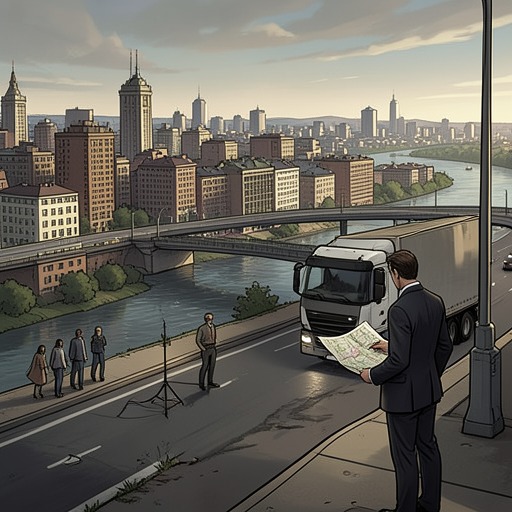
Gang Up: A Bikerland NovelTexas Panhandle is the broadest territorial frame for the Family’s authority and the surrounding wasteland’s political economy. Nearly the size of the entire Texan panhandle, the Family’s region contains several towns and depends on the strength of its central leadership, while Temple stands out as a rare fertile enclave in a world scarred by radiation, famine, and demographic collapse. The location is therefore not merely a backdrop: its land, routes, population, and water make it the material prize around which power is organized.
A Scarce Fertile Region
Temple is described as a battleground and as fertile ground in a land where almost no fertile ground remains. Its soil supports farming, and its relative abundance also makes it valuable for commerce. The same concentration of resources attracts trade in drugs and guns, giving the region an importance that extends beyond subsistence. Brall sees Temple as fertile in every sense relevant to postwar power: productive land, commercial opportunity, and a market for the goods through which a gang can expand its influence.
The region’s fertility is sharpened by the conditions beyond it. Radiation and terror have made ordinary life physically difficult, while the Long War has devastated the human population; Robin has heard estimates that as many as ninety-five percent of people disappeared. In that setting, control of safe crops and habitable settlements becomes a question of survival as well as sovereignty. The Family’s ability to hold towns together rests on this uneven distribution of safety and abundance.
Family Administration and Extraction
The Family’s rule across the region combines territorial command with economic extraction. Titus had directed decisions about whom to attack, whom to trade with, and where to fortify or retreat, and the scale of the territory made those choices consequential across multiple towns. Sandra managed the logistical side of the same system, ensuring that warriors were fed and supplies delivered while administering the distribution of women within the Family’s patriarchal order. Leadership thus appears as both strategy and provisioning: the region survives through decisions about violence, transport, food, and bodies.
The Family is set up to serve all of Temple, earning income through raids on surrounding territories and taking land, loot, and women for trade. Its members receive first choice, followed by the Kin and then ordinary residents who pay taxes. Anyone may live in Temple under the stated rules, but only taxpayers receive the full benefits of protection under Family rule. This arrangement makes security conditional rather than public: protection is offered as a service, and the territory’s inhabitants are sorted according to what they contribute and the rank they occupy.
Currency circulates across the postwar Texas arena in gold, silver, and bronze pieces, allowing the Family’s regional power to operate through recognizable commerce as well as coercion. Taxation, raiding, trade, and protection form a single system. The Family does not simply occupy the Texas Panhandle; it converts movement, settlement, property, and access to safety into sources of revenue.
Military Geography and Crisis
The Texas Panhandle is also organized by the movement of armed groups. Brall commands more than seventy-five soldiers, with another hundred people attached to them as sexual partners, merchants, life-partners, or dependents. Nearly two hundred mouths require discipline as much as food, so Brall trains his followers in formations, attack positions, mock battles, and tactics. The region’s open distances and scarcity make military organization essential: a force that cannot be fed, directed, and kept together cannot hold territory for long.
Family control is made visible through fortified spaces and exclusion. At the Family Compound, guards control entry while a cleared strip about thirty feet wide surrounds the walls. Caravans or wagons occupying that space are confiscated within minutes, and posted warnings justify the action as necessary security. When a crowd gathered outside demanding admission, guards threatened to open fire and ordered people to return home, promising that those permitted to enter would be notified. The surrounding territory is consequently governed through checkpoints, walls, surveillance, and the threat of immediate violence.
The instability of this order becomes literal when an enormous explosion erupts from the south side of the Compound and strikes the wall. The blast transforms the protected center of regional authority into a site of fire and uncertainty, with the garage immediately feared to contain casualties. The event shows how quickly the infrastructure of protection can become the target through which power is attacked.
Water, War, and Territorial Contest
Control of the spring gives the geography an even more basic political center. Brall’s forces attack it near dusk while it is heavily guarded by well-armed Family men. The descending sun blinds the defenders, and surprise gives Brall the advantage. The fight is short and bloody: Brall loses two men, the Family loses five, and the remaining defenders surrender and are chained. They can later be sold back or used as hostages in negotiations, turning captured bodies into instruments of territorial bargaining.
Brall’s limited clemency is strategic rather than sentimental. He wants to rule the people whose spring he has seized, and he understands that removing all their men would make them hostile and leave the conquered settlement less governable. The struggle over water therefore illustrates the broader logic of the Texas Panhandle: military victory is only the beginning, because a successful ruler must preserve the population and the productive infrastructure that make possession worthwhile.
As the war intensifies, the opposing sides agree to meet in open battle outside town rather than continue through sneak attacks and gradual attrition. The decision attempts to convert a dispersed territorial conflict into a decisive contest, with Case’s plan aiming to destroy Brall and end the conflict altogether. The open ground beyond the town becomes a formal battlefield, but the stakes remain control of the settlements, routes, resources, and people spread across the region.
Reorganization Through Alliance
The eventual settlement reorganizes rather than abolishes competing claims to the Texas Panhandle. Brall and the Cauldron take responsibility for trade routes between Temple and Dallas and for connections with any other towns Temple reaches. The Cauldron will also answer military calls when Temple faces hostilities, replacing its previous wandering through the wastes with regimented, regular work. In exchange, its disciplined troops receive access to Compound supplies and lodgings, with drink, women, and sleep provided freely while other goods require payment.
The Family retains Temple’s internal security and control of the town. Its riders continue to search the wastes for new territory, raid abandoned towns and cities for scrap and production materials, and claim the first share of recovered loot. They also remain Temple’s public face to the outside world. The arrangement divides regional functions between a settled security regime and a mobile military-trading force, binding the territory together through specialization rather than a single undivided authority.
The agreement also permits the Cauldron to marry into the Family and receive special preference regarding newly matured Family girls. That provision makes alliance personal and reproductive as well as military and commercial. The Texas Panhandle’s final political shape is therefore built from the same elements that defined its earlier conflicts: land, protection, trade routes, armed force, access to women, and the authority to decide who belongs within the protected center and who remains outside it.