Titus’s Murder
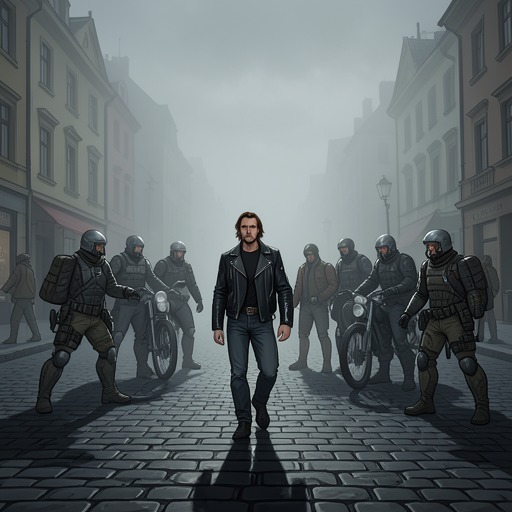
Gang Up: A Bikerland NovelTitus’s Murder removes the leader who had held the Family together and checked Brall’s ambitions in Temple. The killing is treated as murder, but its perpetrator remains unknown in the immediate aftermath. That uncertainty becomes politically dangerous: Case inherits a fragile order, Troy and Sandra accuse one another, and the looming conflict with Brall leaves little time to establish the truth.
Background and Stakes
Titus’s authority rested on more than his position as leader. His strength had kept the Family together, while his confidence gave its different resources a common purpose. Temple mattered to both sides because its unusually fertile ground supported farming and commerce in a wasteland where such land was scarce; for Brall, it also offered opportunities in drugs, weapons, and trade. The rivalry had already been tested repeatedly, but Titus had kept Brall at bay by anticipating his moves and preparing several plans of his own.
The Family’s power was embedded in Temple’s economy and social hierarchy. It raided surrounding territories for land, loot, and people to trade, with Family members receiving first choice, favored residents known as the Kin next, and other townspeople paying taxes for the benefits of protection. The death of the man who had held that system together therefore threatened more than a change in leadership: it exposed the order’s dependence on a single stabilizing figure just as Brall remained a formidable rival.
The Killing and Its Immediate Aftermath
Titus was gunned down in the open street. At his funeral, Case saw his father laid in a grave marked by a tombstone of real granite, more distinguished than the limestone used for many other graves at Temple Cemetery. The cemetery itself had grown far beyond the small plot Titus had begun on a hill. Its graves were overcrowded, and the Family often did not record the deaths of people outside its warrior circle, reflecting the hierarchy Titus had taught them to uphold.
The funeral procession made that hierarchy visible and audible. The Family’s warriors revved their motorcycles for several minutes before riding back to the Family’s Compound. After drinking, they were expected to ride out into the wastes to recover wealth for Temple. The routine continued around Titus’s burial, but his absence changed what the ceremony could not: the Family had lost the leader who had made its power cohere.
Suspicions and the Succession Crisis
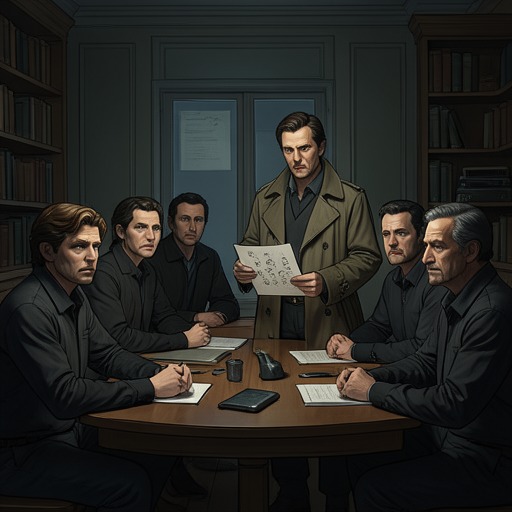
At the Mud Pit, Troy sat at one end of the bar and Sandra at the other. Each blamed the other for Titus’s death. There had been no witnesses, a fact Case regarded with suspicion in a town too small for a killing to leave no one who knew something; those who might have known, he reasoned, could have been paid off, loyal, or dead. The absence of testimony offered no clear answer, only more room for accusation.
Two explanations circulated: Troy might have killed Titus to seize power, or Sandra might have arranged the murder to put her favored stepson in power. Case rejected both possibilities as too distasteful, but he could not dismiss the hostility between them. He and Troy were already at odds over control of the Family, and the conflict had to be settled before Titus’s work fell apart. The peace with the Cauldron was precarious, resting on the fact that neither side had yet shed blood, even in bar fights. Brall’s men were disciplined, and Case knew a war was coming.
Consequences and Significance
Case understood that he would have spent his resources finding the killer if circumstances allowed. Instead, he judged Temple’s social fabric too fragile to leave unattended. He had imagined that, given another two years, he could have brought Brall and the Cauldron under control, quietly removed Troy, and married Abigail. Titus’s death made that timetable impossible: the succession struggle and the threat beyond it arrived before Case had consolidated power.
The murder thus opens a crisis without supplying an immediate resolution. Titus’s death is certain, but responsibility is contested; the Family’s old cohesion is gone, while its rivals remain organized. Brall’s later assault on the spring, where the Family loses five men and the Cauldron two, demonstrates the military stakes of the disorder. The eventual arrangement gives the Cauldron responsibility for trade routes and support against hostilities, while the Family retains Temple’s security and control. Against that later settlement, Titus’s killing marks the point at which the balance he maintained gives way to a struggle over how power will be shared.