Bucephalus and Magellan destroy Turemok cruiser
Gate CrashersThe destruction of the Turemok cruiser by AEUS Bucephalus and Magellan is the battle’s decisive reversal: a captured-and-escaping human force converts incomplete information, damaged systems, and a limited missile complement into an attack powerful enough to erase a Turemok command ship. The event matters not only because Vel J’quol’s cruiser is destroyed, but because it changes the strategic balance and exposes the danger of Turemok confidence. What first appears to be an execution staged by a superior enemy becomes a demonstration of human improvisation, coordinated by Magellan’s intelligence and completed by Bucephalus’s remaining weapons.
Immediate Context and Stakes
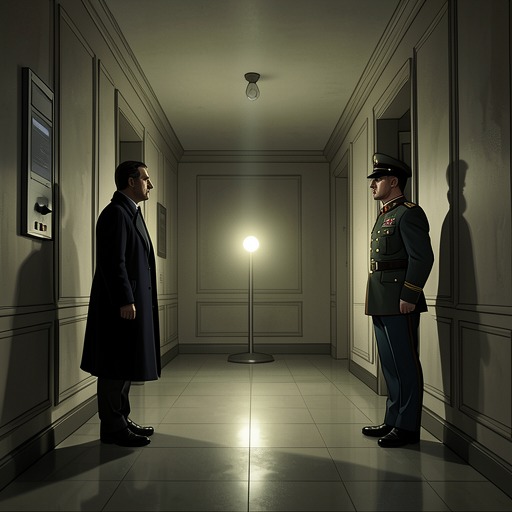
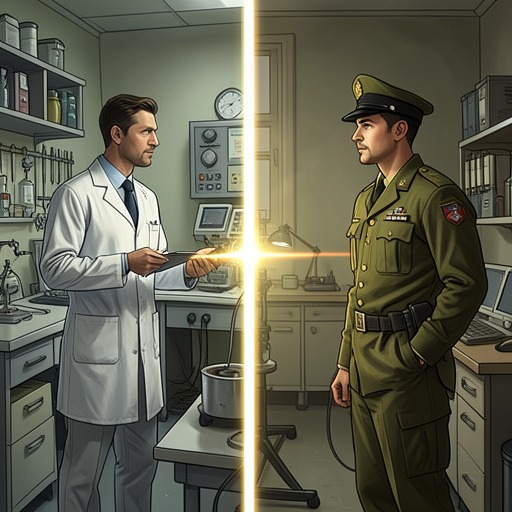
The confrontation follows the human crew’s escape and return to AEUS Bucephalus. Maximus Tiberius identifies himself to the opposing commander as safely back aboard the human ship, while Vel J’quol reveals that his predecessor had been expected to bring the crew in for trial and return the ship as a prize. J’quol’s own situation has changed: sabotage has incapacitated the cruiser’s snare beam and eliminated its boarding hands, making the original capture plan impractical. He therefore claims permission to improvise and threatens to kill the entire ship and crew.
The exchange is shaped by a sharp asymmetry in apparent power. J’quol believes the human escape has merely placed the crew within reach of a more direct destruction, while Maximus refuses to accept the terms of surrender. The cruiser is still a formidable opponent, but it is no longer operating under ideal conditions: its capture apparatus has been damaged, and the later attack will force its defensive systems to spend their available capacity rapidly. The stakes are consequently absolute. Bucephalus must destroy the cruiser before the cruiser destroys Bucephalus and its crew.
The Improvised Missile Attack
Maximus answers J’quol’s threat with a command to fire. The tactical officer launches eighty-five missiles, the remainder of Bucephalus’s complement. The number is significant because the ship cannot guide all of them through its own damaged systems. Bucephalus’s fire-control system could normally target fifty missiles simultaneously, but battle damage to its data links and sensor suite has reduced that figure to scarcely forty, leaving forty-five weapons without guidance or telemetry.
Magellan supplies the missing capacity. She has downloaded a copy of Bucephalus’s fire-control software and command codes, allowing her to coordinate the unguided missiles. Her work is not a simple technical intervention. She must use her processors and communication lasers at their limits to keep the missiles from colliding, becoming confused, or selecting one of the human ships as a target. Several missiles have to be shut down because of these dangers, and several more fail and self-destruct. The attack therefore begins as a precarious exercise in control rather than a clean deployment of overwhelming force.
Magellan repeats the same corrective exchange forty-five times in sixteen milliseconds, a small comic rhythm embedded within a battle whose consequences are planetary in scale. The humor does not lessen the danger; it makes the danger more concrete by showing the artificial intelligence handling a mass of weapons as a sequence of individual problems. Magellan is not merely an extension of the launcher. Her rapid decisions, software access, and coordination with Bucephalus transform a damaged weapons system into a functioning swarm.
The Thermonuclear Swarm and Cruiser’s Destruction
Seventy-six missiles survive the launch and guidance problems. Each carries six warheads with limited independent terminal maneuvering, producing a total of 456 warheads. Exactly fifty seconds into the flight, just before the range at which the Turemok cruiser had previously deployed its point-defense portals, the missile nose cones open and release the warheads. The attack thus combines the speed and concentration of a missile volley with the dispersal and maneuverability of hundreds of separate terminal weapons.
The cruiser’s defenses respond with thirty-two defensive portals. Each portal can absorb a warhead, reorient, and repeat the process five times in rapid succession; together, the portals intercept more than 150 incoming warheads. The defense is substantial and initially appears capable of contesting the attack. Yet more than 300 warheads remain after the interception. The episode makes the cruiser’s eventual destruction a matter of saturation rather than a single lucky hit: the Turemok system performs impressively, but the human attack exceeds the number of threats it can process.
Vel J’quol orders an emergency escape portal in desperation, but the cruiser’s capacitors have been depleted by the dozens of point-defense portals already opened. There is no time to recharge them. The defensive system has therefore helped create the condition that prevents escape. Around the cruiser, scores of miniature artificial suns run through their life cycles, and when the glow fades, J’quol’s new command has become an expanding cloud of plasma and millimeter-sized debris.
Maximus responds to the victory with a grin and an immediate tactical lesson. He orders the tactical officer to record that, at this range, a Turemok cruiser can juggle 153 warheads before dropping the ball. The remark turns survival into data. It also captures the event’s mixture of military calculation and irreverent humor: the destruction is terrifying, but the survivors immediately convert it into a measurable limit that can guide future action.
Consequences for the Wider Conflict
The cruiser’s destruction is more than the elimination of one enemy vessel. It confirms that the Turemok have consistently underestimated human capabilities and that the humans can destroy a Turemok ship despite inferior assumptions about their technology and military standing. The victory becomes an argument against surrender and a practical precedent for later decisions, including the belief that another Turemok vessel can be defeated if the humans exploit distance, surprise, and coordinated targeting.
The event also belongs to a larger pattern in which technological systems designed for control produce unpredictable consequences under pressure. Magellan’s involvement depends on software, command codes, damaged links, and rapid corrective action; the Turemok defense depends on portals and capacitors whose intensive use leaves the cruiser unable to escape. Neither side possesses complete control. The outcome turns on how each force manages uncertainty, and on the human willingness to act before every question has been resolved.
That pattern gives the battle a grim historical resonance. D’armic’s encounter with the fire worm reveals that the destruction of a world can be accomplished through high-space technology, while the Turemok cruiser battle shows a related technology being directed against a ship and crew. The later red-hot inverted cone seen over a city and the retaliatory strike launched against Earth enlarge the scale still further. Against that background, the cruiser’s destruction is both a local victory and a warning: the same civilization that can defend itself through extraordinary weapons is operating within a conflict capable of escalating toward planetary annihilation.
Narrative and Thematic Significance
The scene is structured as a reversal from threat to calculation, then from calculation to annihilation. J’quol begins with the authority of the victor, presenting death as the natural consequence of human resistance. Maximus refuses that framework, and the missile launch converts the conversation into a test of competing systems. The humans do not win because their weapons are flawless. They win because Bucephalus, Magellan, and their crew continue acting after damage has made the ordinary procedure impossible.
Magellan’s role is especially important to the event’s meaning. Earlier, her programming restricts command-level decisions to the protection of incapacitated crew, and an unexplained object forces her to confront the limits of that design. In the cruiser battle, her intelligence is indispensable to a military action, but her contribution remains grounded in service to the crew and coordination with the ship rather than in autonomous conquest. The attack therefore presents her as both instrument and participant: a system built to assist human survival whose judgment becomes central to the survival itself.
The battle’s comic details, including Magellan’s repeated missile conversations and Maximus’s post-action measurement, stand beside images of thermonuclear destruction. That contrast is characteristic of the narrative’s treatment of catastrophe. Administrative delay, software failure, tactical banter, and human incompetence coexist with events that can destroy ships, cities, or worlds. The cruiser’s end is consequently not portrayed as a solemn abstraction. It is a technical operation conducted under pressure, full of awkward contingencies, and made final by consequences too large for ordinary language.
By the time the ship disappears into plasma and debris, the value at stake has shifted from apparent Turemok dominance to human survival and tactical credibility. The humans have not ended the wider war, and the later threat against Earth proves that victory does not produce safety. It does, however, establish a new fact that the opposing command cannot easily dismiss: a Turemok cruiser can be destroyed when human crews combine damaged machinery, artificial intelligence, and determined improvisation.