Kōkūken Sōgenki
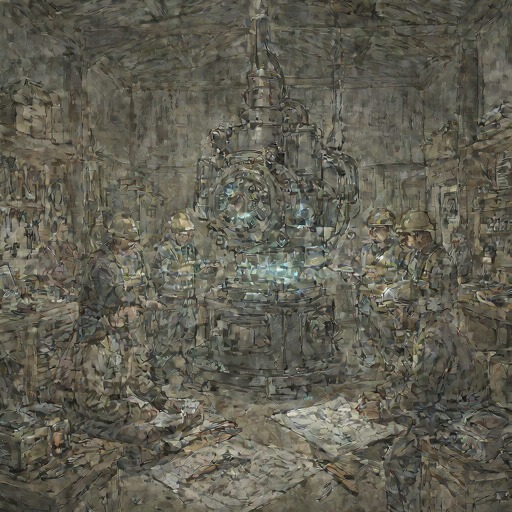
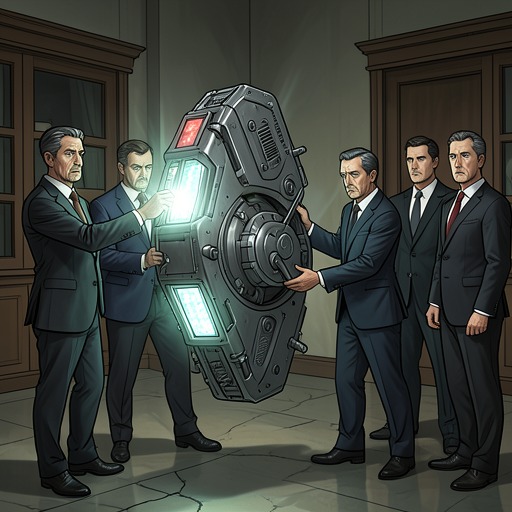
Gate CrashersThe high-space generator is the prototype propulsion and portal-making technology at the center of humanity’s breakthrough into high-space. Its importance is both practical and forensic: it permits ships to cross otherwise impossible distances, yet its capabilities and limitations later become the strongest physical evidence separating the human vessels from the force responsible for the destruction of Culpus-Alam, Okim, and Kulla.
Prototype Technology and Human Reach
The generator is installed aboard the Bucephalus, humanity’s first high-space-capable ship. Allison Ridgeway makes clear that the Bucephalus is not one vessel among a mature fleet of such craft but a prototype; Magellan lacks high-space technology entirely, and humanity has no additional ships capable of operating through high-space portals. This scarcity gives the generator an unusual strategic weight. It is simultaneously a transport system, a symbol of technological precedence, and a single point of failure for humanity’s interstellar reach.
The contrast with the Quantum Entanglement Radio is important. The QER can send messages instantly across any distance because entangled particles imitate one another’s behavior without a conventional signal traveling between them. The high-space generator serves a different purpose: where the QER collapses distance for communication, the generator makes physical transit possible. That distinction governs the crisis near the end of the novel. Eugene Graham’s attempt to warn Earth depends on reaching a QER, while the Bucephalus’s generator determines whether the human ships can move rapidly enough to respond to an approaching warship.
A Device Shaped by Scarcity and Risk
The generator’s strategic value also makes the Bucephalus vulnerable. When D’armic insists that immediate action is necessary, the plan depends on getting the Bucephalus’s reactor burning hydrogen again. The generator cannot simply be treated as an abstract scientific achievement; it is tied to a ship whose power system may not be ready for another emergency maneuver. D’armic must consult Maximus Tiberius and his superiors, but those discussions are secondary to the immediate engineering problem: without a functioning reactor, the prototype’s theoretical capability cannot become practical escape or intervention.
Communication around the generator is correspondingly cautious. When an unidentified presence appears near a high-space window, Maximus Tiberius orders Magellan contacted, directs the ships to use QER communications only, and requests a sensor link while maintaining radio blackout between them. The Bucephalus can share its sensor data through the QER, but the exchange is reduced to text because the linked feed consumes most of the advanced system’s bandwidth. The episode shows that high-space travel does not erase older technological constraints. Portal access, reactor power, sensor coverage, bandwidth, and secrecy remain interdependent conditions of survival.
The Generator as Physical Evidence
The generator becomes most consequential during the Assembly hearing into the planetary destructions. D’armic argues that the human vessel Bucephalus is physically incapable of creating high-space portals of the size that destroyed Culpus-Alam, Okim, and Kulla. The claim is not a matter of intention or political sympathy; it rests on the material limits of the prototype. A machine built to open passages of one scale cannot be blamed for catastrophes requiring a vastly larger aperture.
That argument redirects suspicion toward the patrol cruiser commanded by the deceased Vel Noric. The hearing’s political pressure is severe: Ruckk rejects the implication that a Vel ordered geocide, while D’armic answers that disbelief cannot alter the physical evidence. The generator therefore enters the Assembly not merely as equipment but as a witness. Its engineering limits challenge the official explanation that humanity caused the destructions and expose how technological assumptions can be turned into accusations, defenses, or attempts at suppression.
Allison Ridgeway reinforces the distinction between the two human ships. Magellan has no high-space technology, while the Bucephalus is humanity’s prototype. This fact sharply narrows the possible chain of responsibility. If Magellan cannot create high-space portals at all and the Bucephalus cannot create portals on the destructive scale in question, then the human fleet lacks the demonstrated means for the alleged planetary crime. The generator’s insufficiency becomes exculpatory evidence.
Communication, Pursuit, and Political Consequences
The generator’s role extends beyond movement and courtroom proof because it structures the novel’s emergency communications. The Assembly does not know that humanity possesses the QER, so Eugene Graham cannot safely transmit instructions by ordinary radio; intercepted instructions could reveal the human advantage or allow the warning to be blocked. Ridgeway sends Eugene back alone so he can reach a QER and warn Earth that a warship is approaching. The generator and the QER thus form complementary technologies: one enables high-space movement, while the other enables secure instantaneous warning.
The stakes attached to this technological asymmetry are extreme. If the evidence cannot establish mutual innocence, a Turemok fleet will enter the Human Wildlife Preserve, destroy Earth, and impose a generation-long sequestration on each human colony world. The generator is consequently part of a larger network of devices, ships, sensor logs, and communications systems through which survival depends on proving what machines can and cannot do. Its physical limits do not merely settle an engineering question; they determine whether an entire species is treated as a geocidal aggressor.
Narrative and Thematic Significance
The high-space generator embodies the novel’s recurring movement from unexplained anomaly to usable knowledge. Earlier discoveries repeatedly resist ordinary categories: Magellan encounters a sixteen-meter object that is not on any course; sensors detect localized fuzziness without mass or energy; a sealed sphere appears to contain another dimension; and an apparent radio transmitter proves to be emitting radio waves only as a by-product of a larger, hidden process. The generator belongs to the same pattern of technological estrangement. What first appears to be an extraordinary capability must ultimately be understood through concrete limits, energy requirements, and observable effects.
Its narrative significance lies especially in the contrast between power and control. High-space technology seems to promise freedom from distance, but the prototype is rare, reactor-dependent, bandwidth-constrained, and politically dangerous. It can carry humanity into a wider civilization while simultaneously making humanity’s actions legible to hostile investigators. In the Assembly hearing, the generator’s greatest contribution is not the ability to open a portal but the inability to open one large enough to destroy a planet. That negative capability—what the machine cannot do—becomes the foundation of the human defense.