
The Town, the Sawmill, and the Family Trees
Gente que viene y ¡Bah!The sawmill dispute connects family property, environmental campaigning, public protest, and a later plan to create a new forest-based livelihood.
increasing Bearing strength in each event
 decreasing
Bearing strength in each eventdecreasingA Forest Becomes an Issue
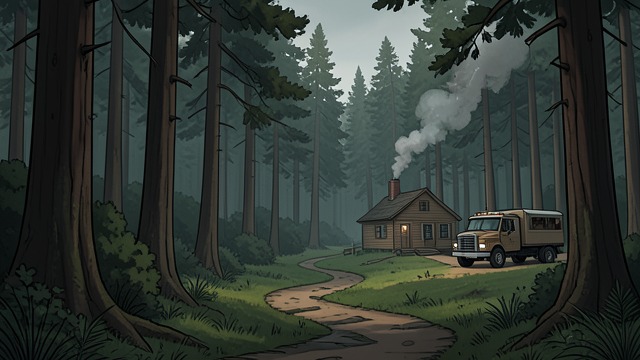
A landscape with competing uses
The sawmill expands
Irene describes the biomass factory and the planned electricity plant near the Andrada sawmill. The proposal depends on organizing private and public woodlands and on planting forest crops for future use.
Competing values
She sees jobs and renewable power; Débora sees the risk of stripping the forests. Bea is still learning the details and initially treats the dispute as one more issue outside her own heartbreak.
The novel grounds the political conflict in a place people inhabit and remember. Trees are not simply fuel or scenery; they are tied to ownership, livelihoods, identity, and trust.
A Protester in the Family
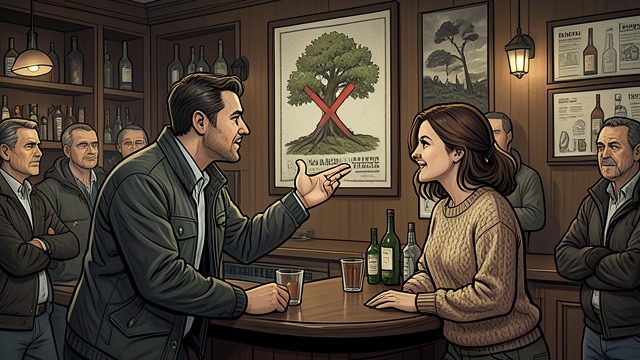
Environmental politics enters daily life
Pacheco’s opposition
At Bar Caribe, Bea sees anti-plant posters and argues with Pacheco, who has become a local journalist and opponent of the project. Their disagreement mixes environmental claims with personal history and mockery.
The campaign grows
Pacheco says he intends to publish widely and believes the project will not be built. Bea defends Irene’s development plan without yet knowing how deeply she will become involved in the conflict.
The scene introduces activism as a local social world rather than a distant political debate. It also shows how arguments about public policy are conducted through friendship, reputation, and neighborhood loyalties.
The Family Wood Is Sold

A private project meets a public operation
The mistaken claim
Bea believes workers are cutting trees on her family’s land without permission and threatens to stop them. Her siblings climb trees, and the dispute escalates into a confrontation with the Guardia Civil.
Ownership changes the result
Diego shows Bea that her father sold the wood from Monte de la Estrella months earlier. The family protests a legal extraction, and Bea must admit that her assumed right to the trees was mistaken.
The failed protest does not settle whether the larger plant is wise. It shows instead that the legitimacy of any campaign depends on accurate facts as well as deeply held convictions.
The Controversial Energy Contract

A project under scrutiny
Rebeca’s questions
Rebeca investigates the plant’s supply chain, emissions, transport, and promised employment. She also reveals a revised agreement that allows cheaper pollution-control equipment and higher emissions.
Trust falls away
Irene says the change was within legal limits and might have been an acceptable compromise, but she had not reviewed the final terms before the interview. Diego’s effort to secure investment has weakened the credibility of the project and of its political sponsor.
The controversy is not resolved by deciding that renewable energy is automatically good or bad. It requires attention to actual specifications, costs, oversight, and who is asked to bear the environmental risk.
From Fuel to Shelter
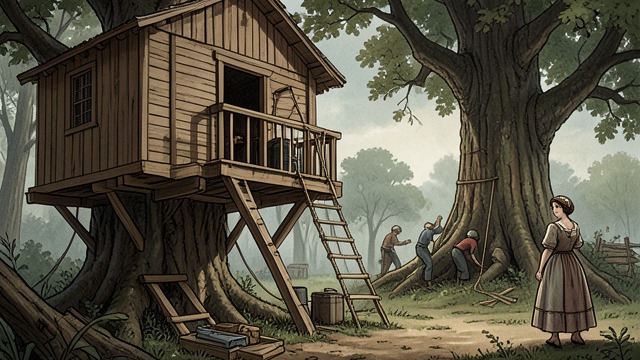
A new forest enterprise
A different proposal
After Emerge abandons the power project, Diego and León plan a treehouse hotel in a chestnut grove. The idea uses the woodland to support visitors and architecture rather than feeding an industrial plant.
Bea’s role
Diego invites Bea to design the project, beginning with Diana’s treehouse. The new plan gives the family a possible source of work and gives Bea a reason to return to the landscape she had once lost.
The alternative is not presented as a complete answer to the town’s economic needs. It does, however, show that development can take more than one form and that a failed plan need not exhaust a place’s future.
During Bea’s conversation with Irene on the roof
At Bar Caribe during Bea’s first night out
During the confrontation at the logging site
Before the regional television program airs
Four months after the plant fails
