Óscar Is Diagnosed with Achondroplasia
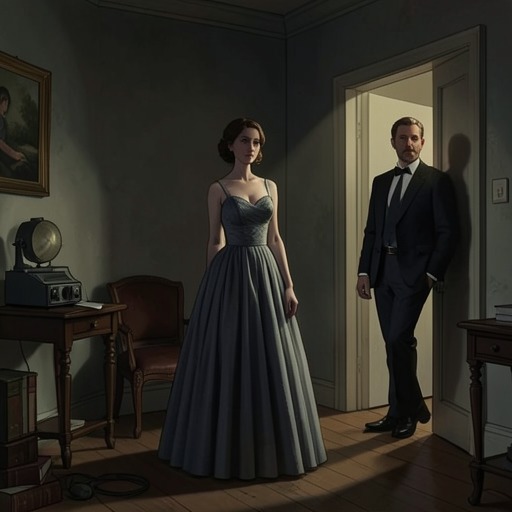
Gente que viene y ¡Bah!Óscar Is Diagnosed with Achondroplasia is a family revelation in which the diagnosis itself is quickly overtaken by the question of why Juan was not told. When Juan learns that Óscar has achondroplasia, he is confronting both an unexpected account of his child’s future and the claim that the condition was diagnosed at birth. The scene turns a medical disclosure into a crisis of trust: Juan seeks an explanation for the silence, while Débora and the others face his distress without resolving what he believes has been hidden.
The News at Home
The disclosure follows an ordinary return home. Bea and her sister have been bargaining over a purchase, with Bea aware of their strained budget and the money already taken from the joint account. At home, the change in atmosphere is immediate: Juan is in the kitchen with red eyes, and Ángela looks troubled. Juan tries to explain what has happened but cannot initially get the words out. Ángela says Óscar is not sick and asks them not to wake him; Juan answers that what is wrong is worse.
Bea does not understand his first description. To her, calling a baby a dwarf sounds absurd: Óscar is an infant, not someone whose adult stature can be inferred from his present appearance. Juan then names achondroplasia and gives the estimate that Óscar may grow to only about 1.10 or 1.20 metres. The exchange records the distance between the diagnosis as Juan has received it and Bea’s immediate, uncomprehending response. What is an established medical fact to him has not yet become intelligible to the rest of the family.
A Diagnosis Already Made
Juan says the diagnosis came from Óscar’s pediatrician, not from Ángela. More consequentially, the pediatrician had reportedly identified achondroplasia when Óscar was born. Juan therefore understands the news not as a newly discovered condition but as information withheld from him for months. The pediatrician’s account gives the scene its sharp reversal: the uncertainty concerns not whether the diagnosis was made, but why Juan was not told when it was.
Juan connects the silence to Débora’s earlier behavior. He asks why she would not let him bathe Óscar and recalls Bea remarking that the baby’s head seemed very large and that he looked frail. Bea says her observation was a thoughtless guess, not knowledge; she insists she knows too little about babies to have recognized a condition. Even so, she feels guilty without understanding what she has done wrong. Her response shows how the diagnosis begins to reorganize earlier family moments: remarks and acts of care that had seemed ordinary are retrospectively treated as possible signs that someone knew more than they admitted.
Confrontation and Competing Explanations
Débora challenges the source of the diagnosis, asking whether Ángela made it. She accuses their mother of interfering and of letting her feelings lead her into mistaken conclusions. Juan rejects that explanation and returns to the pediatrician’s report. His anger is directed less at Ángela’s sensitivity than at Débora’s failure to tell him, and his questions turn repeatedly on the same absence: why did she say nothing when he returned from Turkey?
Débora answers that Juan should not have gone while she was close to giving birth. Juan counters that he was needed there after an earthquake and could not schedule the disaster around the expected date; Óscar arrived early, and Juan says he is not to blame for that. The exchange sets two grievances beside one another without settling either. Débora invokes his absence at a vulnerable moment; Juan defends the obligation that took him away and argues that the early birth does not justify keeping the diagnosis from him afterward.
When Juan calls the situation strange, he clarifies that the concealment is what he cannot accept. He wonders whether achondroplasia is genetic and treats that possibility as a reason Débora must be hiding another explanation. Bea follows his suspicion to its implication: he may believe Débora had sex with a dwarf. She finds the suggestion nearly impossible to credit, but her disbelief does not answer Juan’s demand for an explanation. The scene presents this as his suspicion, not as a confirmed account of Óscar’s parentage or of Débora’s conduct.
What the Revelation Leaves Open
The episode ends with Juan still asking Débora to tell him the real reason, convinced that the unanswered questions are making him lose his grip on events. No reconciliation or explanation is supplied in this scene. The diagnosis is clear, as is the pediatrician’s reported timing; what remains uncertain is why Débora kept it from Juan and whether his speculation about a genetic cause has any basis beyond his own attempt to explain the silence.
The event’s force lies in that distinction. Achondroplasia changes the family’s understanding of Óscar’s physical development, but the immediate rupture concerns knowledge, responsibility, and trust between his parents. The discussion of his expected adult height is concrete, yet the scene is organized around the missing conversation: a diagnosis made at birth, a father who says he was away when the baby arrived early, and a family suddenly rereading earlier interactions as evidence. Because the scene withholds a definitive answer to Juan’s accusation, it establishes a crisis rather than resolving one.