Chestnut Grove Logging Dispute and Family Arrests at the Protest
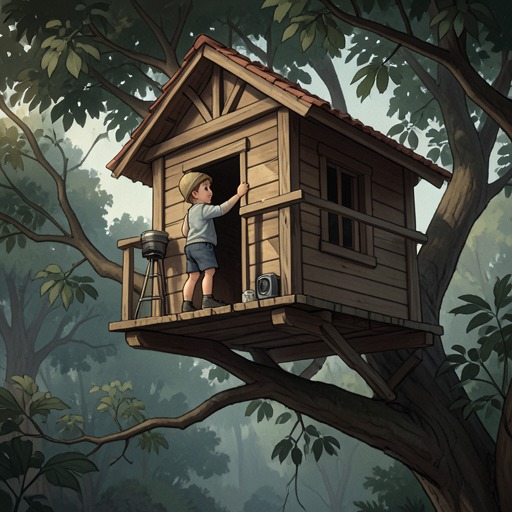
Gente que viene y ¡Bah!The Chestnut Grove Logging Dispute and Family Arrests at the Protest turns Bea’s treehouse project into a direct confrontation with logging operations and the San Esteban Biomass Plant. What begins as an attempt to protect the chestnut where she is building becomes a family protest, an arrest, and a reversal: the trees Bea believes are hers have already been sold by her father. By the time she accepts the legal position, the grove—and the tree carrying her unfinished project—has been felled.
The grove under threat
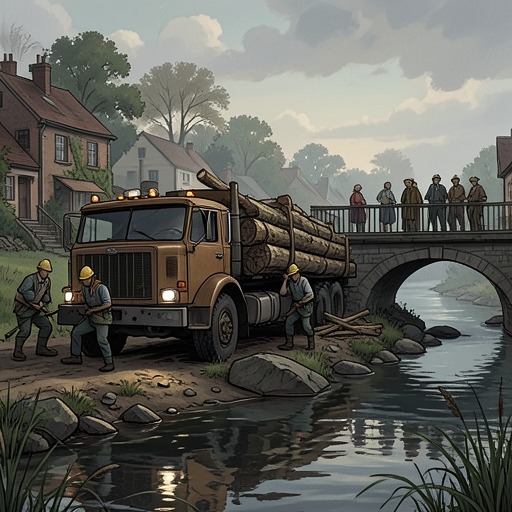
The conflict begins when the forest track leading to the chestnut grove and Bea’s treehouse is blocked by logging trucks. Bea and the others have to continue on foot for roughly four or five hundred metres. Asked why so many trucks are there, someone answers that they have come to load timber. Bea’s alarm sharpens into urgency as she realizes the operation is not limited to removing dead trees: excavators are pulling up rotten chestnuts while workers use chainsaws on living ones, including the tree she has chosen for her house.
Bea runs toward the work until she is nearly unable to breathe. She tries to stop a chainsaw operator by standing in front of him and gesturing for him to halt. Once he removes his hearing protection, she insists that the tree is private property and hers, pointing to the boards she is using to build the house. The worker counters that the trees belong to the sawmill. The dispute is therefore not simply about whether logging is happening, but about competing understandings of ownership: Bea sees a family tree and the foundation of a personal project; the workers act on the basis of a timber purchase that gives the sawmill rights to extract the wood.
Protest and confrontation
Bea identifies Diego Ariza as the person behind the order and demands to see the contracts. The worker confirms that Diego is the boss and that the instruction comes from him. Furious, Bea threatens to pursue the matter and tells Débora to contact the association that chains itself to trees and opposes the plant, bringing its members and the press to make as much noise as possible. Débora hesitates because she does not want to be seen, especially by the press. Bea nevertheless directs her and León to climb separate trees and protect them, while she leaves for the sawmill to confront Diego.
At the San Esteban Sawmill, Bea’s anger remains the force carrying her forward. She has spent the drive feeding it with thoughts of retaliation, determined to confront Diego over what she regards as his destruction of her plans and his refusal to wait until she had finished her own treehouse. At reception, the receptionist begins to telephone Diego. Bea takes the phone from her and tells him that she is the woman whose life he has just ruined, then orders him to come down. The confrontation brings her face to face with evidence that unsettles her certainty: the contract says that Bea’s father sold the trees to the sawmill seven months earlier. Timber suitable for lumber would be used and paid for at an agreed price; the remaining wood would go to the biomass plant. Bea admits that she was not planning her treehouse seven months before.
The contract changes the grounds of the dispute. Bea had treated the tree as private property that the workers had no right to cut; the document shows that her father had already transferred the trees and the right to extract them. That does not undo the loss or make the decision emotionally trivial, but it forces Bea to acknowledge that the protest cannot be defended on the ownership claim she had made at the grove. Her determination to mobilize opposition also meets Débora’s reluctance to attract attention, leaving the family protest less unified than Bea’s initial urgency demands.
Arrests and the loss of the treehouse
While Bea is away, the Guardia Civil orders the protesters down from the trees, arrests them, and allows the logging to resume. Débora calls to tell Bea that they have been removed and detained; León is fighting with Jacobo, who is putting him in handcuffs. The report makes the personal and public conflicts collide: the arrest involves Bea’s siblings, while León’s struggle is also entangled with his relationship with Jacobo. Bea’s attempt to stop the saws has not protected the trees, and the family’s physical presence has instead brought them into custody.
When Bea returns to the grove, her fear that the trees will already be gone proves correct. The chestnuts lie cut down, including the one where she had been building her house. The construction had been under way for only a few days, yet its destruction feels to Bea like the demolition of a finished building. She compares the loss to imagining a future with someone and then watching that possibility disappear. The treehouse had become a project in which she had placed her hopes, and one that had helped her through the weeks after her cancelled wedding. Its removal therefore takes away more than a physical structure: it destroys a source of purpose and anticipation at a moment when Bea already feels bereft.
The detention scene preserves the protest’s disorder rather than turning it into a simple victory. León shouts insults at the Guardia Civil and the workers, while Jacobo stands apart, distressed, embarrassed, and angry as he refuses to listen to León’s protests. Bea, meanwhile, tells her family that they will not take the matter to court or the press and that they must forget it because the trees had been sold to their father’s buyer. León objects that they could still go to the courts and the media, but Bea’s answer is shaped by what she has learned from the contract: the ownership basis for her demand has collapsed.
Release and aftermath
The siblings are eventually released. Bea tells Jacobo that no charges are being brought and that he can let them go; after speaking with the Guardia Civil officer, he gets the confirmation and tells the detained siblings that their sister has secured their release. Débora protests that there had been no grounds to charge them, and Bea asks her to let the matter rest, pointing out that they could otherwise have spent the night in the cells. Release ends the immediate legal danger, but it does not restore the grove or settle the emotional consequences of the protest.
The episode turns Bea’s confidence into a more painful recognition. She first confronts the logging as though force of conviction could establish her right to the trees; the signed contract defeats that claim, while the return to the flattened grove confirms that her project cannot be saved by arriving at the sawmill or mobilizing her family. The sequence’s final contrast is stark: the family succeeds in getting out of custody, but the treehouse’s chosen tree is gone. The arrests are temporary; the loss that gives the dispute its meaning is irreversible.