Emerge–Andrada Family Contract
Gente que viene y ¡Bah!The Emerge–Andrada Family Contract is the pivotal document linking the biomass project’s promise of jobs and green energy to a political crisis, a dispute over pollution safeguards, and the collapse of Diego’s business prospects. Its significance lies not only in what its revised terms allowed, but in how its contents and handling became contested: Irene had the revision on her desk without having read it, the public learned of it through a hostile television interview, and Emerge ultimately withdrew after the controversy became impossible to contain.
Purpose and contested promise
The contract belongs to a project Irene initially defended as a route to clean, affordable energy and employment. She described the factory as a source of pellets for heating and supported the plans through the municipal government, arguing that the larger undertaking could produce electricity for fifty thousand people. In her account, the project could use otherwise unwanted forest wood, reduce dependence on fossil fuels, and bring work to the region. She presented development and the preservation of trees as compatible rather than mutually exclusive goals.
That promise was already politically divisive. Irene said the town had split between supporters and opponents, and that she was being denounced as a traitor to Cantabria for not prioritizing the trees. The contract therefore carried more than a commercial arrangement between Emerge and the Andrada family: it stood within a public argument over what counted as environmental progress, who would benefit from the project, and what costs its supporters were prepared to accept.
Allegations and the revised terms
The project’s political vulnerability was sharpened by a newspaper report shown to Bea by Pacheco. It alleged that Irene had threatened two landowners with expropriation if they refused to sell their trees to the biomass factory. Pacheco also said Irene’s former husband was providing him with information. The report placed the project amid allegations of coercion, though it did not itself establish the contract’s revised pollution terms.
Those terms surfaced during a television interview with Irene. The presenter challenged the project’s environmental claims by raising questions about the emissions from transporting forest material by truck, the waste left after combustion, carbon dioxide, and the scale of woodland needed to supply a power plant. She also questioned whether comparable plants were economically viable and whether their promised employment had materialized elsewhere. The interview moved from the plant’s practical and environmental claims to the political arrangements behind it, presenting the project as a cause for scrutiny rather than as the straightforward advance Irene had promoted.
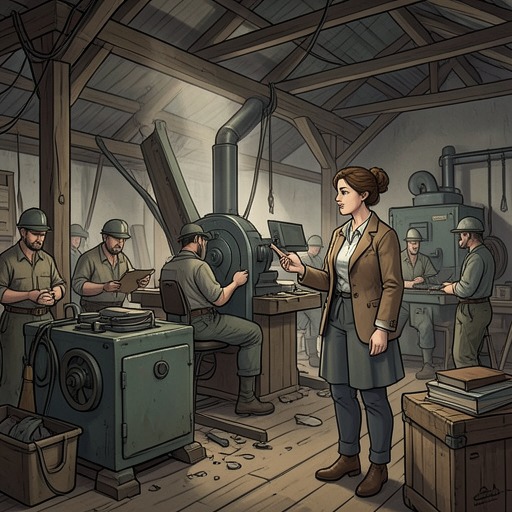
When Irene denied that the pollution parameters had been changed, the presenter showed her a copy of the agreement on an iPad. The revised document made a previously concealed weakness visible: Diego had altered the plant’s specifications without first explaining the change to Irene in person, and Irene did not know what the copy showed. The presenter framed the agreement as evidence that the plant put profit ahead of neighbors’ health and that Irene’s government was supporting and promoting the industry. Irene, caught without the information needed to answer, angrily denied what had just been put before her, further damaging her ability to defend the project.
Irene’s knowledge and Diego’s decision
After the interview, Irene gave Bea a more qualified account of the apparent betrayal. Diego had sent her the contract with the reduction he had proposed, and the document was on her desk, but she had not found time to examine it. He could have explained the change in person; instead, he sent it discreetly and, according to Irene, intended to speak to her later. The interview intervened before that conversation took place. Her account does not erase the fact that she was left publicly exposed, but it changes the meaning of her claim that Diego had acted behind her back: the revision had been sent to her, even though she had not reviewed or knowingly approved it at the time it became public.
Irene also told Bea that, had she known about the reduction, she would still have backed it if that was what it took to secure Emerge’s investment. She considered the resulting emissions to remain within European limits and believed the boiler, safety measures, and controls could be improved over time. In her view, the compromise was a lesser harm than losing the investment. The contract thus records a real conflict within the project’s own support: Irene defended the environmental ambition while accepting weaker interim specifications as the price of making the investment proceed.
Withdrawal and consequences
The exposure of the agreement did not remain confined to the interview. During the mass demonstration, Bea confronted the presenter, hoping the resulting celebrity-news coverage would divert attention from the protest. Her outburst filled a week of entertainment programming and generated heated debates, but it did not displace the demonstration’s message. The protest was reported across the news, and the public attention produced the consequence Irene had feared: Emerge broke its contract with the Andrada family and chose another power plant.
For Diego, the withdrawal meant economic ruin. Bea was uncertain whether he deserved that outcome for having risked Irene’s support, a doubt that underscores how the contract’s collapse implicated both a questionable decision and the fragile financial future attached to the project. As a narrative object, the agreement changes meaning as it passes between settings: first the municipal desk where Irene fails to read it, then the television screen where its revision becomes public evidence, and finally the aftermath in which Emerge’s withdrawal converts political controversy into a personal and business disaster. It embodies the gap between the project’s broad promise of clean progress and the compromises its supporters were willing to make to keep it alive.