San Esteban Biomass Plant
Gente que viene y ¡Bah!San Esteban Biomass Plant stands at the centre of a conflict over what San Esteban’s forests are for and who gets to decide. The site already produces wood pellets, while a far larger adjoining electricity plant is planned; together, the existing works and proposed expansion turn an industrial development into a test of the town’s environmental priorities, land arrangements, and political loyalties.
The industrial site and proposed expansion
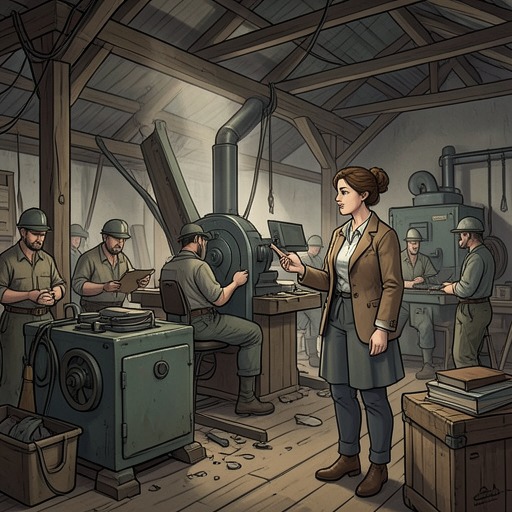
The biomass facility lies beside Andrada Family Sawmill, on the outskirts of San Esteban. When Bea visits with Débora, the scale of the changed landscape is immediately apparent: the biomass factory is a massive presence beside the sawmill, and the electricity plant under construction next to it is larger still. A broad yard surrounds the three industrial structures, with logs stacked in piles and a huge shredder reducing wood to chips. The account places the factory not in an abstract debate about energy, but amid visible timber processing and accumulating material.
The existing biomass factory makes pellets: dry, compressed pieces of sawdust used as fuel in boilers. The much larger neighbouring structure is meant to convert the operation into an electricity-generating plant. That distinction matters. Pellet production is already underway, whereas the expanded power project remains something its supporters are working to bring about. Its ambitions include combining privately owned forests, making use of public forests, and establishing short-rotation forest plantations harvested on a three-year cycle.
Competing claims about forests and energy
Irene supports the project through the municipal government. She describes it as a way to produce clean, inexpensive energy, find a use for otherwise unusable forest wood, and create jobs. In her account, clearing forest material gives neglected woodland a new use rather than destroying it. She also presents the development as an opportunity for Cantabria to look beyond its established reliance on anchovies and tourism. Her confidence makes opposition appear, to her, like resistance to change rather than a dispute over the project’s costs.
Débora takes the opposite view, describing the factory as a threat to forests through overexploitation. Bea initially argues that the operation uses mainly wood residues, brush, and other organic waste, and that clearing such material can help forests. The disagreement is not only about whether biomass is renewable: it concerns what counts as waste, whether extraction will remain within acceptable bounds, and whether a promise of cleaner energy justifies reorganizing forest use.
The conflict is also visible at Bar Caribe, where posters oppose the power plant and insist that the town’s trees are its wealth. Pacheco, the bar’s owner, says that the sawmill must not simply get its way and frames the forests as a common inheritance. Bea counters that woodland has value when it is put to some beneficial use, rather than left vulnerable to fires. These arguments give the landscape two competing meanings: a source of fuel, work, and development, or a shared resource whose value is endangered by extraction.
Land, ownership, and political stakes
The planned supply of wood brings property rights into the dispute. At a forest site, a man points to a map and identifies the area north of forest track seven. He says the surrounding timber belongs to the sawmill: some will go to the biomass factory and usable wood will be turned into planks. When challenged over the trees, he explains that the timber has been purchased from its owners and that the sale included the right to extract it. The encounter exposes the gap between a family’s sense that the chestnuts are theirs and the commercial claims attached to purchased timber.
Irene’s municipal case for the project rests on assembling forest resources and persuading owners to take part. She tells landowners that the sawmill is paying well for timber and offering to buy plots for short-rotation plantations; she also invokes the possibility that the municipality could instead expropriate land and make it public, without paying as much as the Andrada family. The project’s resource plan therefore depends not just on machinery or fuel, but on contested choices about private ownership, public access, compensation, and who has a voice in decisions over woodland.
For Irene, those choices have direct political consequences. She tells Bea that she has spent two years building her government’s policy around the power plant, bringing forests together and persuading people of the benefits of green energy. She fears a no-confidence motion and believes opponents are trying to win over her councillors. The proposed partnership with a major energy company could, she says, make the facility Europe’s largest and create 114 new jobs. Her family’s opposition consequently threatens not only a development scheme but the political identity on which she has staked her administration.
Scrutiny and the meaning of green power
A television interview later subjects the project’s claims to sustained challenge. The presenter questions the emissions associated with burning biomass, the fossil fuel consumed by transporting forest material in trucks, the disposal of combustion residues, the amount of carbon dioxide released, and the extent of woodland needed to supply a plant of this scale. She also invokes problems at other plants, including closures, dependence on subsidies, and job totals that fell far short of promises. These examples are presented as challenges to the general case for biomass, not as established outcomes at San Esteban.
The interview’s most specific disclosure concerns a revised technical agreement. The presenter says that a four-percent reduction from the original offer is linked to lower-quality equipment: a cheaper boiler and filters would increase pollutant emissions by twenty percent. Irene denies the claim, and the presenter shows her a copy of the agreement changing those parameters. Irene has not known about the change. The episode shifts the dispute from a broad clash between environmentalists and development advocates to a question of whether the project’s actual specifications match its public assurances.
San Esteban Biomass Plant thus connects local forest ownership to regional employment promises and the technical details of pollution control. Its supporters describe a route to energy, work, and a new use for forest material; its opponents fear the loss of woodland and question who benefits from decisions made in its name. The site’s significance lies in holding those claims together—and in showing how the credibility of green development depends on the land agreements and equipment behind its promises.