The Gift of Empathy
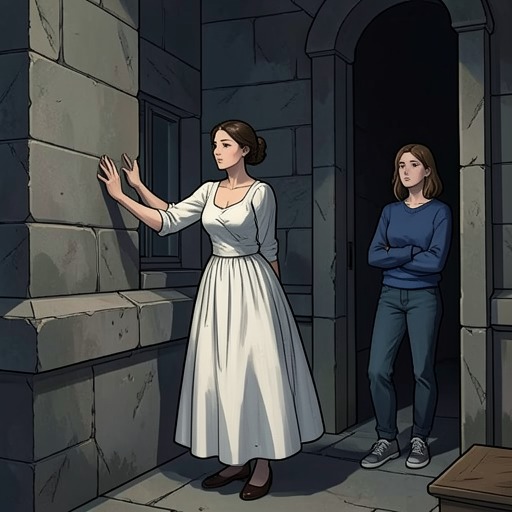
Gente que viene y ¡Bah!The Gift of Empathy is Ángela’s ability to experience another person’s pain through touch and identify its cause with unusual precision. It is both a practical service to her village and a demanding form of care: she gives herself to other people’s suffering, while her own distress remains hidden until her family reads the notes she left behind. Those notes reveal that Débora has inherited the gift, turning a family story once marked by speculation into a private truth Ángela had recognized for years.
What the Gift Is and How It Works
Ángela’s ability is described not as miraculous healing but as an exceptional form of empathy. By touching someone’s hands or another part of the body, she feels the pain that person is experiencing and can identify symptoms precisely enough to suggest a diagnosis. The range of conditions she detects is broad: a stomach tumor, chronic depression, an anxiety crisis, tuberculosis concealed behind respiratory-allergy symptoms, or kidney stones. Bea regards her as more accurate than any doctor in Cantabria, though Ángela does not claim to cure anyone. She identifies the problem and directs the patient to the appropriate specialist.
The gift has been cultivated over time through study, rather than presented as a wholly effortless or inexplicable power. It also has clear limits and costs. Ángela’s work is diagnostic, not medical treatment, and the act of feeling other people’s pain leaves her exhausted. The distinction matters: her compassion does not make her a supernatural remedy, but it does make her unusually receptive to what others are suffering.
A Village Practice and Its Costs
People come to Ángela’s home every day, sometimes in dozens, seeking her help. She refuses payment, wary of legal trouble, and accepts food instead. This arrangement also reflects a practical household consequence: Ángela is a terrible cook, so the family is fed by the pots her patients bring. She labels each pot with its owner’s name and address in permanent marker so it can be returned. During much of her childhood and adolescence, Bea cycles around the village delivering them. The errand gives her an intimate familiarity with the community: she has been to nearly every home, and its residents know her in turn.
That routine is also a measure of how far Ángela’s care extends beyond the consulting visit. Her patients’ food enters the family home, while Bea carries the borrowed pots back into the village. Yet Ángela’s attention to others comes at a personal and familial cost. Because diagnosing pain means feeling it, she often has little energy left for herself, and still less time to act as a consistently attentive mother. Irene frequently fills that role. The gift therefore binds the household to the village while redistributing care within the family: Ángela tends to the community, and Irene often takes her place with her siblings.
Fear of Inheritance and the Limits of Diagnosis
As an adolescent, Bea investigates whether Ángela’s ability might have a medical explanation. She encounters the case of a woman whose senses cross: what she sees, she experiences through touch. Seeing an embrace makes her feel the embrace; seeing someone complain of leg pain makes her feel the same pain; watching someone eat makes her feel the food enter her mouth and pass down her throat. The woman eventually withdraws from other people because their experiences have become exhausting to feel. Her daughter inherits the condition but responds differently, choosing an active social life and trying to disregard what she feels through others.
The comparison unsettles Bea. She wonders whether Ángela’s gift might be an illness rather than a gift, and whether it could be cured. Ángela is not interested in seeking a cure: even if her ability is a disease, she wants to live with it because it lets her help people. Her decision gives the gift an ethical dimension without erasing its burden. She does not deny the exhaustion; she accepts it as part of a life organized around helping others.
Bea also becomes preoccupied with the possibility that she or her siblings, or León, might have inherited the ability. She subjects her siblings to occasional tests, trying to establish that they feel only their own sensations and cannot share another person’s pain by touching them. She later speculates that her determination not to feel what others feel may have made her more self-enclosed and shaped her relationships. But she presents this as uncertain, even questioning whether it is simply a way to excuse her character. The gift thus becomes a lens through which Bea examines both empathy and her own distance from it, without claiming that it explains her completely.
Ángela’s readings of her children are notably less reliable than her diagnoses of other people. She exaggerates their symptoms, turning an ordinary cold into the possible start of pneumonia, and her children dislike having her place a hand on them because they expect her to amplify their distress. There is, however, a consequential exception: one of her alarming predictions led to Irene’s ovarian tumor being detected in time. Ángela’s care can make a minor illness feel catastrophic, yet her overstatement has also helped expose a serious condition early. The contrast shows that the gift is not a simple guarantee of calm or certainty, especially within the family where affection and worry complicate her judgment.
The Gift After Ángela’s Death
When Débora confesses a painful secret to the family, Ángela reacts by shutting herself in the bathroom. The family worries that the shock may have caused a medical emergency, but the episode also makes visible how deeply she takes in other people’s pain. Her response is part of the same pattern that defines the gift: even when another person’s distress is not hers to solve, it reaches her physically and emotionally.
After Ángela’s death, the family learns that she had known for several months that her heart would not last much longer. She had undergone tests but had not told them, partly because she hoped that if she did not say it aloud, it might never happen, and partly because she did not want to worry them. Her notes preserve what she kept private. Bea’s father describes Ángela as someone who absorbed everyone else’s worry and pain while ensuring that no one knew her own; he connects the strain of carrying so much suffering with the failure of her heart. The gift that made her a source of comfort also left her own vulnerability concealed from the people closest to her.
In a note addressed to Débora, Ángela says she has always known that her daughter inherited the gift. She does not ask Débora to continue the consultation practice, recognizing how sacrificial it is, and does not insist that she accept the inheritance on anyone else’s terms. Instead, she affirms Débora’s photography, especially a photograph of Teo and the child, and sees art as another way to empathize with others and channel both personal and shared pain. If Débora ever wants to help people as Ángela did, the consultation is hers. Débora confirms that the gift is hers too, but declines to discuss it further in that moment and goes out into the garden.
The inheritance therefore does not require a repetition of Ángela’s life. Her note makes room for two forms of response: direct diagnosis and artistic expression. What passes to Débora is not an obligation to sacrifice herself, but the knowledge that her capacity to feel others is real and that she may choose what to do with it. Ángela’s final act of care is to acknowledge the burden while leaving that choice open.