Víctor
Gente que viene y ¡Bah!Víctor is Bea’s former partner and fiancé, a persuasive architect whose professional charm helps him succeed with clients but cannot protect his relationship from the consequences of his choices. Their story moves from a shared life and a sudden, joyful engagement to Bea’s discovery that he is involved with a TV News Presenter. The account does not present the breakup as a simple tale of one person acting and the other merely suffering: Bea admits that Víctor could tell a different, partly valid version of how they came apart.
Identity and Background
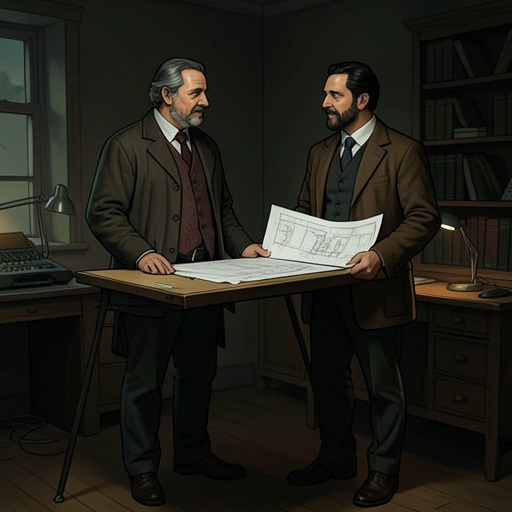
Víctor and Bea lived together for three years and worked at the same architectural studio. He was particularly effective with clients, a talent the studio’s bosses recognized early. They brought him into project presentations, where he helped sell proposals, even those Bea describes as highly implausible. His contribution was not limited to technical work: he could make people like him and persuade them to consider what the studio was offering.
That ability had roots in his childhood. During holidays, his father, a traveling cosmetics salesman, took him along to work. Víctor learned the arts of persuasion and personal charm there, and later applied them in different parts of his life. His father wanted him to become a lawyer, believing his oratorical and argumentative skills could serve him well in that profession. The account presents this as a family expectation, not as a career Víctor pursued; his work was in architecture.
Bea contrasts his social ease with her own less immediate manner. She describes herself as distrustful, quick to become angry at injustice, and unsuited to winning over strangers at first meeting. That contrast helps explain why Víctor’s capacity to charm clients was so valuable at work, while also setting up a distinction between persuasive fluency and the more difficult business of sustaining trust in an intimate relationship.
Shared Life and Engagement
Víctor and Bea had a playful agreement about a list of five famous people each could pursue without the other objecting. They treated the arrangement as a test of modern, generous attitudes toward attraction. Bea’s list consisted of three Hollywood actors, a model, and an athlete. Víctor’s included two actresses, two models, and a TV News Presenter. What they framed as a remote hypothetical became consequential when Víctor met that presenter and became involved with her.
Their engagement began during a period of professional optimism. After years of modest projects and demanding competitions, the studio’s bosses were celebrating a major success and planned a party for the arrival of a group from Stockholm. At that celebration, Víctor proposed to Bea, presenting her with an engagement ring. Bea had not been someone who had spent her childhood planning a wedding or imagining herself in bridal clothes. Yet his proposal surprised her with the force of her own happiness: the response she expected herself to make gave way to unguarded excitement.
Later, Víctor explained that he had proposed after learning Bea was at risk of being dismissed from the studio. He said he believed his own position there was secure and thought that marriage would make the bosses less willing to fire her as his future wife. Bea hears this as confirmation that the proposal was connected to her job, though his stated intention was to protect her from losing it, not to cause her dismissal. The explanation complicates the romantic meaning of the engagement without erasing the genuine happiness she remembers feeling when he asked.
The Relationship Breaks Apart
Bea initially gives a compressed account: Víctor met the presenter, became involved with her, and left Bea less than two months before their wedding. She then corrects herself. The events were more complicated, she says, and Víctor could describe them differently: he might argue that Bea pushed him toward the presenter and that, in the end, Bea was the one who broke up with him. She acknowledges that this version would not be a lie. Her account therefore holds two things together: Víctor’s involvement with another woman and Bea’s own part in the relationship’s collapse.
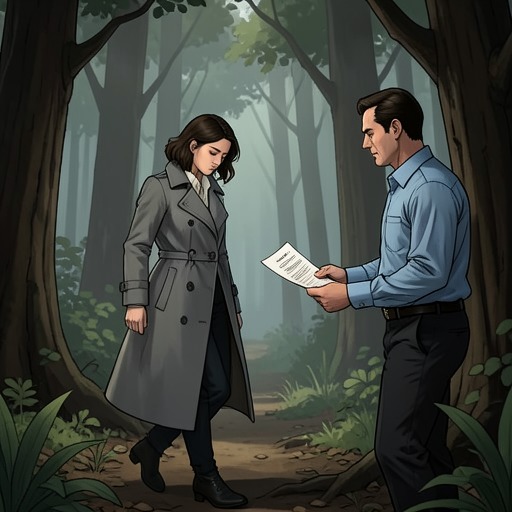
The rupture becomes unmistakable when Bea sees Víctor just after he has kissed the TV News Presenter. In the shock of that encounter, she takes the engagement ring from her bag and puts it into his mouth. The gesture turns the ring, previously a sign of the future they had agreed to share, into a blunt rejection of that promise. It is the clearest physical ending to the engagement in the evidence presented, even though Bea’s later account insists that the larger breakup cannot be reduced to that moment alone.
Public Declaration and Narrative Role
After returning to her family home in Cantabria, Bea sees an image of Víctor and the presenter dressed for the opening of a musical on Madrid’s Gran Vía. The picture makes their relationship appear established, and Bea takes it as reassurance that she had not invented or exaggerated what happened. Her hurt is sharpened by the sight of Víctor looking handsome to her; the account observes, with bitter irony, that being replaced can intensify rather than diminish an ex-partner’s beauty in the abandoned person’s eyes.
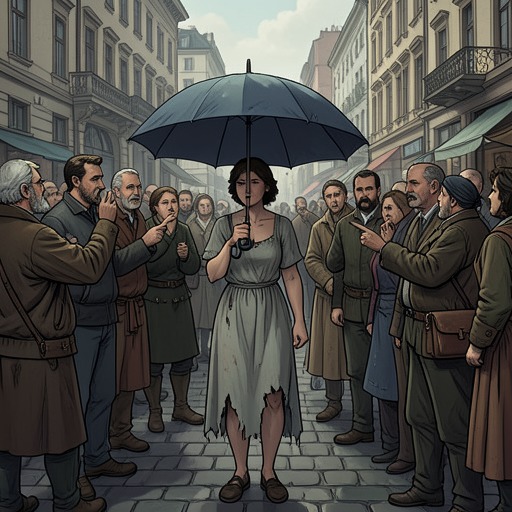
The relationship becomes more painful when Bea watches the presenter speak on television about Víctor as the man of her life. Víctor is then interviewed and presents their connection in similarly absolute terms, describing it as unlike anything he has felt before and declaring himself happy. For Bea, the declaration raises the unresolved question of what his earlier commitment to her had meant, especially after he proposed to her and they had spent years together. The scene shows how public confidence and persuasive performance, qualities that had served him so well with clients, can give a new relationship an emphatic narrative while leaving the former fiancée to confront its implications from a distance.
Víctor’s significance in Bea’s story rests on this contrast and reversal. He is not only the charming colleague who could sell a difficult proposal or the fiancé who offered her a future she had not expected to want. He is also the former partner whose new public declaration forces Bea to reconsider the years they shared. Because Bea acknowledges that her own actions helped shape their separation, the account leaves room for complication without softening the decisive consequences: the wedding is no longer their future, the ring has been rejected, and Víctor’s life with the presenter has become visible to Bea through photographs and television.