
Diana’s Silence and the Treehouse
Gente que viene y ¡Bah!Diana’s silence after her mother’s death gradually gives way to speech, while the treehouse becomes a shared project of attention and hope.
increasing Bearing strength in each event
 decreasing
Bearing strength in each eventdecreasingA Child Who Does Not Speak
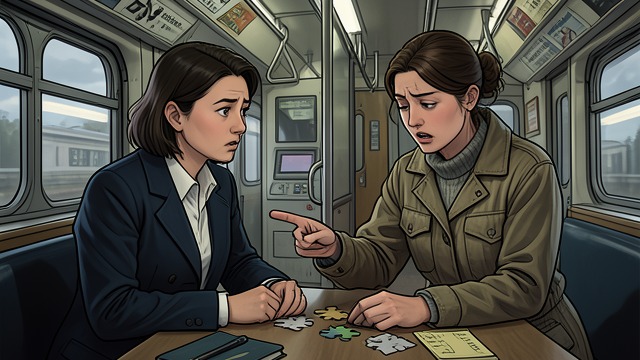
Silence without explanation
Observing the girl
Bea notices Diego helping a young girl with a puzzle on the train. The child communicates through gestures and expressions but does not speak, and Bea initially assumes that Diego is her father.
A family tragedy
Bea later learns that Diana’s mother died in a car accident and that the child has not spoken since. Diego and his in-laws are trying to care for her while living with the consequences of the loss.
Diana’s silence is not treated as a mystery for outsiders to solve. It reflects a child’s grief, and the adults around her must learn to respond without forcing speech as proof of recovery.
A Treehouse as an Invitation
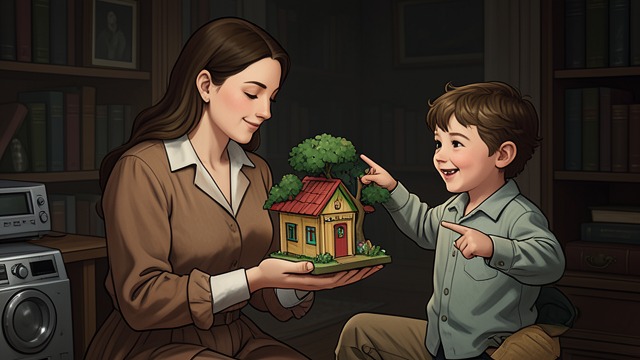
A desired place
The model captures her attention
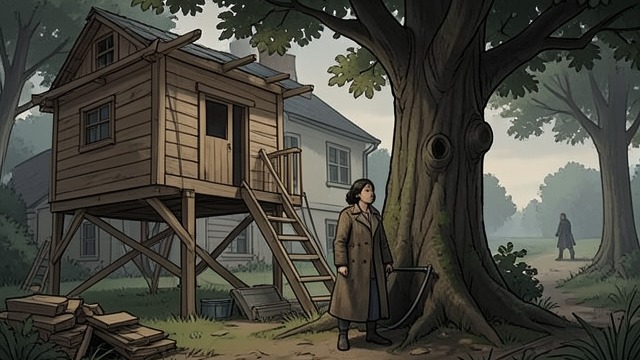
Diana sees Bea’s miniature treehouse and becomes visibly excited. She points to her own drawings and asks, through gestures, for a similar house among the trees at the estate.
A father’s plan
Diego hopes that a compelling treehouse will motivate Diana to speak. He says she must ask in words before he lets her use it, treating the request as an incentive rather than assuming the structure itself will cure her.
Bea understands the design as a chance to create a place the child can desire for herself. Its intended value lies in invitation, patience, and a growing relationship—not in a guaranteed therapeutic result.
A House Designed to Grow
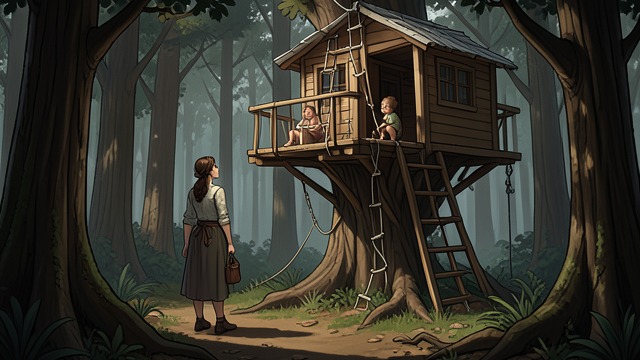
Childhood play and future privacy
Multiple levels
Bea develops a multi-level structure with climbing elements, a resting place, and an upper area that could suit Diana as an adolescent. She chooses details inspired by the child’s favorite films, toys, and colors.
Safety and scale
The design includes soft landing surfaces and careful access so that Diana can play without unnecessary danger. Bea consults Diego about the child’s interests while maintaining the architectural integrity of the work.
The plan imagines a future beyond the immediate silence. It gives Diana room to grow, rather than defining her solely through grief or the developmental milestone the adults hope she will reach.
Speech at the Construction Site
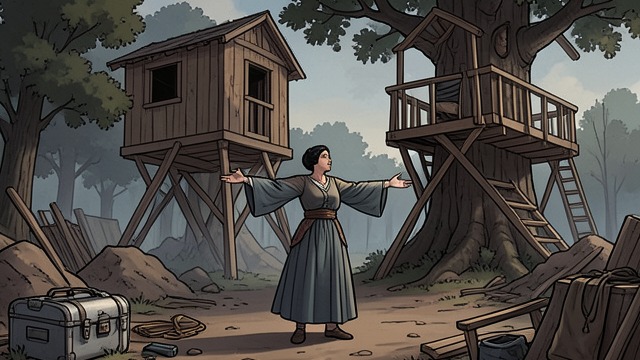
The requested words
A familiar voice
While Bea and Diego are alone in the unfinished treehouse, Diana arrives and calls out to her father. The brief word astonishes Diego, who has waited and hoped without being able to command this moment.
A specific request
Diana later records a clear request for her treehouse. Diego plays the recording to Bea, tears in his eyes, and explains that his daughter has begun speaking.
The moment does not make the treehouse a magical cure. It shows that Diana can reach for the adults around her when she is ready, and that the house has become a shared object of anticipation.
A New Home and a Continuing Bond
A family in motion
Leaving the old estate
Diego tells Bea that he and Diana have moved to Santander, rather than remaining in the home where her mother died. He has saved the estate and its house, but the family is beginning a life elsewhere.
A promise to finish the house
Diana asks for the treehouse, and Diego makes its completion the first condition of Bea’s future involvement in a proposed treehouse hotel. The request shows that Diana remembers Bea and the design as part of her own world.
Diana’s progress is modest but meaningful: she speaks, asks, and participates in a future plan. The adults’ task is to keep listening without turning her recovery into a performance.
When Bea first encounters Diana on the train
At Diana’s first visit to the family consultation room
During the design period at Ingrid’s studio
During a quiet visit to the treehouse site
Four months after Bea leaves Cantabria
