
Green Energy and Forest Protection
Gente que viene y ¡Bah!The biomass debate traces the tension between Irene’s jobs-and-energy vision and the objections of residents who fear the costs to forests and public trust.
increasing Bearing strength in each event
 decreasing
Bearing strength in each eventdecreasingTwo Competing Visions

Progress is contested
Irene’s argument
Irene sees biomass as a way to use forestry waste, create employment, and reduce reliance on fossil fuels. She believes San Esteban can lead by combining forest management with local electricity generation.
Débora’s concern
Débora sees the same project as a threat to woods that belong to the region and distrusts promises that extraction will remain limited. Their disagreement is not merely personal; it reflects different judgments about what counts as ecological responsibility.
The novel gives neither position a simple victory. It asks whether a project can be called green when its material supply, transportation, emissions, and local consequences remain contested.
Land and Ownership
The forest is also property
An inherited assumption
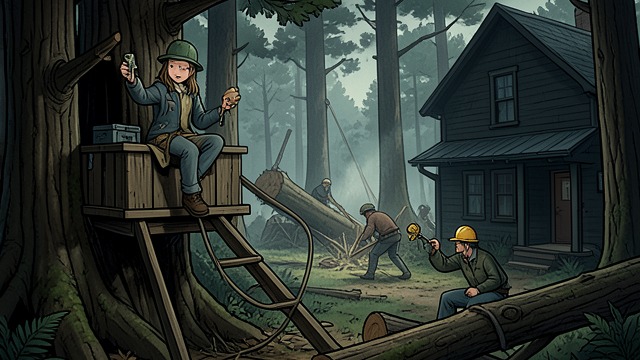
Bea believes the chestnuts remain family land and reacts to logging as an attack on her treehouse. She learns that her father signed a sale agreement months earlier, transferring the trees to the sawmill.
A clash of meanings
The trees are at once a loved landscape, a resource, and a legally purchased commodity. Bea’s mistake does not make her attachment false, but it changes what she can legitimately demand from the workers.
The episode complicates easy slogans about conservation and ownership. People may care about a landscape even when they no longer possess authority over it, while commercial rights do not erase the emotional history of a place.
A Compromise in the Contract
Investment has a cost
The price reduction
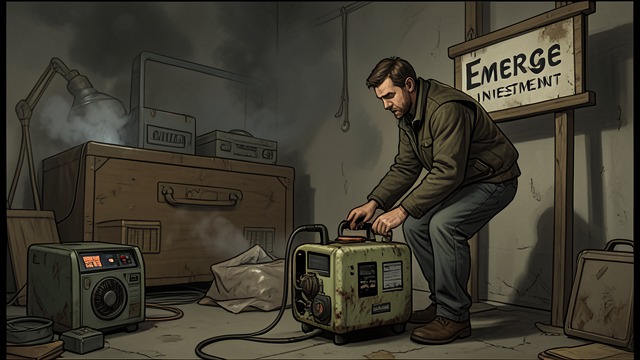
Diego reduces the project’s price to secure Emerge’s investment. The revised agreement specifies cheaper equipment that increases emissions, though the reported figure remains within European limits.
An ethical boundary
Irene had hoped for a more sustainable plant and was not fully informed before the public interview. Diego sees the change as a desperate compromise; environmental critics see it as proof that the project’s clean-energy claims obscure pollution.
The disagreement asks whether a partly renewable project remains worth pursuing when financial survival depends on environmental concessions. The answer cannot be given by the label “green” alone.
The Town Takes Sides
A public argument becomes a crowd
A divided community
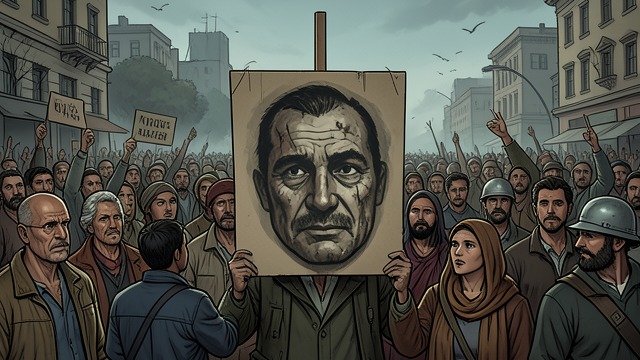
The dispute attracts activists, residents, local politicians, and regional media. The protest’s size disproves Irene’s expectation that only a handful of opponents will attend.
Public legitimacy at stake
For supporters, the plant promises employment and local energy. For opponents, it risks forest loss, pollution, and political favoritism. Both sides argue that the town’s future is being decided without enough trust.
The demonstration transforms a technical and economic proposal into a question of who gets to define public benefit. Its scale helps end the project’s political and investment prospects.
Failure and a Different Forest Future
Losing one plan
Business collapse
After the protest and media controversy, Emerge chooses a different project. Diego faces severe financial losses, and Irene loses the mayoralty, leaving the original biomass plan without its central partners.
Another use for the woods
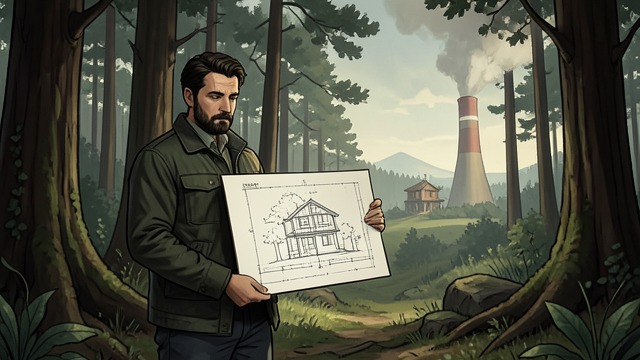
Months later, Diego tells Bea that he and León plan to build a treehouse hotel in a forest. The new enterprise uses the woods as a setting for architecture and hospitality rather than as fuel for a power plant.
The alternative does not answer every environmental question, but it marks a shift in how the characters imagine economic value. A forest can support livelihoods without being reduced to a single industrial purpose.
During Bea and Irene’s rooftop conversation
When workers fell Bea’s chosen chestnut
As Emerge considers the competing projects
On the day of the demonstration
After Emerge abandons the project
