
Consequences of Fame and the Search for Privacy
Gente que viene y ¡Bah!Bea’s attempts to escape celebrity culture fail repeatedly, revealing how public attention feeds on vulnerability and how she gradually reclaims her own account.
increasing Bearing strength in each event
 decreasing
Bearing strength in each eventdecreasingA Celebrity List Turns Real

A joke becomes a risk
The five-person pact
Bea and Víctor’s list of celebrities they might sleep with is supposed to be safely hypothetical. At the casino celebration, Bea jokingly encourages Víctor to kiss the TV News Presenter because she appears on his list.
Permission misunderstood
Víctor later says Bea gave him permission, while Bea understands the pact as a fantasy that would never matter in real life. The kiss exposes the gap between their shared joke and their actual expectations.
The episode shows how people can use modernity and humor to avoid discussing boundaries. The list seems harmless until one partner takes it literally and the other experiences it as betrayal.
Flight from Coverage
Escape does not stop circulation
Bea seeks distance
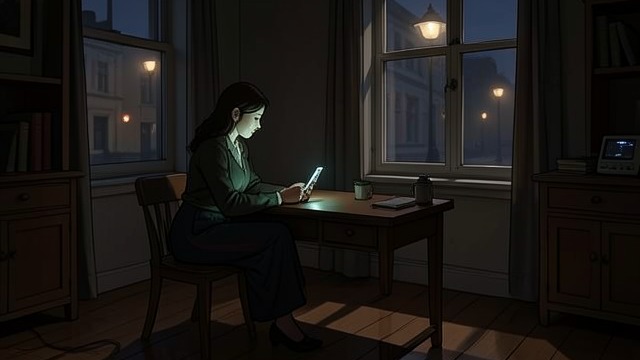
Bea returns to her parents’ home hoping to avoid television, internet, and celebrity magazines. The journey instead surrounds her with covers and readers following Víctor and the presenter.
Attention becomes compulsive
Bea keeps checking her phone and watches for messages even while insisting she wants to disappear. Her need for connection and her wish to withdraw pull in opposite directions.
The episode portrays media saturation as both external and internal. Bea cannot control what is published, but she can see how compulsive checking keeps the story present in her private life.
The Presenter Comes to Town

Public attention closes in
Rebeca arrives
Rebeca Ramos comes to San Esteban with photographers and journalists. Bea sees her arrive and wonders whether she has come to reclaim Víctor or to confront Bea over the night they spent together.
A local issue becomes media material
Rebeca also finds Irene’s contested biomass project and develops it into a television investigation. Bea fears that the presenter’s personal anger will shape the report, while Irene sees the professional opportunity.
The arrival allows private romance and public politics to collide. Bea’s suspicion is not proof of revenge, but the surrounding circumstances make it hard for her to separate professional interest from personal motive.
The Media Finds Bea’s Family

From ex-girlfriend to headline
A family profile
The national article gives Bea a public identity as the unstable ex who followed Víctor, then links her to Irene’s politics and the family’s unusual private lives. Its claims and insinuations are distributed far beyond the local town.
The consequences of exposure
Bea’s relatives face embarrassment, political suspicion, and renewed conflict. The article’s publication helps turn the coming protest into a national story and makes each family member feel personally implicated.
Publicity does not merely report events; it changes their stakes. The family must now respond to a narrative that treats privacy as evidence and eccentricity as scandal.
Choosing a Counter-Narrative

Bea speaks on her own terms
A direct confrontation
Bea uses the crowd and nearby cameras to accuse Rebeca of turning personal jealousy into investigative reporting. She says she does not want Víctor and tells the assembled crowd that Rebeca’s behavior is not professional objectivity.
Visibility without full control
The confrontation produces a catchy public moment, but it does not redirect attention away from the mass demonstration. Bea becomes a media character again, now through her own performance rather than only the receptionist’s account.
Her act gives her a voice without restoring privacy. The novel leaves the reader with the difference between correcting a story and escaping the machinery that wants another story from her.
At the casino party
During the train journey to Cantabria
After Víctor’s overnight visit to Bea’s hotel
On the morning the national scandal piece appears
As the demonstration reaches its peak
