
Bea’s Self-Blame and Responsibility
Gente que viene y ¡Bah!Bea repeatedly assumes responsibility for events beyond her control, gradually learning to distinguish accountability from the belief that she causes every crisis.
increasing Bearing strength in each event
 decreasing
Bearing strength in each eventdecreasingThe Train Confrontation
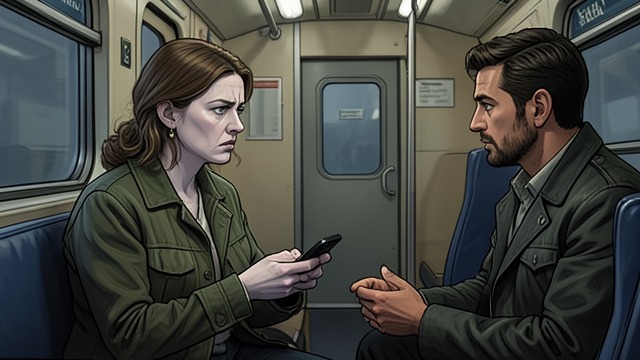
Fear becomes accusation
A missing phone
When Bea cannot find her phone, she focuses on a nearby passenger and accuses him of theft. Her anger is fueled by a larger crisis, but she cannot initially separate the immediate evidence from her fear of being wronged again.
Shame after discovery
A child returns the phone, and Bea realizes the passenger was innocent. She spends the rest of the journey imagining the other travelers’ contempt.
The episode begins a pattern of overcorrection: Bea’s desire not to be helpless turns into blame, followed by intense self-reproach. Neither the accusation nor the shame gives her the steadiness she needs.
Taking the Money
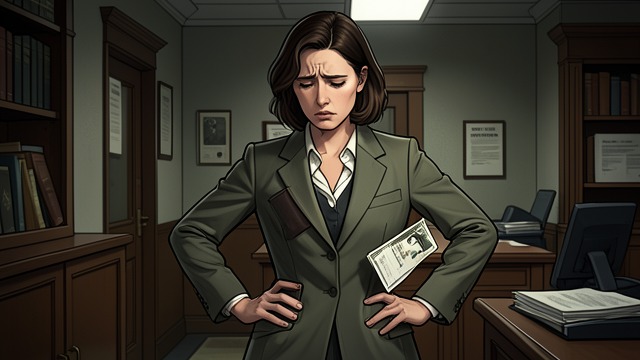
Revenge framed as compensation
The shared account
Bea withdraws money from the wedding account, telling herself that half is hers and that Víctor owes her for emotional injury. She spends some of it on the prospect of building the treehouse.
Regret after anger
The next morning she feels uneasy but refuses to return the money. The act exposes how easily moral certainty can shift when she feels humiliated and powerless.
Bea’s later growth does not erase the questionable decision. It requires acknowledging that being hurt does not automatically make every retaliatory act fair.
The Family Logging Protest
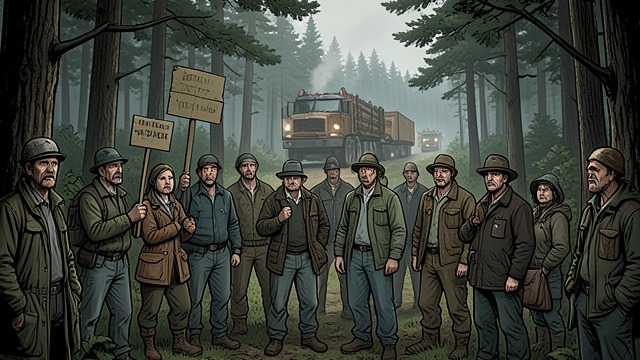
Responsibility meets misunderstanding
A family mobilized
Bea asks her siblings to block the logging, and they are detained after confronting the workers. She believes the trees are still family property and later learns that her father sold them.
A public consequence
Irene fears the event will damage the biomass project, while Bea takes on blame for the confusion. Yet the sale was not her decision, and Irene also failed to realize which grove Bea intended to use.
The episode shows responsibility as shared and uneven. Bea’s impulsiveness matters, but so do incomplete communication, an unexamined property assumption, and the choices of the adults who approved the sale.
Blaming Herself for the Public Fallout
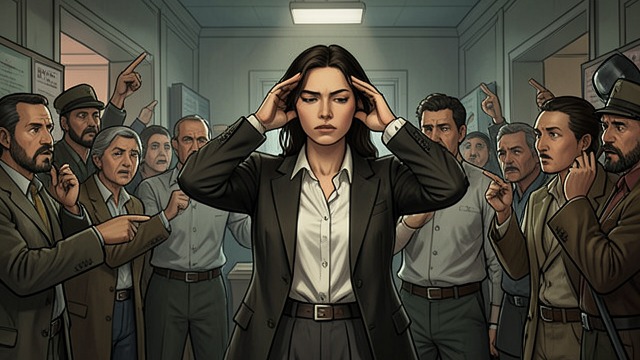
One person cannot control every outcome
The political crisis
Bea’s confrontation with Rebeca becomes public, but the demonstration and the project’s collapse result from broader disputes about emissions, investment, and political trust. Irene nevertheless tells Bea that her return and the scandal have made matters worse.
A desire to disappear
Débora also blames Bea for exposing family secrets, and Bea decides that leaving Cantabria is the only way to stop harming everyone. She treats her presence as the common cause of crises she did not create alone.
The novel presents her self-blame as both empathy and distortion. She recognizes genuine consequences of her actions but tends to claim responsibility for choices made by other adults.
A Future Built with Others
Responsibility without self-erasure
A changed invitation
Diego asks Bea to work with him and León on a treehouse hotel, acknowledging that he acted badly toward Irene and that Bea was not the sole cause of the project’s failure.
Choosing participation
Bea accepts the work and agrees to build Diana’s treehouse first. She does not need to declare herself blameless; she can take responsibility for her craft while refusing to carry every family member’s disappointment alone.
Her return signals a more balanced understanding of agency. She can help build a future without believing that she must repair everyone or disappear whenever life goes wrong.
On the journey from Madrid to Santander
During Bea’s drunken night out in San Esteban
When Bea learns her father sold the chestnut land
After Rebeca’s interview and the demonstration
Four months after Bea’s departure
