Bea Designs and Begins Building a Treehouse
Gente que viene y ¡Bah!Bea Designs and Begins Building a Treehouse marks the moment Bea turns a dismissed model into a real architectural project. What begins as a defiant answer to Ingrid becomes a renewed commitment to design on Bea’s own terms: a small, human-scale structure, fitted to a particular tree and built with help from her family. The work gives her energy after heartbreak, but its first stages also make clear that conviction and detailed plans are only the beginning of construction.
From insult to intention
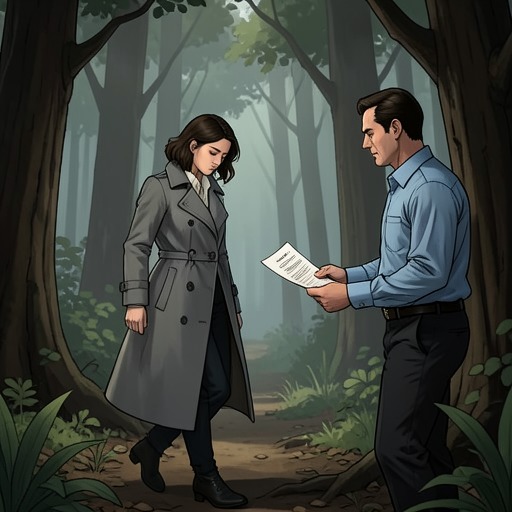
After walking home angry with Ingrid, her mother, and herself, Bea confronts the assumptions behind Ingrid’s mockery of her model. Bea admires Ingrid’s buildings, but rejects the idea that architecture must mean monumental towers or imposing museums. A treehouse may be small, but that does not make it childish or unserious; nor, Bea insists to herself, should architecture by a woman have to imitate work she associates with masculine solidity. She resolves to show that another approach can be equally valid, even if it earns no prizes.
At home, Bea tells her family that she will build the treehouse, improving on the model. When Débora asks why, Bea first frames it as a way to prove Ingrid wrong, then admits that she has always wanted to make one. Her mother asks where it could stand: the fig tree in the garden would not bear the weight. Bea remembers a small plot in the hills where her grandfather used to take the family chestnut-picking and asks whether it was sold. Her father handles the property, but her mother thinks it remains theirs. Bea chooses one of its chestnut trees as the intended site and returns to drawing.
Design, site, and scale
For more than a week, Bea largely shuts herself in her room to work through the plans, design, and feasibility. Irene urges her to take a coffee break and objects that Bea has fled Madrid to recover from heartbreak only to spend her days drawing as she did when she was a student. Yet the project has restored something: research, structural questions, and material choices bring back the enthusiasm she felt during her studies. With León’s help, she searches online for information, although thoughts of Víctor and the woman from the television news still intrude. They have not disappeared, but the work takes up much of her attention and loosens their hold on her day.
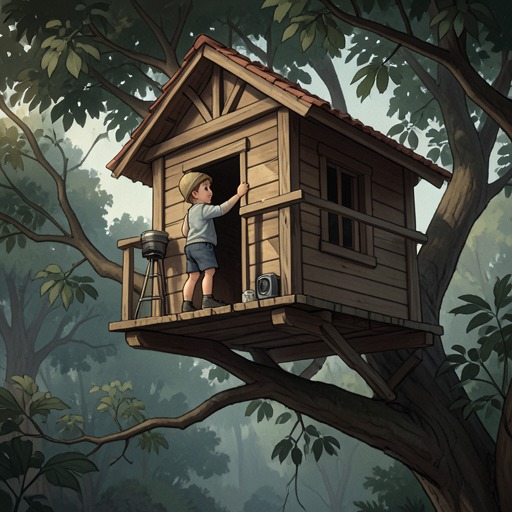
Juan eventually accompanies Bea to the chestnut plot. Of six trees, three are rotten or dead; she selects the strongest of the remaining three. The chosen tree is centuries old, with a broad trunk and five sturdy, almost horizontal branches. Bea sees the branches as a natural framework for the house and imagines a terrace from which she could look across and feel joined to the landscape. The site changes the project from an abstract design into one with specific dimensions and structural possibilities. Bea feels happy for the first time in a long while, and Juan notices her excitement.
She photographs the tree and takes measurements, estimating that a week of concentrated work will finish the plans. The pictures and measurements let her reformulate the design around the actual tree. Bea later admits to herself that her preferred process is to begin in the abstract, visit the real location after some of the work is done, and then revise. Within five days, most of the design is nearly complete. The remaining challenge is the budget: she has little money and may have to remove elements if the cost rises too high.
Money and materials
At first, Bea refuses to draw on the joint account she shares with Víctor. She believes doing so would compromise her position in their breakup, since she considers herself the one who acted rightly. That resolve changes after a drunken night leaves her waking among banknotes taken from the account. Although she feels some remorse, she decides not to return the money. She regards at least half as hers and sees it as available for the treehouse, or at least for some of its materials. The model remains in view as a reminder that the project, however foolish it might seem to anyone else, is one she intends to make real.
Bea persuades Débora to go with her to the sawmill, appealing to her sister’s ability to bargain and explaining that the project has helped distract her from Víctor. At the customer-service counter, Bea presents a sheet of measurements and asks for prices on red-pine planks. The request is specific: she is pricing materials for a structure, not asking for wood for an ordinary piece of furniture. Her architectural drawings are beginning to meet the practical questions of supply and cost.
The first work at the chestnut
Before setting out, Bea loads her mother’s old van with tools gathered from the family garage and purchases of her own: a grinder, compressor, toolbox, chainsaw, electric hammer, wood glues, sawhorses, two ladders, and pieces for a small scaffold. Her parents’ interest in furniture restoration has given her do-it-yourself skills since childhood. She also brings printed plans, a three-dimensional project on her laptop, and online notes about similar structures built elsewhere. She feels ready to put an architectural idea into physical form, and welcomes the help of nearly all her family. In her imagination, the shared labor might bring them together and help heal their wounds.
The next day, at eleven in the morning, a sawmill truck delivers the wood to the nearest forest track. The drop-off is still about three hundred metres from the chosen tree, and the driver will not carry the lumber farther. Jacobo has anticipated the problem and brought three fellow members of the Civil Guard. Together with León and the sawmill employee who accompanies the driver, they carry the pine lengths to the site. The hauling is exhausting, but by the end of the morning all the wood is stacked beside the tree. Bea is already tired before the actual assembly has begun.
Fin arrives after lunch, as does Juan, who offers to help. Débora, despite having promised to come at some point, has not appeared. Bea worries that her sister’s arrival could make the atmosphere awkward with Juan, but proceeds by improvising a table from planks and laying out the plans. She explains the proposed work in detail; the faces around her show that the project seems difficult. Bea agrees that building a house is hard, says professional help will be needed when appropriate, and insists that they can make a start themselves. Her optimism remains undiminished. León picks up a drill chuck backwards and examines it in confusion, prompting Bea to tell him not to handle anything for the moment. The opening workday therefore ends with materials in place and a willing group assembled, but with the construction still at its threshold: the plan is now on the ground, and its practical difficulty is no longer theoretical.