Bea Presents Her Treehouse Model to Ingrid
Gente que viene y ¡Bah!Bea Presents Her Treehouse Model to Ingrid is the encounter in which Bea’s attempt to re-enter architecture meets a blunt rejection—and turns into a commitment to build the treehouse on her own terms. She arrives prepared to make the case for her design, but Ingrid gives the model scarcely a glance. The meeting ends with Bea leaving the model behind; on the walk home, anger at the dismissal becomes a clearer defense of her architectural vision.
The Presentation
Bea carries the model to Ingrid’s architecture studio in a large bag and prepares an elaborate pitch. She explains the house’s intentions, the architectural movement that inspired it, and whether such a structure could be built. Her aim is mixed: she wants to impress Ingrid and hopes for an offer of work, while also wanting the chance to decide whether to accept it. Bea knows that selling projects is not her strength; that had been Víctor’s specialty. Still, she believes that with effort she can do at least half as well.
The studio stands in the center of the village, on the main square. Its open-plan interior is modern and industrial, with the air-conditioning pipes exposed. Large windows look out onto the square and a baroque church, whose presence contrasts with the studio’s clean lines. An employee asks Bea to wait. She uses the pause to take the model out of its oversized bag and set it on a table, making the object the center of the visit before Ingrid arrives.
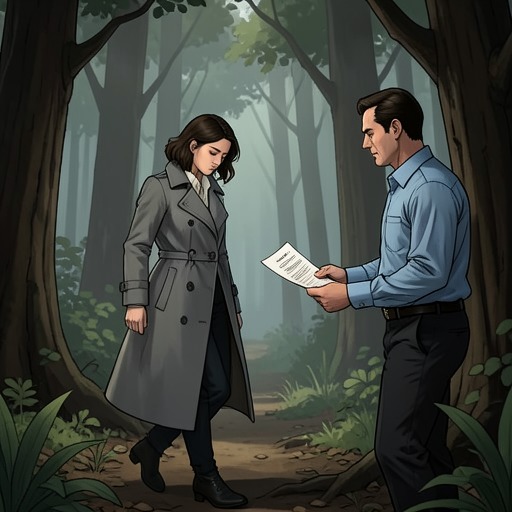
Ingrid appears two minutes later, dressed in black, with a floor-length linen skirt and a large metal-piece necklace. Her greeting conveys disappointment. She looks at the model with such indifference that it receives less than two seconds of her attention. Bea’s careful preparation has brought her into the studio, but it cannot make Ingrid take the work seriously.
A Dismissal of the Design
When Ingrid treats the model as a toy house, Bea tries to explain what it represents: microtopia, an approach concerned with small, human-scale spaces rather than building on a grand scale and wasting space. Ingrid interrupts her with the judgment that architecture is serious and not for girls. The exchange is not simply a disagreement about the size or appearance of a building. Ingrid casts Bea’s proposal as childish and, by invoking gender, questions whether Bea belongs in the profession at all.
Bea tries to continue, but her voice fades as she offers to show the plans. Ingrid asks whether she has anything else, then extends her hand to end what has become a mock interview. The gesture closes the encounter without a discussion of the project’s practical merits. Ingrid does add a message for Ángela: she went to the specialist, who confirmed that her condition was allergic dermatitis. The personal aside does not soften the professional rejection. Bea shakes Ingrid’s hand and hurries out, leaving the model on the table rather than putting it back in the bag.
The Walk Home and Bea’s Argument
Bea walks roughly two kilometres from the square to her home, angry with Ingrid, with her mother, and with herself for failing to defend either the project or her understanding of architecture. The humiliation is sharpened by her sense of what she could have said. She admires many of Ingrid’s buildings and projects, but that admiration does not mean there is room for only Ingrid’s kind of architecture. In Bea’s view, monumental projects—hundred-storey buildings or grandiose museums—cannot be the sole measure of serious work. She links that model of architecture to bankruptcy and asks why a treehouse should be dismissed simply because it is small.
Her response also makes explicit the gendered assumption behind Ingrid’s put-down. Bea wonders whether a woman architect is expected to prove herself by making work as massive, solid, and phallic as a man’s. She rejects the implication that her project must be either feminine or childish, and rejects the idea that either quality would make it worthless. The design’s small scale is not evidence of incompetence: it expresses a different position on what buildings should do and how much space they should claim.
From Rejection to a Decision
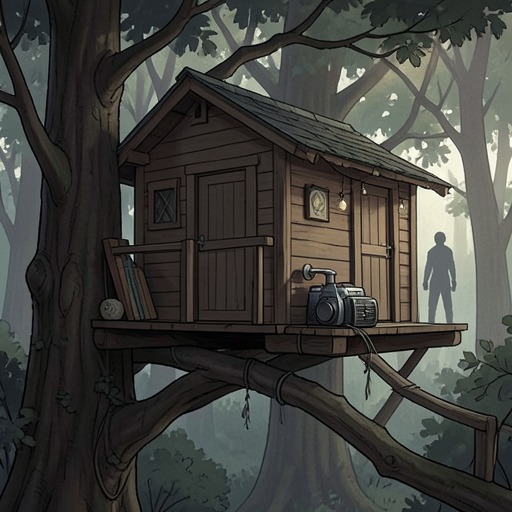
At home, Bea tells her family what she has decided: she will build her treehouse, making it like the model but improved. The model that Ingrid barely examined thus becomes the starting point for a concrete undertaking. Bea says she will draw a house that will astonish people, though her declaration is forceful enough to sit alongside her own qualification that the project need not win architectural prizes. What matters to her is proving that there is more than one valid way to build.
Ángela asks whether Ingrid commissioned the work. The question distinguishes Bea’s decision from an employer’s approval: the project is not presented as a job Ingrid has offered, but as something Bea now intends to pursue herself. The encounter’s decisive consequence is therefore not a new position at the studio. It is Bea’s shift from hoping to be invited into professional work to asserting the value of her own design and undertaking its construction. The abandoned model marks the rejection; Bea’s resolve to improve and build it turns that rejection into a beginning.