Bea's Chestnut Lumber
Gente que viene y ¡Bah!Bea's Chestnut Lumber moves from a contested asset to the material basis of a treehouse commission. Cut to Bea’s measurements, it is difficult for Diego to resell, and his initial low valuation gives her little reason to accept his offer. The timber’s practical limitations, however, become the opening for a different arrangement: Diego offers to buy all of it if Bea will use it to build a treehouse for his daughter. The wood thus carries both the friction of their negotiation and the possibility of work on terms that Bea can price for herself.
A Material Problem
The lumber enters the negotiation as something Bea expected Diego to make an offer for. When he resists, she replies that she no longer needs it because of him, making the wood a reminder that their business dispute is bound up with their personal conflict. Diego says he does not usually make deals with someone who insults him and accuses him of things that are untrue. Neither treats the timber as a neutral commodity: for Bea it is a burden whose circumstances she attributes to Diego, while for him it is attached to an acrimonious relationship he would rather not reward.
Their disagreement quickly becomes concrete. Diego offers a third of the amount Bea wants, arguing that the wood has already been cut to her measurements and will therefore be of limited use to other buyers. He expects that selling even half of it would be fortunate. The dimensions make the lumber less interchangeable and weaken its resale value; the same feature that reflects Bea’s specifications now traps its value in a form that does not readily suit other uses. Diego’s assessment does not settle the matter, but it defines the narrow commercial terms under which he is initially willing to buy.
From Sale to Commission
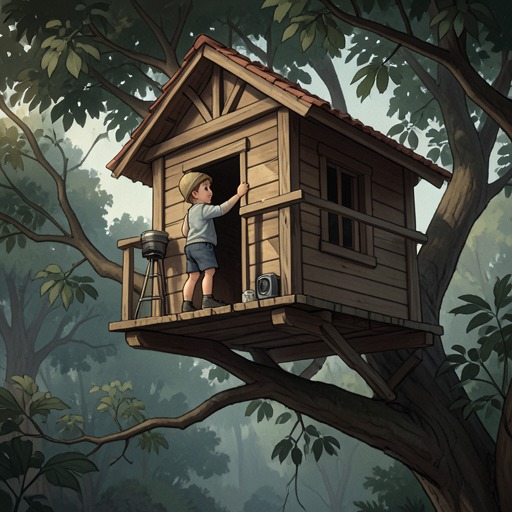
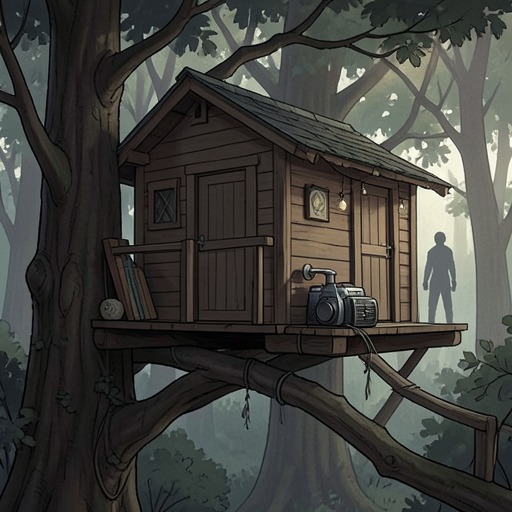
Diego then changes the shape of the deal. Rather than buy only a fraction at the price he has proposed, he offers to take all the lumber on the condition that Bea use it to build a treehouse for his daughter at his estate. The agreement would also pay her for her work as an architect and for the other construction roles she might undertake. He tells her to set a price and prepare a budget, so the lumber becomes the entry point to a paid project rather than simply an awkward stock of material to dispose of.
Bea rejects the proposal at first. When the offer is raised again, she insists that she would rather die than accept it, and says she will retrieve the wood and burn it if necessary. Her threat emphasizes that keeping or destroying the lumber seems preferable to letting Diego dictate what it is worth or what she must do with it. The wood’s limited resale value does not make it inconsequential: possession still gives Bea a choice, even if the choice she names is to refuse the bargain outright.
A Budget and a Change in Value
Bea eventually works on the project with Ingrid and her team. The design grows beyond its initial scale, and their first estimate is exceptionally high. Diego clarifies that the lumber itself is his responsibility and does not need to be included in the budget. That distinction separates the cost of the material from the cost of turning it into a finished treehouse: the timber is supplied by Diego, while Bea’s design and construction work must still be priced.
After repeated insults, Bea arrives home elated because Diego has accepted the budget and construction is about to begin. The lumber has therefore passed through several different valuations: first a disputed asset that Diego says would be hard to resell, then the condition attached to a commission, and finally a material supplied by him while Bea’s work receives its own accepted price. The change does not erase the hostility that accompanies the negotiation, but it means the original low offer no longer determines the project’s value.
Trees, House, and Family Memory
At home, Bea’s happiness about the accepted budget is visible to her father, who is proud of her and eager to see the house. Bea responds that they would have had a house like it if he had not sold the trees. León counters that their own house would not have been the same: it would have been more modest, though just as beautiful. The exchange connects the new treehouse to an earlier family loss without establishing that Bea’s lumber is itself the timber from those sold trees. Instead, the wood and the house bring two different ideas of what trees might have made possible into the same conversation: a paid commission in the present and a family home imagined as something that might have been.
In that contrast, the lumber is more than a leftover from a difficult transaction. Its fixed dimensions first make it hard to sell, yet those same pieces can be incorporated into a new project when the terms change. The wood cannot restore the trees the family remembers losing, and the projected treehouse is not the modest house León recalls. It can, however, support Bea’s return to architectural work and help turn a conflict over what the material is worth into a structure she is paid to design and build.