Cantabria
Gente que viene y ¡Bah!Cantabria is the place of return and conflict in Bea’s story: the familiar northern home she both longs for and fears being drawn back into, and the setting where intimate family life becomes entangled with public disputes over development. Its significance lies not only in its landscape, but in the way its weather, local reputation, political divisions, and economic pressures bear directly on the people who live there.
Return to a Familiar Place
After catching her fiancé with a television presenter and losing her architecture job, Bea has little choice but to return to her hometown in Cantabria. The prospect combines an idyllic landscape with an uncertain future, an eccentric family, and a neighbor she regards as mysterious. Cantabria is therefore less a simple refuge than a place where Bea must begin again under conditions she cannot control.
Her arrival in Santander gives that return a physical and emotional texture. She recognizes the city by its damp air and familiar smell, and thinks of herself as being home. Yet the feeling is divided: returning brings the satisfaction of seeing her family and the few friends she may still have, while also reviving the fear that she has never truly left. She imagines a magnetic pull drawing her back, as if coming home meant she had not progressed or grown, but had become again the adolescent who needed affection and approval. The return is at once comforting and humiliating, a homecoming that confronts her with an older version of herself.
That ambivalence becomes concrete in the effort of getting off the train. Bea drags a heavy suitcase through the station after other passengers refuse to help; its wheel breaks, and the exertion leaves her back in pain and her right hand numb. The small mishap makes the journey home an ordeal rather than a triumphant arrival. Juan, her brother-in-law, eventually collects her and helps with the suitcase, offering practical kindness when Bea is too exhausted to maintain her usual show of self-sufficiency.
Weather, Landscape, and Local Feeling
The region’s spring weather is not presented as a postcard backdrop. During a run with Juan, Bea is badly out of training and struggles in the cold, damp air. The overcast sky and rain feel entirely characteristic of Cantabria at that time of year; every breath hurts as she tries to keep up. At the same time, new leaves emerge with an intense green that seems to catch fire when sunlight breaks through the clouds. Bea fixes her thoughts on that image to distract herself from exhaustion. Nature offers a brief counterpoint to her discomfort: spring’s renewal continues whether or not she feels ready to renew herself.
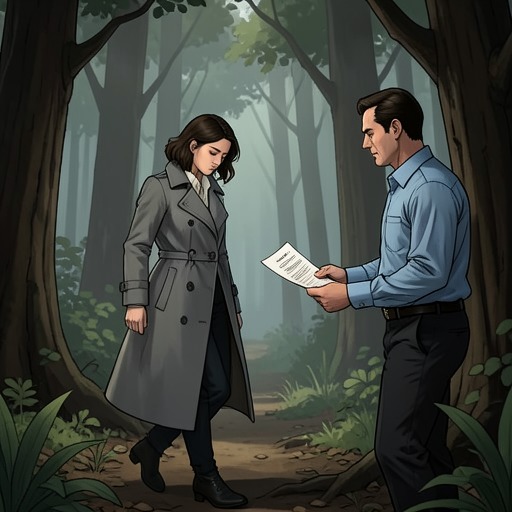
The landscape also matters as a working environment. Diego’s proposed house is designed around a centuries-old oak, and the building team considers how to protect it against the rain and winter cold. Oak wins a discussion that also weighs elm, pine, beech, chestnut, and other woods; solar panels are planned for heating water without disrupting the garden’s appearance. These decisions make climate and materials practical constraints on design, not merely scenery. When Diego later raises a toast to the best treehouse in Cantabria, the local setting becomes a measure of ambition and pride.
A Close-Knit, Watchful Community
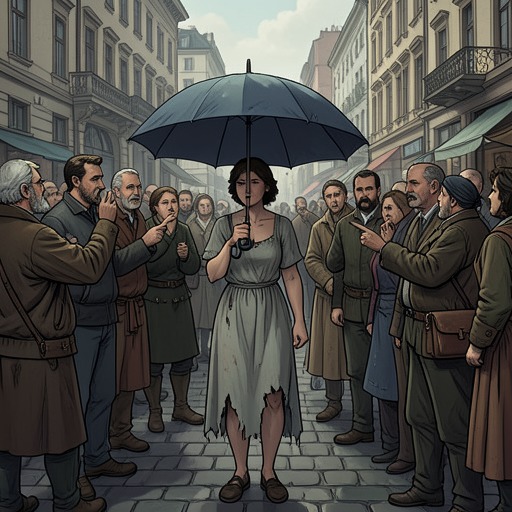
Bea’s return places her in a social world where news and rumor travel quickly. She hears that Jacobo, known by an array of names, and much of the town suspect Diego of killing his wife. The allegation is presented as local gossip, not established fact, but its circulation shows how quickly private tragedy can become a shared story. In a place where people watch one another, reputation can precede knowledge.
Cantabria also figures in the public image of Juan. He has become a regional celebrity after refusing, alongside two fellow firefighters, to evict two elderly women from homes seized over debt. Their position is that their work is to put out fires, not to deprive people of lifelong homes. Their case is awaiting trial, while photographs of Juan have appeared on the front pages of national newspapers. Bea remembers proudly showing those pictures at her architecture studio and presenting him as both family and a man of integrity. His story connects local acts of conscience to a much wider public audience.
The community is not socially static. Bea sees León and his boyfriend showing affection in the street in a town she describes as conservative and prosperous. She contrasts that ordinary tenderness with the Guardia Civil’s earlier history of violence in the Congress, taking the visible affection as evidence of social change over the decades of democracy. The moment is filtered through Bea’s irreverent humor, but its setting matters: public behavior in the town becomes a way of registering how norms have shifted.
Building, Business, and Political Division
Cantabria is also the setting for Bea’s return to architectural work. At Ingrid’s studio, the team assembles the specialist trades needed for Diego’s project: a carpenter and crew, plumber, cabinetmaker, metalworker, mason, and site manager. Bea takes responsibility for the technical supervision of the build. Ingrid presses for efficiency and speed, since completing the initial house is meant to clear the way for the larger renovation and extension. The project gives Bea a professional role again, but it also embeds her in the practical and financial ambitions of Diego’s work.
Those ambitions are vulnerable to a wider dispute over an electrical plant. Diego is anxious for a major energy company to make its decision, while opposition figures in the town hall and an anti-plant association prepare a demonstration. Román is among the opponents and is described as increasingly combative. Diego tries to believe the protest will remain small, expecting that only a few activists will be willing to chain themselves to trees and that the wider public will not mobilize. But he fears that negative publicity could make the company reconsider. The conflict sets the promise of economic development against organized resistance and concern for the landscape.
The demonstration ultimately overwhelms hopes of containing the controversy. Bea manages to attract attention from entertainment programs by confronting a prominent journalist, but her outburst does not displace the protest’s slogan. The crowd is too large to ignore, and the demonstration becomes news across television even when it does not lead the bulletins. Emerge then breaks its contract with the Andrada family and chooses another plant instead. For Diego, the decision means financial ruin; for Bea, it sharpens the moral uncertainty of having contributed to the publicity while also knowing that Diego had put her sister’s interests at risk.
Narrative Significance
Cantabria gathers together the forces that pull Bea in opposite directions. It is the home that restores access to family and work, yet its familiarity also revives her fear of stagnation. Its green spring growth offers an image of persistence, while rain and cold impose material limits on both her body and the buildings being designed. Its small-town intimacy enables care and solidarity, but also allows rumor and political conflict to become intensely personal.
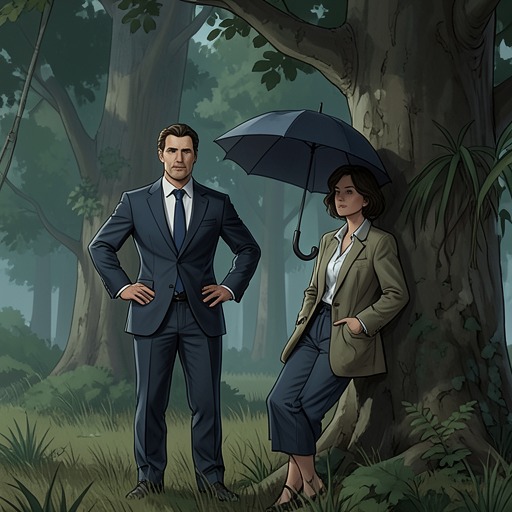
The region’s landscape is consequently more than a picturesque setting. Trees and timber belong to architectural choices and to the dispute over the energy project; weather shapes the construction, and public opposition has consequences for Diego’s finances and Bea’s relationships. In the closing rain-soaked exchange with Diego, Bea insists on walking and getting wet, then is splashed with mud by a passing car. The moment does not resolve the conflict, but it returns the story to Cantabria’s tangible conditions: weather, roads, and bodies caught in the aftermath of choices made at home.