Irene
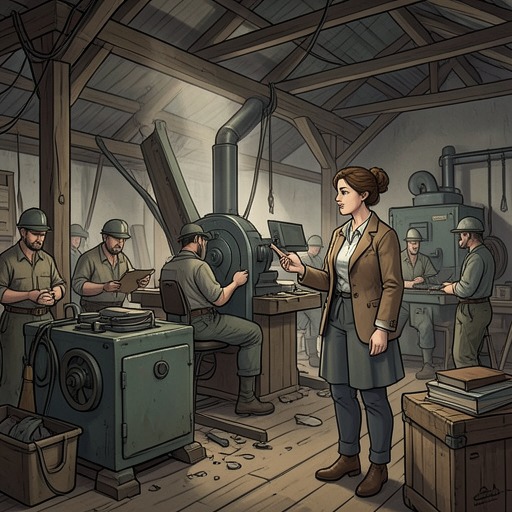
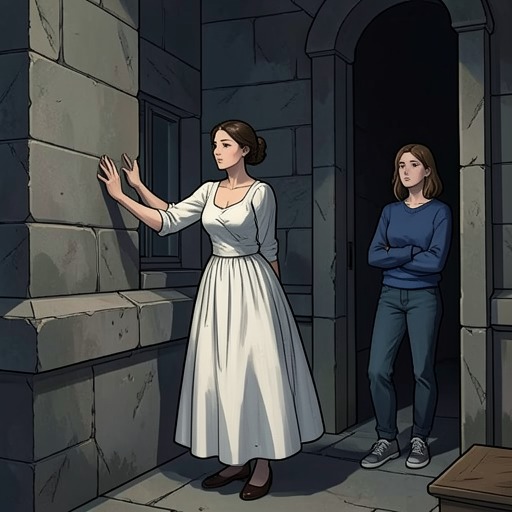
Gente que viene y ¡Bah!Irene is Bea’s elder sister, a 39-year-old mayor whose instinct is to take charge wherever she sees a problem. Her confidence in action serves her in public life and makes her a powerful presence at home, but it also draws her into conflicts she might otherwise have left alone. Her defining political commitment is the San Esteban Biomass Plant: she treats it as a route to employment and cleaner energy, while opponents see the project—and her conduct in advancing it—as grounds for distrust.
Character and public identity
Bea describes Irene as organized, bossy, practical, and inclined to turn opinions into action. Irene calls herself a woman of action; in Bea’s account, she has long led the family, to the point that Bea sometimes feels Irene helped raise her as much as their mother did. Leadership appears almost instinctive to her. That temperament helps explain both her success in local politics and her habit of involving herself in other people’s difficulties without waiting to be asked.
Her public image is shaped by a conspicuous attention to clothes and presentation. Bea observes that Irene has gained weight, which Irene attributes to a thyroid problem, and that she favors what Bea calls older women’s clothing. Irene, for her part, regards dressing well as part of being mayor in an affluent Cantabrian town, even as a politician from Izquierda Unida. Her Loewe handbag became a campaign emblem: she promised voters that it would be the only luxury gift she allowed herself if elected, and that she would enter and leave office with the same bag. The phrase made her a subject of cartoons and discussion on local television. Party members in Madrid were reportedly unimpressed, but her absolute-majority victory silenced their objections. The episode shows how readily Irene turns a potential liability into a memorable public persona—and how electoral success can make an unconventional image useful.
The biomass project and political conflict
When Bea asks how things are going at the mayor’s office, Irene reduces the answer to one word: biomass. The new factory beside the Andrada Family Sawmill has divided the town between supporters and opponents. Irene says the municipal government supports it, though she distinguishes that support from personal involvement in the factory. At this stage she sees the project as a practical answer to several problems at once: it can use otherwise unusable wood, create jobs, and produce energy.
Her defense is also a broader vision of local development. Irene argues that a plant producing electricity could serve 50,000 people, reduce reliance on gas and oil, and make the area a Spanish pioneer in renewable energy. In her view, forest conservation and energy production need not be opposites; the town can have both if people approach the question sensibly. She points to the Andrada family’s expansion of its timber business as evidence that even established local interests recognize the direction of the future, while acknowledging that Diego’s son-in-law played an important part. Her confidence in the project is not merely promotional: she presents it as a way to connect employment, energy independence, and the use of forest material.
That confidence places her under attack from both sides. Irene knows that graffiti in town calls her a traitor to Cantabria for failing to defend the trees. She rejects the idea that being a left-wing woman obliges her to oppose every development affecting the woods, and dismisses some objections as resistance to progress. The conflict is therefore also a struggle over how the project should be described: Irene frames it as clean energy and economic opportunity, while critics frame support for it as betrayal of the landscape and its residents.
Family responsibilities and Fin
Irene’s assertiveness is equally visible in her family life. When Bea returns home carrying a large suitcase, Irene immediately wonders whether Víctor has kept their flat or thrown Bea out and proposes taking legal action. Bea protests that a suitcase proves nothing. The exchange captures Irene’s characteristic leap from a possible problem to a proposed intervention: concern quickly becomes a plan, even when the facts are not yet clear.
She remains attentive during Bea’s withdrawal after the breakup. While Bea shuts herself away to work on the treehouse design, Irene insists that she take a coffee break and challenges her decision to escape Madrid only to spend her days drawing in isolation. The family’s continued visits and invitations eventually draw Bea into running with Juan toward the chestnut grove. Irene’s care is expressed through persistent involvement rather than distance; it can feel intrusive, but it helps keep Bea connected to the household and to the work that has renewed her interest in architecture.
As Fin’s mother, Irene supports his devotion to motocross even though her former husband, Román, has always considered the sport too dangerous and too demanding for a young boy. Irene believes that the happiness Fin finds on a motorcycle matters, and that a person should not be made to abandon something so absorbing. When Fin begins struggling with thoughts of death, she worries that Román may use this vulnerable moment to persuade him to quit racing. She wants him to see a psychologist, but he refuses, reasoning that no psychologist can guarantee he will not die. Irene’s own anxiety spills into a desperate speculation that his nickname, Fin, keeps death constantly in view; she even wonders whether he might feel differently if everyone called him by his given name, Serafín. His insistence on reading a bleak passage from La náusea to others, after which he arrives with a black eye, further alarms her.
After Fin’s serious motocross crash, Román declares that the motorcycles must end. Irene answers that the decision belongs to Fin, defending his right to choose even while the family waits for news. When doctors rule out complications three days later and discharge him, Irene does not have to carry out her threat to demolish the chapel in anger if he is harmed. Fin stays at Bea’s parents’ house while his leg is in a cast and he can barely move on crutches, where the family can share his care. His friendship over Skype with the dwarf stripper who saved him also becomes a continuing family connection: Fin talks with him for hours, and Irene’s sister Débora sometimes brings Óscar to the camera at Fin’s urging. Irene’s role here is protective but not controlling; she advocates for Fin’s choices and joins the wider family effort that supports his recovery.
Exposure and political vulnerability
Irene’s political certainty is tested when Pacheco shows Bea a newspaper report alleging that two landowners were threatened with expropriation unless they agreed to sell trees for the biomass factory. Pacheco says Román, Irene’s ex-husband, has been supplying him with information. The allegation casts Irene’s usual readiness to pursue results in a different light: the same forcefulness that makes her an effective organizer can be presented as coercion when landowners and political opponents define the situation for the press.
The pressure escalates when a television presenter approaches Irene with apparent flattery before recording an interview. Once the cameras are on, the presenter challenges the plant’s environmental and economic claims: the fossil fuel used to transport forest material, the waste and emissions from burning biomass, the area of forest needed to supply a plant, the history of other facilities, public subsidies, and the shortfall between promised and actual jobs. Irene has answers to many questions, but the presenter overwhelms her with facts and turns the interview from a discussion of energy into an attack on her political judgment.
The decisive reversal comes when Irene denies that pollution-control specifications were changed. The presenter then displays a copy of the revised agreement on an iPad, a change Irene says she did not know about. The segment accuses the plant of prioritizing profit over neighbors’ health and presents Irene’s government as having made the facility its political banner. Caught without a ready response, Irene angrily denies the charge and loses her composure. The scene exposes a gap between her confident public defense of the project and her incomplete knowledge of the agreement attached to it.
At the demonstration that follows, Bea sees the presenter reporting from the street while cameras and reporters pursue her. From Bea’s perspective, the protest threatens Irene’s mayoralty as well as Diego’s fortune, and the environmental dispute has become inseparable from the family’s wider public crisis. Irene’s story thus turns on competing versions of what her actions mean: civic initiative to her, betrayal or political maneuvering to her critics, and an increasingly damaging news story to the town watching the interview and its aftermath.