Irene Loses Her Mayoral Office in a Vote of No Confidence
Gente que viene y ¡Bah!Irene Loses Her Mayoral Office in a Vote of No Confidence marks the institutional defeat of a mayor who had made the biomass power project the centrepiece of her government. After controversy over the project intensified into a public and political crisis, Irene declined to resign and faced a motion of no confidence. It passed by an overwhelming majority, including the votes of five councillors from her own party, ending her time as mayor and leaving her feeling both defeated and humiliated.
Background: A mayor identified with the project
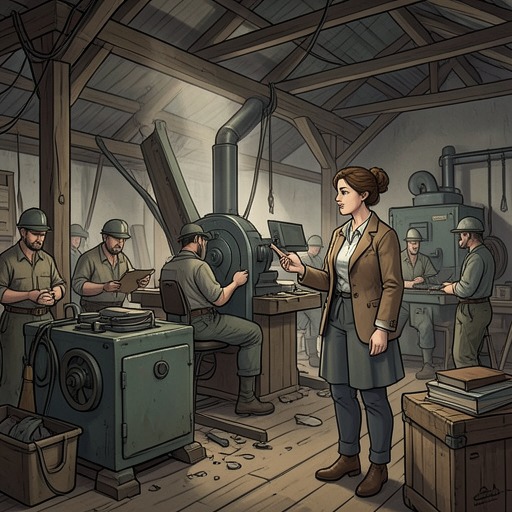
Irene’s political authority rested partly on her forceful, practical style. She was described as a woman of action who did not merely hold opinions about problems but set about acting on them, often taking charge even when others had not asked her to. At home, she had long dominated family life; in public, that instinct for leadership helped carry her into the mayor’s office. Her electoral standing also benefited from the affection villagers felt for her mother, whose empathy and generosity had made her widely beloved. Irene understood that inherited goodwill and worked relentlessly to prove herself worthy of it.
The biomass project became the clearest expression of Irene’s governing ambitions. She presented the proposed plant as a source of clean, inexpensive energy and employment, and argued that it could make use of otherwise unwanted forest timber. She envisaged electricity for 50,000 people and greater energy independence from fossil fuels. To her, the project represented progress and a chance for the region to lead; to opponents, it threatened forests and made her appear aligned with powerful business interests. The village was divided, and Irene said she had spent two years reorganising forest land and persuading people of the benefits of green energy.
Escalating scrutiny and public backlash
The project’s controversy sharpened when a newspaper article, shown to Bea by Pacheco, alleged that Irene had threatened two landowners with expropriation if they refused to sell their trees to the biomass plant. Pacheco said that Irene’s former husband was supplying him with information. The report gave the project’s opponents a politically damaging account of how land and timber were being obtained, regardless of whether the allegation itself had been established.
A television interview then brought the dispute into a national media frame. The presenter initially approached Irene through flattery, but, once the cameras were recording, challenged the claims made for biomass energy. Her questions concerned the fossil fuels used to transport forest material, the waste left after combustion, carbon emissions, the forest area needed to supply a plant of this scale, and whether promised jobs and subsidies made similar facilities viable. Irene had answers, but the presenter overwhelmed them with statistics and examples. The questioning then shifted from the environmental and economic case to the political arrangements behind the project, portraying Irene as a politician willing to force agreement and favour the area’s most powerful timber business.
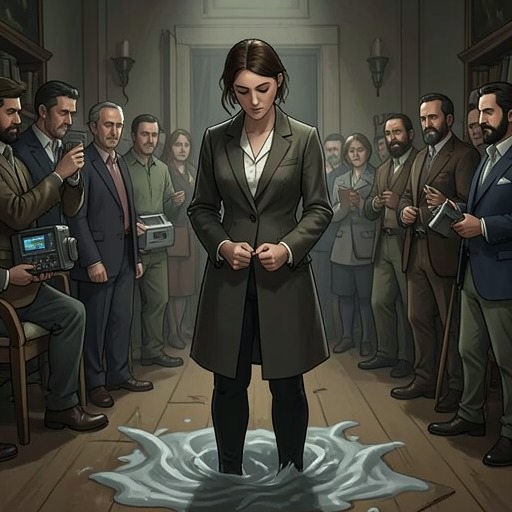
The interview’s most damaging moment came when the presenter produced, on an iPad, a copy of an agreement changing the plant’s parameters—something Irene had not known about. The presenter framed this as evidence that the plant pursued profit at the expense of residents’ health and that Irene’s government had made the project its political banner. Caught unprepared, Irene denied the accusation angrily and lost her composure. The interview did not simply question whether the project was green; it connected its environmental claims to disputed decisions and to Irene’s political conduct.
The motion and Irene’s choice
The public crisis had become visible in the streets as well as on television. Bea found San Esteban filled with a crowd so large that she was stopped around 600 metres from the street where the demonstration was due to begin. Among the demonstrators were Juan and his fellow firefighters, in uniform and opposed to the plant. The scale of the protest confirmed how far the dispute had spread beyond the town’s ordinary political divisions.
After the interview, the opposition announced that it would finally bring forward its long-threatened motion of no confidence. Irene believed the opposition had the votes to remove her. Bea asked whether she should resign instead, but Irene argued that she had not acted wrongly merely by setting a goal and pursuing it, or by trying to put the town at the forefront of European energy. Even while acknowledging that the journalist had caught her unprepared, she insisted that she wanted to face the motion rather than leave through the back door. Her decision made the vote a direct test of whether she still commanded support in the council, not simply a resignation staged to avoid defeat.
Vote and consequences
The opposition did have the votes. Irene was removed by an overwhelming majority, as five councillors from her own party joined the opposition. The result made the loss more than a defeat at the hands of political rivals: members of the political group she had led helped withdraw her authority. Irene tried to accept the outcome with composure, but it was a severe blow. Although she had said she was not attached to the office, she felt that the people she had worked so hard to serve had turned their backs on her. The mayoralty she had feared losing was gone.
Bea did not believe she could look Irene in the face. Irene did not explicitly blame her, but Bea felt responsible for adding to her sister’s distress; Débora, by contrast, did not conceal her anger toward Bea. Bea concluded that her return to Cantabria, intended as refuge from her own disorder, had brought disorder into the lives of the people she loved. She decided to leave for Madrid, imagining that she would have to begin again by finding work and an apartment. The political outcome therefore deepens the family rupture surrounding the project: Irene loses her office, while Bea interprets the damage as another consequence of her presence.
Significance
Irene’s removal exposes the gap between a political project’s promise and the alliances, decisions, and public consent needed to sustain it. Irene had built her government’s identity around the plant and believed its proposed energy and employment benefits justified pursuing it. But a public demonstration, a hostile interview, and reports of disputed land dealings changed the terms on which the project was judged. The censure vote converted that loss of confidence into a formal withdrawal of power.
The defeat also contrasts Irene’s determination to face the vote with its painful result. She would not resign simply to avoid being seen as retreating, yet the council’s decision made the loss unmistakable. The five defections from her own party show that the support on which her authority depended had fractured from within. For Bea, meanwhile, the vote becomes part of a personal reckoning: she sees her family’s political and emotional turmoil as connected to the chaos she brought home.