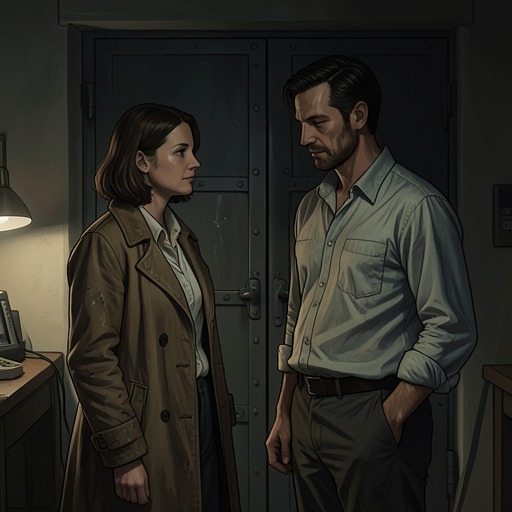
Irene's loss of the mayoralty
Gente que viene y ¡Bah!Irene's loss of the mayoralty is the political consequence of a crisis that turns her signature energy project into a test of her judgment, authority, and support within her own party. After years of building the biomass power-plant plan, she faces public anger and a no-confidence motion; five councillors from her party ultimately vote with the opposition, and she is removed by an overwhelming majority. For Irene, who had built her public identity around getting things done, the defeat is both a formal loss of office and a deeply personal humiliation.
Political Identity and the Biomass Project
Irene is described as a practical, commanding woman of action: when she sees a problem, she moves to solve it, and results matter more to her than procedure. That forcefulness has shaped her role at home as well as in public life; Bea recalls that Irene often seemed to occupy the place of a parent. Her instinct to take charge helps explain her rise to the mayoralty, but it also leaves her prone to entering situations where others might not need her intervention.
Her public image combines that governing style with a conspicuous attention to presentation. Irene attributes her weight gain to a thyroid problem and her preference for formal, older-fashioned clothes to the demands of being mayor in a prosperous Cantabrian town. During her campaign she made a Loewe handbag part of her promise to voters, saying she would arrive with one and leave with one. The line became a subject of cartoons and local television discussion. Even the Madrid branch of Izquierda Unida reportedly disliked the association, but her absolute-majority victory silenced that criticism. The episode shows how Irene could turn a potential liability into a memorable political image, though her later downfall would depend less on presentation than on whether voters and colleagues trusted her project.
The biomass plant had become the foundation of Irene's governing record. She tells Bea that she has spent two years bringing the forests together and persuading people of the benefits of green energy. She fears that the appearance of sabotage by members of her own family could undo that work, damage her standing, and give the opposition an opening. Her response reveals how thoroughly she has tied the plant's prospects to her own political credibility: criticism of the project threatens not only a policy but the account she has given of her leadership.
From Policy Dispute to Political Crisis
The public challenge to Irene's project questions both its environmental promise and its practical value. The interviewer raises the fossil fuels consumed in transporting forest material by truck, the waste produced by burning biomass, carbon-dioxide emissions, and the extensive forest area a plant would need for a continuing supply. Irene has answers, but the barrage of statistics leaves her struggling to persuade. The interview also points to plants that had closed, heavy subsidies, and job creation that fell far short of promises. These questions make the controversy concrete: the issue is whether the plant can deliver the environmental and economic benefits used to justify it.
The interview then shifts from the merits of biomass to the way the project was assembled. Its accusations portray Irene as willing to buy support, favor the area's most powerful businessman, disregard competing interests, and pressure councillors from her own party. These are allegations made against her in the interview, not established findings in the account. Their political force lies in linking her celebrated decisiveness to authoritarianism and alleged favoritism: the same drive to achieve a result can now be presented as evidence that she ignored proper limits.
The controversy becomes visible in the scale of public opposition. Bea arrives near the route of a demonstration and finds the crowd blocking the way from roughly six hundred metres away. The gathering includes not only much of San Esteban but people from across Cantabria, and it is larger than any crowd Bea has seen in the town, even during its patron-saint festivities. Juan and fellow firefighters attend in uniform, making their opposition unmistakable to Bea. The demonstration signals that the dispute has escaped the town hall and become a region-wide challenge to the project.
The No-Confidence Motion
After the interview and mounting opposition, the opposition announces a no-confidence motion. Irene expects that it will proceed only because its supporters have secured the votes to remove her. Bea asks whether resigning might be better than being forced out, but Irene rejects the idea that she has done something that warrants resignation. She describes her aim as taking the town to the forefront of European energy and says that, if the motion goes ahead, she wants to face it rather than slip away through the back door. Her insistence makes the vote a public reckoning: she will not concede office in advance of the formal decision.
Irene also defends the plant's revised technical situation. She argues that its specifications were still within European limits and that the boiler, safety, and monitoring systems could have been improved over time. She characterizes the problems as less grave than the interviewer made them seem, while acknowledging that Diego had been realistic but mistaken in how he handled the matter and that she had let herself be caught unprepared. This explanation does not restore public confidence. Bea notes that people believe Diego misled Irene and that Irene in turn misled everyone else. Irene's uncertainty about whether that loss of trust should prompt her to resign sits beside her determination to answer the motion openly.
Defeat and Its Personal Aftermath
The councillors have the votes. Irene is deposed by an overwhelming majority after five members of her own party vote with the opposition. The result reverses the political support that had once seemed secure, including the absolute majority that carried her into office. She tries to accept the outcome with composure, but the defeat is painful: the representatives of the town for which she had worked have turned against her. She feels like a failure and is humiliated, even though she had said she was not attached to the office itself.
Bea experiences the aftermath through guilt. She cannot bring herself to look Irene in the face and believes her own presence in the village has made her sister's distress worse. The account does not say that Irene directly blames her; Bea nevertheless feels responsible, while Débora makes no effort to conceal her hatred of her. The political defeat thus compounds the family conflict that had already made Bea's return difficult. Bea concludes that she has brought chaos into the lives from which she sought refuge and decides that leaving for Madrid is the only sensible course.
Significance
Irene's removal marks the point at which a governing project, personal authority, and party loyalty fail together. Her political style had rested on action, persistence, and a record of work for the town; the biomass plan also gave her administration its organizing purpose. Once its environmental and economic claims are publicly questioned and the process behind it is attacked, that same concentration of effort becomes vulnerable to charges of overreach. The no-confidence vote converts public controversy into institutional judgment, with the decisive break coming from Irene's own party.
The defeat is not presented simply as the end of a career or as proof that every accusation was true. Irene contests the case against her and intends to face the vote, while the narrative records both the allegations and the claims about the plant's technical limits. What is unambiguous is the loss of political support: five of her fellow-party councillors join the opposition, and she loses the mayoralty. The result also reverberates beyond the council chamber, deepening Bea's sense of responsibility and helping drive her decision to leave the town.