Monte de la Estrella
Gente que viene y ¡Bah!Monte de la Estrella is a family chestnut-growing area whose meaning changes from possibility to loss. Bea identifies a century-old tree there as the ideal support for a treehouse she hopes will help her heal; later, she finds the family’s parcel bare after her father has sold its chestnuts, turning the landscape into the focus of anger and unfinished family business.
Setting and the Chosen Tree
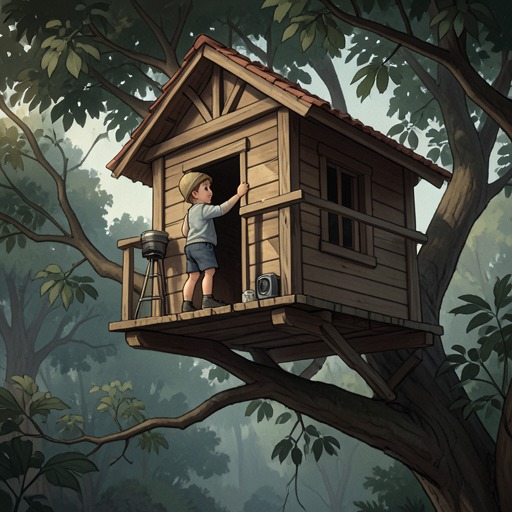
The chestnut stand Bea visits contains six trees, three of them rotten and dead. The best of the remaining trees is a century old, with a very broad trunk and five strong branches extending almost horizontally. Its shape makes the site seem ready for the house she imagines among the branches.
Bea pictures herself resting on a small terrace above the landscape and feeling at one with it. The prospect makes her genuinely happy for the first time in a long while. She takes measurements and photographs, and estimates that a week of concentrated work will be enough to finish the plans. The tree is therefore not just a building site: for Bea, it offers the prospect of a home and a way to recover.
Family Land and a Misunderstanding
The family has chestnuts in both Monte de la Estrella and Prado Largo. When asked which trees were sold, Bea learns that the land consolidation had taken place in Monte de la Estrella. Her father explains that he assumed she was carrying out her own consolidation in Prado Largo and had not realized she meant the other stand.
That mistaken assumption exposes how a consequential decision about family land was made without Bea understanding which grove it affected. The distinction between the two areas matters because Bea had believed her plans concerned Prado Largo; learning that the consolidation involved Monte de la Estrella helps explain why the sale comes as such a shock.
The Bare Parcel
When Bea returns to the chestnut area, the family’s parcel has been cleared: not one tree remains. She struggles to turn her attention elsewhere and resents that her father sold the chestnuts without a decision shared by the family. She had tried to speak with him over Skype the previous night without success, and expects to have a serious conversation when she returns home in a few days, though she knows it cannot undo what has happened.
The loss also changes the practical fate of the treehouse plan. The family begins loading the timber into a van, and Bea says the wood is no use to her now; she hopes the sawmill will buy it back. The contrast is stark: the grove that had offered a living tree on which to build a place of refuge has become a cleared parcel and wood to be carted away. Monte de la Estrella thus binds Bea’s hope for renewal to a conflict over who had the right to decide the fate of the family landscape.