Román
Gente que viene y ¡Bah!Román is Irene’s former husband and Fin’s father, a persistent opponent of Fin’s motocross career whose conflict with Irene escalates from disagreement over their son’s choices to threats involving custody and her position at the town hall. His objections begin with concern about the sport’s danger and Fin’s demanding commitment; when Fin’s distress and a hospital visit bring the family under pressure, Román’s concern becomes entangled with a struggle over who gets to decide what is best for their fifteen-year-old son.
Family Position and the Motocross Dispute
Román’s place in the family is defined by his opposition to Fin’s racing. He regards motocross as too dangerous and believes it demands too much dedication and discipline from someone so young. In his view, Fin ought instead to spend time with friends and play video games. That judgment sets him against Irene, who has supported her son because she sees how happy he is on a motorcycle and recognizes the hours and effort he puts into becoming the best.
The disagreement sharpens when Fin becomes preoccupied with death and considers giving up motorcycles. Irene argues that Román is using this vulnerability as an opportunity to draw Fin away from competition, and insists she will not allow it. This is Irene’s interpretation of her former husband’s conduct, rather than an independently confirmed account of his intent. The distinction matters: Román’s opposition to racing is explicit, but the claim that he is exploiting Fin’s existential anxiety comes from Irene, who sees her son’s passion and his distress as matters requiring support, not a reason to abandon the sport.
The Hospital Confrontation
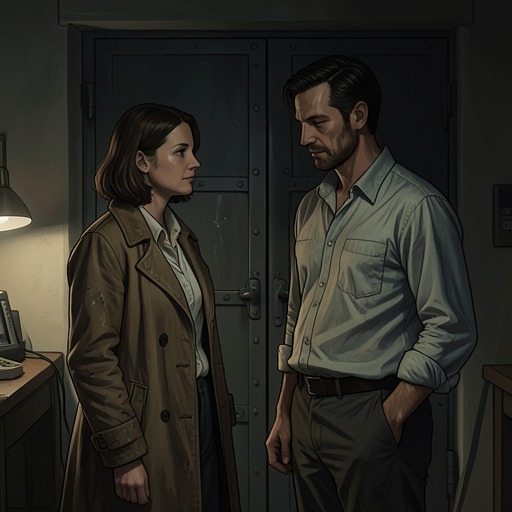
Román enters the hospital room with determination and immediately asks how Fin is. The brief exchange places his concern for his son alongside the conflict that follows: he proposes that he and Irene present a united front and decide what to tell Fin when he comes out. Irene refuses to make a decision in the heat of the moment. Román then threatens that unless she behaves like a sensible mother, she will lose custody.
Irene does not yield to the threat. Although she had been upset and blaming herself for being consumed by her work at the town hall, the confrontation restores her customary composure. She answers that Fin is fifteen and that, in any custody decision, he would choose where to live; she is confident that he would choose her. Her response counters Román’s attempt to define her as an inadequate mother with an appeal to Fin’s own preference. The scene establishes a struggle not only over motocross, but over parental authority and whether their son’s wishes will be heard.
From Custody Threat to Political Retaliation
Román’s hostility does not remain confined to the hospital or to disagreements about parenting. The threat to go after Irene follows quickly, as he had promised at the hospital: he intends to do everything he can to remove her from the town hall. The target of this campaign is therefore Irene’s public position, making their personal conflict part of the political pressure surrounding her mayoralty.
The shift expands the stakes without resolving them. The available account establishes Román’s intention to oust Irene, not whether he succeeds. It does, however, connect his earlier coercive threat about custody with a later effort against her political office. In both cases, he confronts Irene by challenging her authority: first as Fin’s mother, then as the person serving at the town hall.
Characterization and Narrative Role
Román is presented through a pointed contrast with Irene. He sees danger, discipline, and a young person’s supposed need for more conventional pastimes where she sees happiness, commitment, and a passion worth protecting. His concern for Fin is visible in his urgent question at the hospital, but it does not prevent him from threatening Irene when she resists making an immediate decision. The narrative thus holds paternal concern and coercive conduct in the same frame rather than treating them as interchangeable.
His role also marks the widening reach of the family dispute. What begins as opposition to Fin’s sport becomes a custody confrontation and then a stated campaign to remove Irene from public office. The evidence does not establish Román’s ultimate success or a fuller account of his political methods; his significance lies in the escalation itself. He is both a father opposed to his son’s chosen pursuit and an adversary willing to carry his conflict with Irene beyond the household.