Treehouse Hotel Project and Bea’s Return
Gente que viene y ¡Bah!The Treehouse Hotel Project and Bea’s Return is the novel’s closing event, turning Bea’s longing to help Diego into a concrete invitation to work together. Among the chestnut trees, Diego offers her the role of architect for a new hotel, and Bea accepts after agreeing first to finish a treehouse for his daughter. The project gives her a way back to architecture while making their renewed closeness visible through practical choices rather than declarations alone.
The invitation in the chestnut grove
The scene begins with Bea recognizing that she wants to help Diego, and that the desire matters to her as more than a passing impulse: it is something she hopes may help her continue. She follows him from the car into the forest, between the chestnut trees, where he stops in a clearing and reveals that the parcel belongs to him and León. They are going to start a business together. The location is therefore not simply a backdrop to a romantic reunion; it is the site of a shared undertaking with a defined ownership and a partner beyond the couple.
Bea does not immediately understand what kind of business Diego has in mind. Her first possibilities are another sawmill or another biomass plant, a question that recalls the kinds of enterprise associated with the family’s recent conflicts. Diego sets those expectations aside: the land is already in order, and what the venture needs is an architect. His answer narrows the uncertainty from a potentially contentious development to a specific professional invitation, though it does not erase the importance of what will be built in the forest.
A hotel among the trees
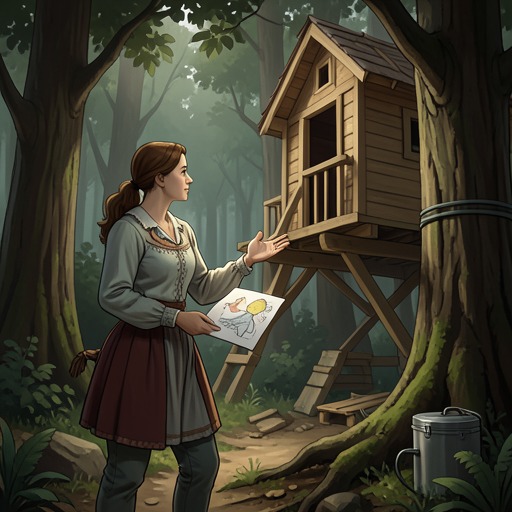
When Bea asks what the business is, Diego describes a hotel in the trees. The plan is to build one small house in each tree, with fifteen treehouses in total and accommodation for thirty-eight to forty people. He hopes it will become the first treehouse hotel in Cantabria. The scale and ambition are precise: the proposal is not just an extension of Bea’s earlier work on a single treehouse, but a substantial design project intended to make the place a destination.
Diego presents the hotel as something that should be beautiful and notes that such places are becoming fashionable. Yet the offer depends on more than a trend or a scenic site. He tells Bea that they need the best architect and asks her to be theirs; he then makes the invitation personal by saying the project would have no meaning without her. The professional role and the emotional appeal are deliberately joined. Bea is being asked not merely to return to her former occupation, but to contribute her judgment and presence to a venture Diego is building with León.
The treehouse that comes first
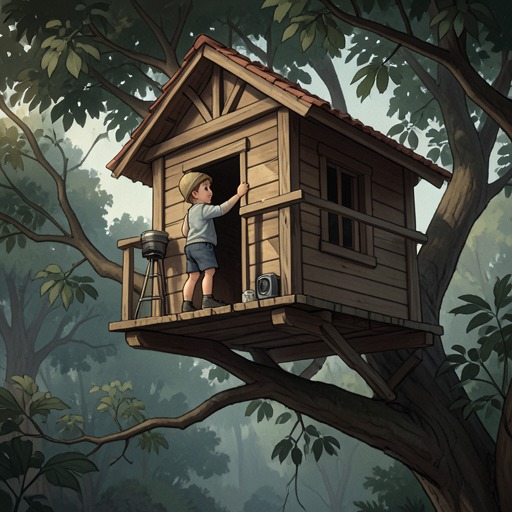
The hotel is not the only design commitment in Diego’s proposal. He sets a condition: Bea must first finish the treehouse she began for his daughter, so that she will have a special place when she visits her grandparents. The request comes from the child herself. It makes the smaller, earlier project the first obligation in the larger plan and gives Bea’s work a direct personal meaning within Diego’s family life.
Diego also tells Bea that he saved the estate and its house, but that he and his daughter no longer live there; they have moved to Santander. Bea did not know about the move. In her understanding of the moment, this change matters because Diego is no longer living with his in-laws, and because his offer places her in the future he is making for himself and his daughter. The sequence is significant: before asking Bea to design the hotel, he has already acted to change the circumstances of their home life, and his daughter’s request makes her place in that future specific rather than abstract.
Acceptance and a shared future
Bea sees Diego become tearful and recognizes why: he has, on his own, helped his four-year-old daughter move beyond the death of her mother and begin speaking. His emotion turns the scene briefly away from the hotel and toward the family grief that continues to shape their lives. Bea wonders whether Diego might also help her move through the death of her own mother. The question remains open, but the scene places her loss beside his without suggesting that either is simply resolved by the new relationship.
When Diego asks again for her answer, Bea thinks of her mother’s belief that mistakes should be accepted and owned, and that they can lead people somewhere unexpected. She understands her own missteps and the trouble they caused as part of the path that brought her to Diego. She says yes: she will build the treehouse for his daughter quickly, then take on what she calls the wildest project of her life, constructing a treehouse hotel with a red-haired man. Diego embraces her from behind, and she responds that it will certainly be fun.
The ending binds work, family, and intimacy without collapsing them into one thing. Bea returns to architecture through a project whose first task is for Diego’s daughter; Diego’s partnership with León gives the hotel a broader basis than romance alone; and the embrace closes the scene on mutual anticipation. Rather than presenting a finished outcome for either the hotel or Bea and Diego’s relationship, the event ends with their decision to begin.