Sunny Klein's Deathbed Revelation
Gone for GoodSunny Klein’s deathbed revelation is a brief but consequential disclosure: three days before her death, she told Will Klein that his missing brother, Ken, was still alive. The statement opens a possibility Will cannot readily accept or reject. Its weight comes not from explanation or proof, but from the circumstances in which it is spoken, its stark brevity, and the uncertainty that follows it into the family’s mourning.
The Deathbed Statement
Will recalls that Sunny was gravely ill and spent most of her time asleep. In that condition, she said, “He's alive.” She had warned that these were not her last words, though they came close to being so. The statement was made only once, and she did not explain it. Will emphasizes both its exact wording and its isolation: there is no account of how she knew, what she believed Ken had done, or why he had not come home.
Sunny’s condition leaves Will unsure how much confidence to place in the disclosure. He doubts whether this moment was lucid, and the possibility of medication affecting her words remains central to the family’s later response. Yet uncertainty does not make the statement emotionally neutral. Will considers that Ken’s being alive might be either good or bad news; the revelation offers hope while also reopening the unresolved circumstances of his absence.
What Was Left Unsaid
The disclosure does not become a conversation between mother and son. Will recalls that Sunny had one more possible lucid moment, when he told her she had been a wonderful mother, said that he loved her, and said goodbye. They did not speak about Ken then. Will notes that silence did not mean the family was not thinking of him, as though he were present at Sunny’s bedside. The contrast is defining: Ken is intensely present in their thoughts, yet absent from the final exchange between Will and his mother.
That separation also limits what the revelation can establish. Sunny’s assertion is a claim about Ken’s survival, not an explanation of his whereabouts or a confirmed account of his actions. Because she says nothing more, Will is left with a sentence whose personal importance exceeds its evidentiary detail. The episode’s force lies in that gap between what she states and what she can no longer clarify.
The Revelation at the Shivah
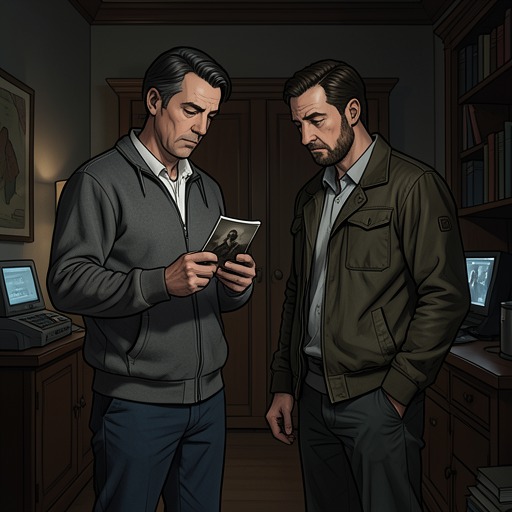
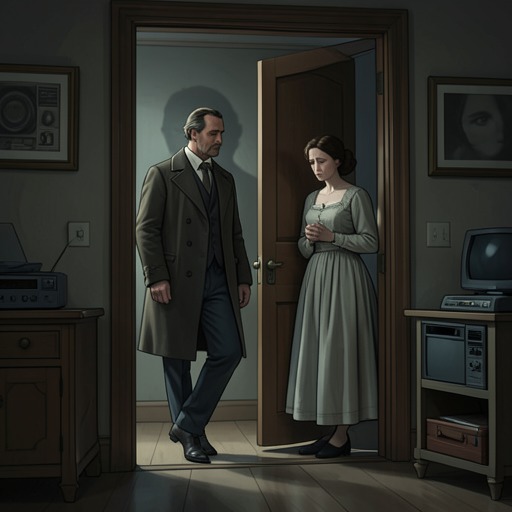
Four days after Sunny’s death, the family returned home to sit shivah. Will then told their father that his mother had said Ken was still alive. Their father stiffened briefly before giving a sad smile and responding, “It was the drugs, Will.” His immediate dismissal makes the disagreement less a dispute settled by evidence than a difference in how each man handles Sunny’s words: Will brings the possibility forward, while his father explains it away.
When Will presses him, their father recalls more of what Sunny had said. According to him, she also claimed that Ken had not killed Julie Miller and would have returned by then except that he had to do something first. The account adds two important assertions, but does not resolve their source or reliability: Will learns them through his father’s recollection, and his father continues to insist that Sunny was not making sense. The disclosure therefore grows in scope while remaining uncertain.
Narrative Significance
The revelation changes the meaning of Ken’s absence without immediately settling it. Before Sunny speaks, his survival is not offered as a possibility in this exchange; afterward, Will has a reason to question the family’s understanding of what happened. The further claims attributed to Sunny sharpen that uncertainty by linking Ken’s possible return to Julie Miller’s death and to an unfinished task, but provide no details that would explain either.
The event is framed through Will’s later recollection, so the reader encounters Sunny’s words alongside his doubt about her lucidity and his father’s refusal to credit them. Neither response conclusively verifies her account. That tension gives a very short utterance lasting force: “He's alive” can be heard as hope, as a drug-affected statement, or as an incomplete lead whose meaning remains open. At the family’s moment of mourning, the sentence makes Ken present again while leaving the central questions about him unresolved.