The Chi Gamma Murder Connections Emerge
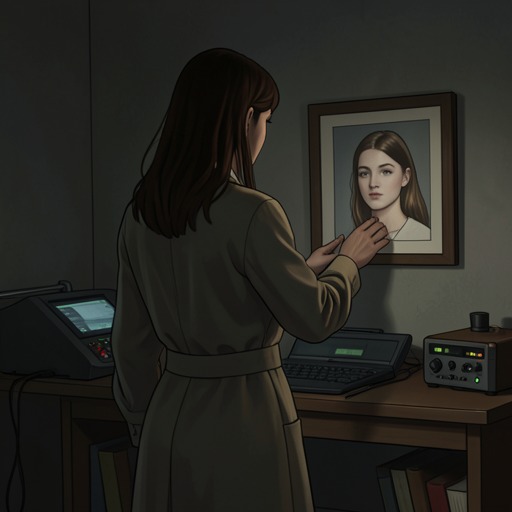
Gone for GoodThe Chi Gamma murder connections emerge when Katy Miller uncovers that Sheila Rogers and Julie Miller were not strangers: they had attended Haverton College, belonged to the same sorority, and had shared a room. Rose Baker’s testimony then links the women’s college circle to the earlier killing of Laura Emerson. The disclosures transform a search for answers about Julie into a challenge to the official account of her murder, while leaving a crucial distinction unresolved: the evidence suggests a pattern and institutional concealment, but does not establish that Sheila caused the deaths or explain why the FBI withheld what it knew.
The Sorority Connection
Katy finds the first link in an old Chi Gamma booklet kept in a trunk in the basement. It identifies Sheila Rogers as being from Mason, Idaho, records her communications major, and places her at Haverton College with Julie Miller. The biographical entry matters because it joins two lives Will Klein had understood separately. Sheila had been close to him, while Julie was the woman whose murder had remained an open wound; the booklet places both women within the same college organization.
Katy’s further recollection supplies the more intimate connection: Sheila and Julie had been roommates. The revelation stuns Will, who had not known Sheila’s college history and learns that Sheila never told him about it. Katy, by contrast, remembers Sheila’s name from the sorority record. The exchange is not simply a new detail about their past. It changes the questions the investigation must ask: what happened within Chi Gamma, what Julie and Sheila knew about each other, and whether their shared surroundings connect their later fates.
Rose Baker’s Account of Chi Gamma
Will and Katy bring the discovery to Rose Baker, a former figure in the sorority’s life. Rose recalls that Julie initially seemed fine at college, then began to withdraw from the group, cut classes, and end a relationship with her hometown boyfriend. Rose places this change in Julie’s junior year and emphasizes how late it came compared with the breakups she considered ordinary among first-year students. Her recollection gives the college connection a gradual shape: Julie’s distance from her earlier life preceded the murder, though Rose cannot explain it fully.
Rose says Sheila joined Chi Gamma in that same period and describes her as a bad influence. When asked about the rooming arrangement, she confirms that Sheila and Julie were roommates for a time. She also says she believed Sheila had brought something bad into Chi Gamma and, in retrospect, wishes she had removed her, but had no proof of wrongdoing. That qualification is essential. Rose’s suspicion supplies an atmosphere of unease, not evidence that Sheila committed a crime or that her influence caused Julie’s death. Her account leaves the supposed harm unnamed, preserving the gap between her judgment and what she could substantiate.
Sheila’s earlier history makes Rose’s characterization more complicated without resolving it. In the investigation, Will learns that Sheila had run away from the Midwest and was arrested for prostitution at sixteen; according to her file, she was working for Louis Castman. Castman later describes meeting her after she arrived by bus and says she eventually became connected to larger dealers, began carrying drugs, and started getting clean. This history establishes the vulnerability and exploitation that marked Sheila’s youth, but it does not prove Rose’s allegation about her conduct at Chi Gamma. The contrast between the runaway known through police records and the college roommate named in a sorority booklet makes Sheila’s past harder to reduce to one description.
Laura Emerson and the Pattern of Deaths
The conversation changes when Will tells Rose that Sheila has been found murdered. Rose’s reaction opens another line of history: she asks whether Will knows about Laura Emerson. He does not. Rose says Laura was found dead near her home in North Dakota, eight months before Julie, and had also been strangled. Until this disclosure, the investigation had treated Julie’s killing as though it stood alone; Laura’s earlier death gives the investigators a concrete basis for comparing the cases.
Rose says the police did not find Laura’s killer, but two FBI agents became involved. She does not remember their names. She recalls that the agents did not ask her about Laura, so she brought up the earlier strangling herself. Their response, as she remembers it, was that she should keep the information to herself because speaking about it could compromise the investigation. The sequence is consequential: Rose had information about a prior strangling, volunteered it to federal investigators, and was told not to discuss it. Her account does not identify the agents or disclose what they knew about the cases, but it establishes that the connection had been raised with the FBI.
The FBI’s Withheld Account
For Will, the accumulated disclosures produce a sharp reversal. Three young women are dead, and he recognizes that all three were connected to the same sorority house. Laura’s death preceded Julie’s by eight months; Sheila, Julie’s former roommate, has now also been murdered. Taken together, those facts make a recurring pattern difficult to dismiss as coincidence. The novel presents this recognition through Will’s overwhelmed response, emphasizing how quickly the separate strands of his investigation have begun to converge.
Will’s further conclusion is that the FBI knew the murders were connected and had lied for years by allowing Julie’s case to be presented as a random, solitary act of violence. That is his inference from Rose’s account and the newly visible pattern, rather than a full explanation from the agents themselves. The precise reason for their silence remains unanswered. The discovery therefore shifts the mystery rather than closing it: investigators must consider not only who killed the women, but why the connection between their deaths was kept from the public and from those closest to Julie.
Consequences for the Investigation
The revelations redraw the relationships at the center of the case. Katy’s memory and the sorority booklet provide documentary evidence of Sheila and Julie’s shared past; Rose supplies the testimony that links Chi Gamma to Laura’s earlier death and to the FBI’s response. Neither source answers every question, but together they redirect Will and Katy from a single murder toward an institutional and historical pattern.
The event’s significance lies in the tension between what can be established and what remains conjecture. Sheila and Julie were roommates; Laura was strangled before Julie; Rose told FBI agents about the earlier death and says they urged her to remain silent. Rose’s belief that Sheila was harmful to Chi Gamma is not proven, and the agents’ full knowledge or motive is not disclosed here. By keeping those distinctions visible, the discovery exposes how an official account can appear settled while crucial connections remain unspoken—and makes the search for the truth inseparable from the question of who controlled its telling.