Will Klein and Squares’s Friendship
Gone for GoodWill Klein and Squares’s Friendship is shown through practical cooperation, unguarded humor, and a shared willingness to face painful obligations. Squares is not merely a companion who makes Will laugh: he notices what a situation requires, helps turn connections into action, and urges Will to remember the people behind the problems he is trying to solve. Their trip to Sheila Rogers’s funeral brings those qualities together, revealing a friendship that can hold both levity and grief.
Trust and Practical Cooperation
The friendship appears in the rhythm of working together. When a problem calls for help from Quick Go, Squares remembers that Sonay is a devoted practitioner of Yoga Squared and uses that connection to reach her. Sonay, in turn, contacts Quick Go’s owners, the brothers Ian and Noah Muller. Will recognizes the ingenuity of this chain of calls and tells Squares he is amazing; Squares accepts the praise with characteristic self-assurance. The exchange presents their partnership as complementary: Squares draws on personal connections and acts decisively, while Will recognizes the value of what he has done.
That competence is paired with familiarity rather than solemn admiration. Will’s response is affectionate, and Squares’s confident reply lets the praise become a joke between them. The brief exchange conveys ease built on mutual recognition: Will can admire his friend without ceremony, and Squares can turn the compliment into another occasion for comic self-regard. The friendship’s warmth is therefore present even in a scene organized around solving a practical problem.
Shared Work Among Street Youth
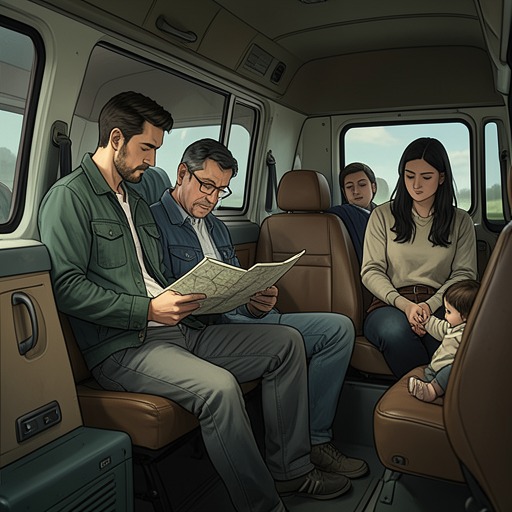
The bond also takes shape through work they do side by side. At four in the morning, after visiting a dive on Avenue A known for heroin use, Will and Squares return to their van. Earlier, Squares had handed Will phone cards to distribute as they approached young people, talking with them, cajoling them, and listening. The account emphasizes not only their shared task but the attention it requires: they encounter children still living on the street, and the work leaves little room for easy conversation between the two men afterward.
In that silence, Squares proposes that they go to the funeral. The suggestion connects their immediate work with their obligation to Sheila Rogers. He asks whether Will ever saw her face when she worked with the young people, directing attention to the care she showed them. Will does not trust his voice enough to answer readily. Squares does not insist on an explanation; instead, he allows the moment to turn toward remembrance. Their shared service among street youth gives the funeral decision a concrete basis: Sheila is not only someone to mourn, but someone whose work among those children they have encountered.
Humor, Grief, and the Funeral
When Will struggles to make sense of events, Squares offers a different emphasis. He says that they have been doing too much with their heads and may need to remember the heart as well. Will admits that the thought does not entirely make sense to him, but Squares makes the proposal practical: they can go to pay their respects to the Sheila Rogers they knew. He then tells Will that they owe it to her memory. The language of obligation matters, but the recommendation is not presented as an investigative tactic alone. Will considers the funeral as a chance to find answers and as an act that might help him heal.
The trip itself preserves the friendship’s lighter register without erasing the grief. On the flight from La Guardia to Boise, Squares reads an article about himself in Yoga Journal, nodding along to claims about him and declaring them true. Will understands that he is doing it to annoy him, and identifies that very habit as part of why Squares is his best friend. The joke does not interrupt the seriousness of their journey; it shows how their usual rapport continues inside it. Squares can provoke Will, and Will can see the affection within the provocation.
After landing, they travel toward Mason in a rented Buick Skylark, get lost twice, and pass the strip malls that Will observes have spread even into the supposedly rural landscape. Squares’s company is part of the journey, not a cure for what awaits them. At the small, unremarkable chapel, they find Edna Rogers standing outside alone. When Will reaches the casket with Edna, he looks down and experiences a sudden collapse of composure. The account does not describe Squares intervening at that instant; it does show that the two friends have made the journey together and that Squares helped Will reach the ceremony when grief made even speaking difficult.
What the Friendship Makes Possible
The relationship’s significance lies in the way practical action and emotional attention reinforce each other. Squares helps Will mobilize a contact when a problem needs solving, but he also interrupts the habit of treating every uncertainty as something to master by thought alone. His suggestion to go to the funeral gives Will a concrete action when answers remain uncertain; his reminder about the heart gives that action a meaning beyond investigation. Will, in turn, responds to Squares with trust, praise, and a clear awareness of his teasing manner.
The novel supplies no origin story for their friendship in these scenes. Instead, it defines the relationship through observable choices: working together among street youth, following Squares’s lead toward a funeral, making the journey, and preserving their familiar humor along the way. That combination makes their bond credible without making it sentimental. Squares does not remove Will’s grief or provide a solution to it; he helps him keep moving toward the people and memories that matter.