Dolly Upshott
Good Morning, Midnight (Reginald Hill Edition)Dolly Upshott is the sister of David Upshott, the vicar of Cothersley, and the assistant of Palinurus Maciver Junior. To the village she is a familiar presence in parish work; to the police investigating Palinurus’s death, she becomes a person whose seemingly separate public and private identities must be reconciled. Her account of becoming Dolores explains how a role first approached as play came to involve sexual encounters arranged through Palinurus, and shows the discretion, unease, and personal boundaries that shaped that arrangement.
Identity and Parish Life
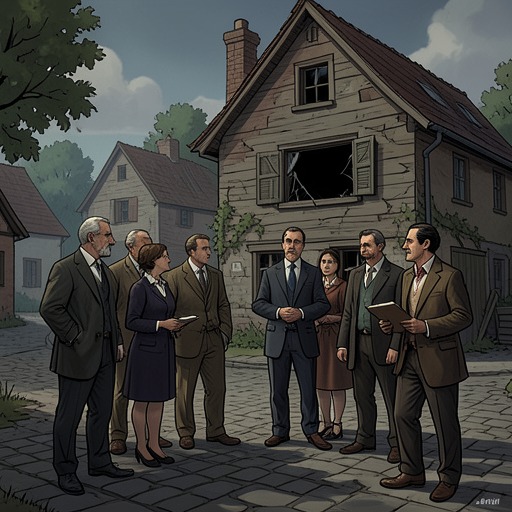
Dolly is introduced at St Cuthbert’s Church after arriving in a dusty hatchback with supplies for a bring-and-buy sale. She has discarded an Archimagus costume and changed into practical country clothes, although her unruly brown curls remain recognizable. Her arrival shifts the scene from the police officers’ conversation to an ordinary task: carrying boxes from her car into the hall. She accepts Peter Pascoe’s offer of help, but makes clear that the work is hers to manage and that he has come to Cothersley for more than the pleasure of acting as a porter.
The sale is one instance of Dolly’s wider responsibility for parish affairs. She sorts out the accounts and handles goods that parishioners leave at the vicarage, while David prefers the practical value of filling the pews to receiving donations by post. Dolly credits Palinurus with helping the parish when it needs money. She recalls that only the previous weekend he had brought a carload of goods for the sale, insisting that villagers should be able to enjoy the pleasure of finding bargains that he valued as an antiques dealer. Her voice breaks as she remembers this recent kindness, placing his death against the immediate detail of a generosity that was still active in village life.
Peter also asks about Kay Maciver, Palinurus’s stepmother, and Dolly says Kay is bearing the situation badly. Dolly has not visited her; Kay is reluctant to receive company and has almost thrown David out of the house. The exchange situates Dolly between the investigation and the family’s grief, but does not make her an intimate of Kay’s household. Her knowledge of the bereaved family is limited, and she presents it as such.
Dolores and the Arrangement with Palinurus
Dolly’s private account begins with the circumstances that preceded her work for Palinurus. After her mother became ill, Dolly cared for her for six months, eventually giving up the possibility of continuing her bank job. Following her mother’s death, she lived at the vicarage. She later took work with Palinurus and says that, with his help, she became good at it. Her account presents the job as a welcome new part of her life after an extended period defined by care and constrained opportunity.
The Dolores persona began casually. Dolly and Palinurus asked one another to do various things, and dressing as Dolores was one of the things he requested. She describes the initial playfulness as akin to children dressing up, while acknowledging that it was more than that. The distinction between Dolly and Dolores then became operational: when Palinurus wanted to bring a friend, he suggested that the visitor could know her only as Dolores, not as Dolly Upshott. Dolly was frightened by the prospect, but considered what Dolores herself might want; she recalls that the persona found it exciting, and that the encounter proved more exciting still.
A later encounter made the question of payment explicit. Palinurus’s friend left an envelope beside Dolly’s clothes in a hotel room; it contained two hundred pounds. Dolly was furious and challenged Palinurus over what he thought she was. He replied that what mattered was what she thought of herself, and offered to return the money. Dolly threw it at him; he threw it back, saying that he would not object to being paid as a stud but had no ambition to be a pimp. They both began laughing. The exchange does not erase her anger or make the money inconsequential: it records a dispute over whether the arrangement defined her as a paid sexual partner, and ends in mutual laughter rather than a simple resolution imposed by Palinurus.
Palinurus later reassured her that he understood the encounters as temporary fun while his sister was out of commission, and promised there would be no tales out of school. His description of himself and Dolores as discreet underscores how carefully the private arrangement was kept apart from the public identities around it. Dolly’s willingness to recount it to the police is therefore significant: she is asked to be frank partly because she cannot bear the prospect of David learning about it through some other route.
The Night of Palinurus’s Death
Dolly’s account places her with Jason Dunn and Palinurus on the night of his death. Their usual arrangement was to meet in the sports-centre car park, where Jason and Dolly would get into Palinurus’s car and he would drive them to Moscow House. That way, his was the only car anyone would see going up the drive. On this occasion Palinurus did not arrive at the usual time. Dolly tried his mobile, which was switched off, and then tried the shop without getting an answer.
Jason used Dolly’s phone to call Palinurus’s home and spoke with Sue-Lynn Maciver, who did not know where Palinurus was. They drove along The Avenue and passed the entrance to Moscow House, but mist made the house difficult to see from the road. On their return, they saw a police car turn into the drive. Jason was troubled and went back to the sports centre to make more calls, dropping Dolly in the car park. He told her he was sure everything was all right, but she could tell he was worried.
Dolly usually changed clothes and removed her make-up in her little Fiat when the car park was quiet. This time, worried herself, she drove back down The Avenue. She arrived in time to see an ambulance with its siren on turn into the Moscow House drive and saw what appeared to be a police car’s flashing lights near the house. She parked around the corner and walked back. She knew that prostitutes often worked along The Avenue and expected a woman walking alone not to attract attention; instead, the area seemed deserted, as if the police presence had driven the women elsewhere. These details connect her hidden work to the scene of Palinurus’s death without establishing that she witnessed what happened inside the house.
Recognition, Disclosure, and Narrative Role
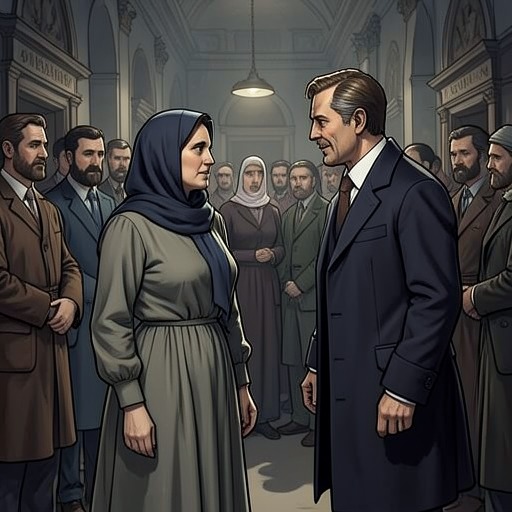
Dolly’s appearance at the church later produces a consequential mistake in identification. Constable Jennison recognizes the woman Peter had spoken to outside St Cuthbert’s as someone he believes to be Dolores, noting how different she looked with her hair altered. Peter knows her as Miss Upshott, the vicar’s sister, and reacts incredulously. Jennison is unhappy about raising the possibility and admits he may be mistaken, but feels he must report what he noticed. The incident makes visible how appearance and setting can conceal the continuity between Dolly’s two identities: the woman carrying parish boxes is also the woman Jennison associates with the name Dolores.
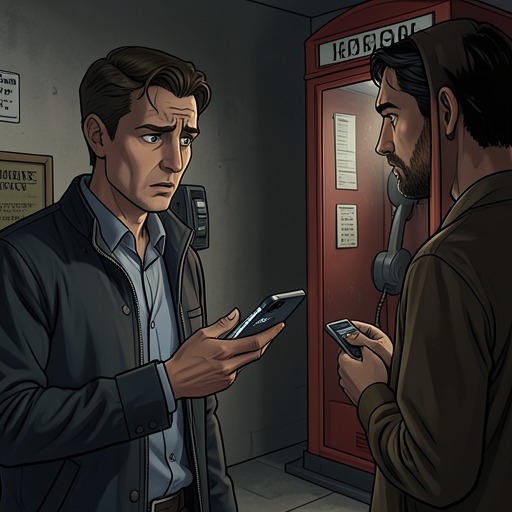
Peter then calls Dolly, using the redial function on a phone, and asks her to come in at her earliest convenience, offering instead to speak with her at the vicarage. The silence among the officers after the call registers how much this summons changes their understanding of the church encounter. When Dolly later stands at a patio window in Peter’s home, she looks pale, with dark shadows beneath her eyes and her short brown hair more disordered than usual. Peter reads her presence as confirming a suspicion, and she confirms what he has inferred directly. After examining his face for nearly a minute, she agrees to speak.
The narrative then gives Dolly room to tell her history in her own voice, beginning not with a neat account of the case but with uncertainty about where such a story begins. That shift matters: the investigation first encounters her through clothing, a mistaken recognition, and the practical traces of the night at Moscow House; her testimony supplies the history behind those appearances. Dolly is neither reduced to the parish helper nor defined only by Dolores. The contrast between those roles is the means by which the story reveals her complicated connection to Palinurus, while her disclosure makes her own account, rather than a stranger’s guess, the basis for understanding it.