Hat Bowler
Good Morning, Midnight (Reginald Hill Edition)Hat Bowler, a Detective Constable in Mid-Yorkshire, begins his arc in bereavement: after the woman he loved more than life died in a car accident, he could not imagine a future or bring himself to say her name. His recurring dream of being lost in a forest gives that grief a landscape, while his gradual return to police work and his connection with Lavinia Maciver offer the first signs of a way out.
Grief and the Forest Dream
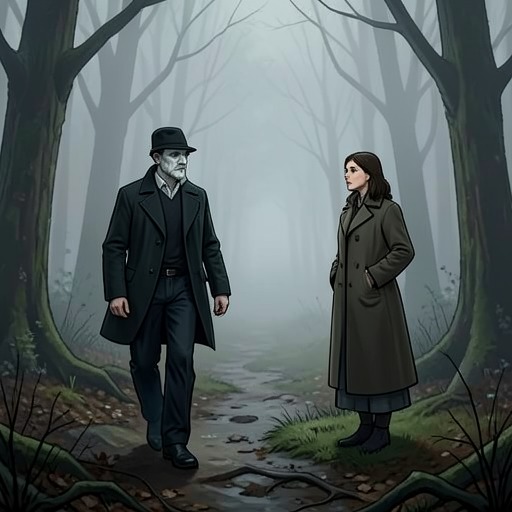
On March 21, 2002, the first day of spring, Hat is still caught in a dream that has become familiar through repetition. Trees crowd around him so tightly that they allow just enough light to show there is no escape. He sleeps as little as he can, anticipating that the moment he closes his eyes he will be back among them. The forest is not simply frightening: it gives form to the dead end he believes his life has become.
The woman’s death occurred on a Saturday in late January. Hat reported for work the following Monday as though nothing were wrong, but Peter Pascoe saw through that effort and insisted he consult his general practitioner. Hat expected Pascoe to share his irritation when the doctor recommended rest and psychotherapy. Instead, Pascoe made clear that refusing the advice could become an official matter recorded on Hat’s file, where it might be seen by future promotion boards. Hat regarded the threat as empty because he believed he had no future to protect; exhausted and unwilling to resist, he nevertheless went to see Dr Pottle.
Pottle listens to Hat describe his dreams and asks what he would hope to find if he escaped the forest. Hat cannot bring himself to name the woman, because hope feels as delusional as any imagined reunion. The exchange sharpens the distinction between recovery and consolation: Pottle does not promise that change will be good, only that change is his business. For the first time, Hat’s dream alters. The trees stand apart, a broad track opens between them, and hazy sunlight and birdsong suggest a morning. He first moves quickly, then slows as the possibility of hope proves painful in its own right.
Blacklow Cottage and a First Opening
The altered dream does not immediately resolve into a clear destination. When Hat emerges into a sunlit clearing, what he finds disappoints and relieves him at once. Yet the movement out of the forest matters: his inner landscape has changed before he can be certain what that change means. Later, after waking with more energy than he has felt for weeks, he remembers budding fruit trees and nesting birds rather than darkness. Hungry, he discovers that his refrigerator has nothing tempting and drives to Blacklow Cottage.
The journey shows a small but important recovery of regard for other people. Nearing the cottage, Hat notices that another car has taken the place where Laurence Waverley had left his the previous morning. He checks that the Alfa Spider’s bonnet is still hot, taking satisfaction in the return of his detective’s attentiveness; then he considers whether he should avoid imposing his troubles on Lavinia and her guest. Inside, Lavinia introduces him to Waverley. The name itself means little to Hat, but Blacklow Cottage gives him an uneasy sense of recognition. Waverley, who walks with a slight drag in his left leg and uses a hawk-headed stick, soon declines Lavinia’s invitation and leaves. Hat remains with her.
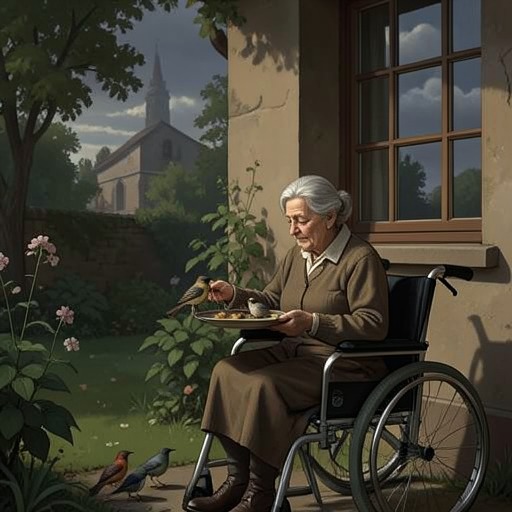
When Lavinia gives him room to speak, Hat recalls being six years old on holiday on the Pembrokeshire coast. He watched two cormorants fly low over rough water and tried to imagine the physical sensation: speed above the waves, the sea seeming to reach up, and cold spray against the birds’ bellies. As a child, he could imagine the bodily experience; as an adult, he says, he has come to know what it is like through living. The memory turns a childhood act of imaginative empathy into a measure of experience acquired through loss. With two Blue tits, Impy and Lopside, perched on her shoulders as an attentive audience, the conversation takes place in the company of the birds that have begun to replace the dream forest’s enclosure with movement and life.
The Detective Returns
Hat’s recovery is not a clean break from grief, but his attention and appetite for work begin to reappear alongside it. At one point, he is officially still sick, yet comes into the CID room and finds himself alone except for a colleague at the fax machine. When Andy Dalziel confronts him, Hat is clutching fax sheets containing details of Pal Maciver’s telephone calls. He tries to explain that he was only looking and does not know what is happening in the case. Dalziel, who has come to feel fond of him after an initially difficult relationship, changes from a menacing reception to a broad grin, welcomes him back, and gives him a tumbler of Highland Park while asking him to explain what he has seen.
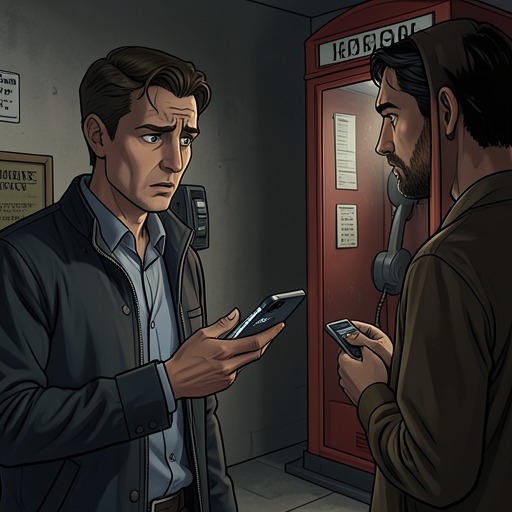
The telephone records give Hat something concrete to follow. Among the numbers is a pay-as-you-go mobile number, without a subscriber name or address, that appears several times, both incoming and outgoing, and especially on the evening of Pal Maciver’s death. Hat enters it into his own phone and listens to the message; then he checks the number and listens again, carefully. When he recognizes that a listed number belongs to Jason Dunn, the brother-in-law Pal was supposedly playing squash with, Hat tells Dalziel that he should hear the message too and hands him the phone. The message’s contents are not given here, but Dalziel’s reaction makes clear that listening to it changes the investigation’s footing. Hat’s contribution comes not from authority—he is still officially on the sick list—but from patient comparison and the instinct to test a clue twice.
His return to police work remains entangled with his personal attachment to Lavinia. When Pascoe asks how Hat knows Waverley, Hat hesitantly explains his acquaintance with Lavinia and speaks of her with unmistakable enthusiasm. Later, Pascoe and Hat are on their way to see her, despite Hat’s awareness that senior officers have been keeping him away from Blacklow Cottage. He has considered ignoring Dalziel’s suggestion that he spend Saturday at his desk and thinks of fresh-baked bread and Lavinia’s birds as better therapy. The prospect of seeing her makes him visibly distressed during the drive, revealing how much the cottage has come to matter to him as well as how vulnerable that attachment remains.
Recognition, Care, and the Unfinished Ending
At Blacklow Cottage, Hat applies his observational habits to details he had initially missed. The first time, a smell was masked by baking bread and open windows through which the birds could come and go. On a later visit, while working in the garden, he notices the dried stalks; in the lean-to greenhouse he sees trays of shoots and recognizes what he thinks they may be. Pascoe cannot follow Hat’s account until he slows down and explains it step by step. The scene makes his return to professional attention visible in ordinary things: smell, plant remains, a greenhouse, and the difference between seeing a detail and understanding its significance.
Waverley’s later account supplies the longer consequence of Hat’s connection with Lavinia. After leaving Mid-Yorkshire, Waverley eventually returns to convalesce and renew his own acquaintance with her. By then her condition has noticeably deteriorated, though she struggles on without complaint and has not told her family how serious it is. Waverley says that he helped her in several ways, one of which the pleasant young Mr Bowler had clearly brought to Pascoe’s attention; Lavinia then enters a long remission. The retrospective account does not assign Hat sole responsibility for that improvement, but it confirms that his presence and attention have had effects beyond his own recovery.
The ending imagines Hat’s next life less as a dramatic cure than as a chance to cultivate Lavinia’s garden. Waverley predicts that Hat will benefit from being allowed to do so, returning the story to the garden and the birds that have accompanied his movement away from the forest. The prospect is deliberately modest: it promises neither the return of the dead nor a guarantee that change will be for the better. Instead, Hat’s arc turns on the possibility of attending to someone living, noticing what needs care, and finding a future in shared, practical acts.