Jason Dunn
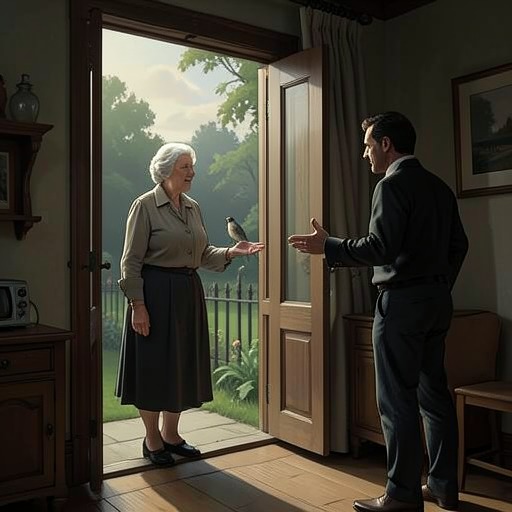
Good Morning, Midnight (Reginald Hill Edition)Jason Dunn is Helen Dunn’s husband, the father of her twins, and a teacher whose renewed friendship with his brother-in-law, Palinurus Maciver Junior, becomes a channel into the Maciver family’s hidden conflicts. Outwardly he is an athletic, attractive young man and a conscientious school sports referee; privately, he is involved in relationships that complicate his marriage and make his actions on the night Palinurus died newly significant. His story reaches the reader through both his guarded behavior during the inquiry and a later first-person account that exposes what he had concealed.
Identity and family life
Jason is in his mid-twenties, tall, blond, and notably athletic. Kay Kafka first sees him as he arrives at Helen’s home, where his appearance makes an impression, but he is there because of his friendship with Palinurus and his marriage to Helen. The two men regularly play squash, and Jason’s failure to appear for a game is one of the first signs that Palinurus is missing. Jason contacts Kay to ask whether Palinurus has left a message for Helen; his concern initially seems ordinary and familial.
Jason teaches at Weavers School and holds a proper referee’s qualification. The qualification matters both at home and in the investigation: Helen explains that the school needs him to officiate an important match, while Jason later uses that obligation to explain why he is not at the hospital with her. His work also shapes the boundaries he says he observes with pupils. He claims to keep schoolgirls at a distance while they attend Weavers School, though the circumstances of his earlier relationship with Kay make his confidence in his own boundaries less simple than that account suggests.
Helen and Jason marry after a rapid courtship. Helen recounts that they met while out clubbing, became engaged after three months, and married not long afterward; she soon became pregnant. She describes Jason as gentle and reluctant to quarrel, a quality that also helps explain his role in reopening contact between Helen and her estranged brother. Their domestic life, however, is not free of secrecy: Jason’s later account makes clear that his marriage coexists with a concealed relationship involving Palinurus and Dolores.
Marriage, Kay, and Helen’s family
Jason’s relationship with Kay Kafka began before his marriage to Helen. He had noticed Kay at a parent–teacher meeting at Weavers School and pursued an affair with her. According to the account Dolores later gives the investigators, Jason said this relationship did not last long and that Kay ended it; Dolores understood that the breakup had hurt him. The affair is therefore part of the history behind Kay’s subsequent intervention when Jason and Helen began seeing one another.
When Kay discovered that Jason was serious about Helen, she went to his apartment and warned him that she considered the relationship a mistake. She threatened to approach the education authorities with an allegation that it had begun while Helen was still a pupil, putting his teaching position at risk. Jason was frightened, but he refused to end the relationship or let the threat decide whom he would marry. Kay eventually accepted his determination and invited him to meet the family. Her approval did not erase the tension created by their own past, but it allowed Helen and Jason to proceed toward marriage.
Helen’s account presents Jason as an important agent in her reconciliation with Palinurus. About six months before Palinurus’s death, Jason met him again at the Squash Club and encouraged him to come home and speak to Helen. Palinurus did so, and the siblings began cautiously to put old estrangements behind them. Helen says she and Jason discussed inviting Palinurus and his wife to dinner; Jason advised against rushing the reconciliation. Kay, too, encouraged Helen to restore her relationship with her brother and sister before drawing the whole family together. Jason’s easygoing wish to avoid rows thus helps reopen a family connection, even as his own concealed conduct later places him at the center of the inquiry.
The missing squash game and the twins
On the night Palinurus disappears, Jason first appears as the absent squash partner. He asks Kay whether Palinurus has called, then arrives at Helen’s home and asks again whether there is news. When the police contact Palinurus’s wife, Sue-Lynn Maciver, because he is the keyholder to Moscow House, Jason tries to make light of the possibility that the call concerns a break-in or vandalism. His attempt at casual humor does not persuade the people around him.
Events at Moscow House soon bring Jason into a more urgent family scene. He arrives in a Volvo with the pregnant Helen, while Cressida Maciver runs after an ambulance and demands information. Jason seems eager to join the others in seeking answers, but Helen’s labor takes priority. When she cries for help and says the baby is coming, Jason calls for assistance, and Kay runs to her. The immediate emergency shifts the scene from concern about Palinurus to the birth. Later, Jason confirms that he has become the father of twins.
The contrast between the birth and the investigation persists after the immediate crisis. When Peter Pascoe visits Helen in hospital, she says she cannot wait to return home but worries about Jason’s work and does not want him distracted. She explains that he has gone back to school because an important match requires a qualified referee. Later, Andrew Dalziel finds Jason officiating at that match. Jason says he has just become a father, while Dalziel tells him the hospital has reported that Helen and the babies are doing well. Jason replies that he will visit later because the school has difficulty finding cover. His professional responsibility is real, but the timing leaves him conspicuously absent from the hospital at a moment of family change.
The concealed relationship with Palinurus
Jason’s later account describes how his squash friendship with Palinurus developed into a secret, recurring arrangement involving Dolores. On Wednesdays, the three met at a shopping-centre car park, travelled in Palinurus’s car, and went to Moscow House, where they spent about an hour before returning. Jason presents the arrangement as something that kept him content and, in his view, reduced the pressure he placed on Helen. He expected it to end once Helen had the twins and their life returned to normal. His explanation does not make the secrecy less consequential: it shows that he had treated the affair as a temporary private solution while his marriage continued alongside it.
The setting also connects the relationship to Palinurus’s family history. Palinurus took Jason and Dolores to Moscow House after telling them that the empty house had been put on the market. He spoke there about his father’s suicide and his belief that his stepmother had been responsible. Dolores later reported that Palinurus became angry when discussing Kay Kafka but also seemed intensely absorbed by the subject. During one gathering, after Palinurus and Jason had used cocaine, Palinurus spoke of his youthful belief that Kay had been attracted to him. Jason responded by revealing that he himself had been with Kay before marrying Helen. The conversation linked Jason’s own history with Kay to Palinurus’s suspicions and to the private confidences forming among the three.
The inquiry and Jason’s account
After Palinurus fails to appear, Jason says he tried calling his mobile, his shop, and his home. A review of the phone records shows that, around the likely time of death, the calls to all three went through the same number. Dalziel identifies the number as belonging to Dolores and confronts Jason at the school match, playing a recorded message associated with it. Jason initially denies knowing what the evidence has to do with him. Dalziel points out that the number appears on each of the phones Jason said he had called.
Jason’s account then supplies the missing circumstance. He had waited in the car park for Palinurus. Dolores arrived and tried Palinurus’s mobile, then the shop; when neither answered, Jason borrowed her mobile and called Palinurus’s home, where he spoke to Sue-Lynn. He recognizes afterward that using Dolores’s phone was a mistake, but says he did not know what had happened. They later drove along the Avenue past Moscow House, saw a police car turning into the drive, returned to the car park, and separated. The sequence explains why Dolores’s number appears in the records and places Jason and Dolores near the developing emergency, without by itself establishing that Jason knew Palinurus had died.
The account also clarifies the emotional logic he had previously concealed. Jason says Palinurus initiated their liaison when Jason was at a vulnerable point and describes his own expectation that it would be a one-off before it became regular. That explanation is self-protective, but it is not merely an excuse about the phone records: it exposes how Jason compartmentalized his life, keeping Helen, his school work, his revived family connections, and his secret relationship in separate spheres. Peter Pascoe offers a further interpretation of Kay’s earlier decision to accept the marriage: he suspects that Kay feared losing Helen, reconsidered the consequences of driving the couple apart, and concluded that Jason’s commitment to Helen made him an acceptable husband. This remains Pascoe’s reading of Kay’s motives, not a fact Jason can confirm.
Jason’s narrative role rests on that gap between appearance and disclosure. The agreeable squash partner who helps reconnect a brother and sister is also a man with a concealed past with Kay, a secret arrangement with Palinurus and Dolores, and a compromised explanation for his calls on the night Palinurus vanished. The evidence reveals the calls and the relationships, but it does not establish that Jason caused Palinurus’s death. His significance lies in how his private life brings the family’s unresolved history into the police investigation, while leaving the central question of responsibility open.