
Pascoe’s Moral Investigation
Good Morning, Midnight (Reginald Hill Edition)Peter Pascoe struggles to honor police procedure while confronting evidence that cannot deliver a complete or safe truth.
increasing Bearing strength in each event
 decreasing
Bearing strength in each eventdecreasingA Routine Assignment
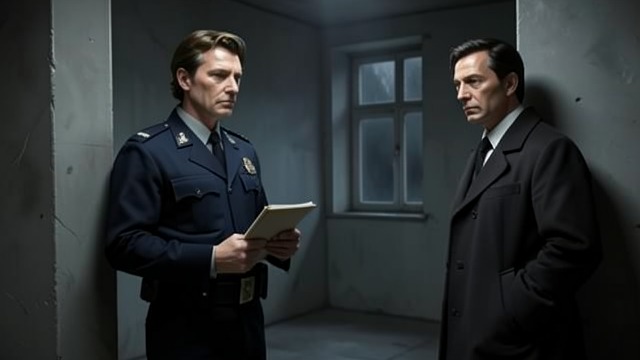
A Routine Assignment
The assigned officer
Peter Pascoe reaches Moscow House after the death is discovered and finds Dalziel already shaping the response. The apparent suicide should be a limited matter.
An unsettled instinct
The scene’s theatrical precision and Dalziel’s certainty trouble him. Pascoe’s habit of examining motives makes it hard to accept a tidy administrative ending.
Following Loose Ends
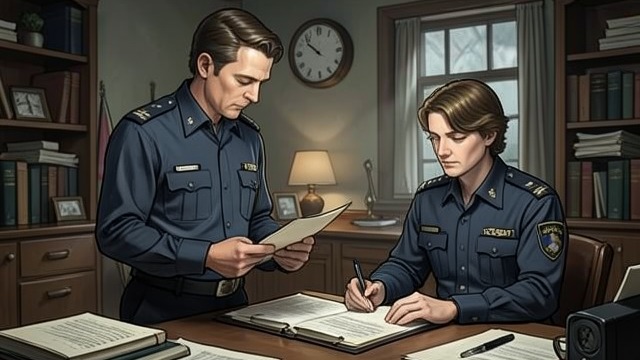
Following Loose Ends
The old file
Pascoe asks Novello to retrieve evidence from the earlier death, despite instructions to hand the case over. The discovery of the son’s suppressed statement gives him reason to keep working.
Professional risk
He knows that his continued inquiry challenges his superior. His hesitation is not only about solving the case, but about how far he can pursue a truth that Dalziel does not want surfaced.
A Tense Partnership
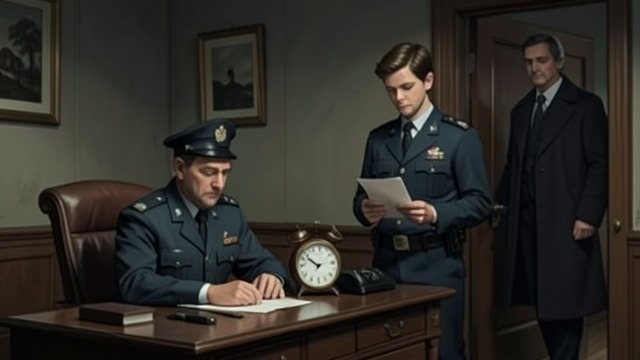
A Tense Partnership
An imposed deadline
Dalziel gives Pascoe twenty-four hours to identify the sender of an anonymous letter, while insisting the death remains suicide. Pascoe must investigate without openly challenging that conclusion.
Shared work
Novello and Wield help him connect the letter, phone records, and old case. Their cooperation makes a difficult inquiry possible even as authority remains divided.
Confronting the Confession
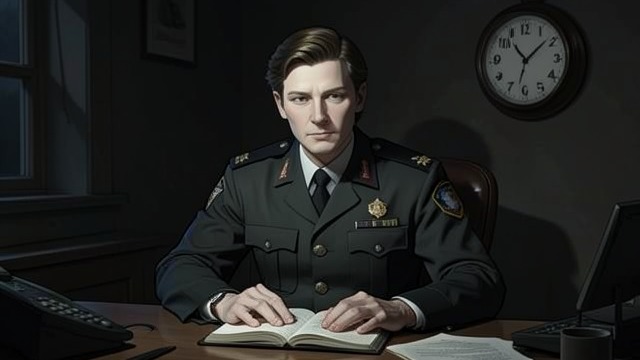
Confronting the Confession
Waverley’s account
Pascoe records Laurence Waverley’s detailed explanation of the first death and the covert interests around it. The story implicates powerful people without supplying independently verifiable proof.
A burden of judgment
Pascoe refuses to turn one confession into certainty. He must decide what can be reported, what can be used, and what would endanger others without establishing justice.
Choosing Restraint
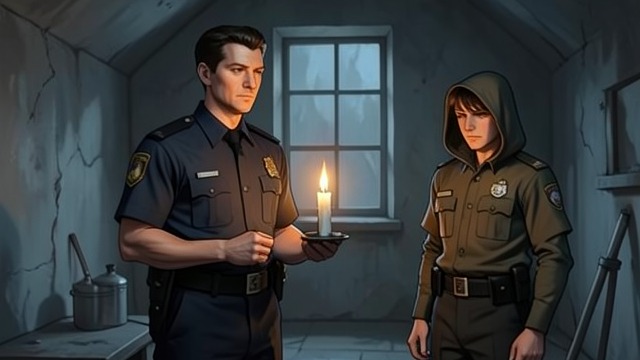
Choosing Restraint
An unusable truth
Pascoe and his colleagues agree that the recording cannot support a public prosecution. They burn the tape rather than pretend its contradictions have been resolved.
A partial duty fulfilled
Pascoe accepts the suicide conclusion for the inquest while acknowledging the possibility of older crimes. His choice protects people but leaves him morally unsettled.
March 20, 2002, night
March 21, 2002, morning
March 22, 2002, morning
March 23, 2002, afternoon
March 23, 2002, evening
