Tony Kafka's disappearance
Good Morning, Midnight (Reginald Hill Edition)Tony Kafka’s disappearance is first registered through a sequence of failed arrivals and unanswered communications, not through any confirmed explanation of what happened to him. He was expected in America, but did not reach the people waiting for him; his car remained in a railway car park, and his wife, Kay Kafka, was left with no knowledge of his whereabouts. The later disclosure that the U.S. Securities and Exchange Commission was looking into Ashur-Proffitt accounts adds a financial and investigative dimension to an absence that remains unresolved in the available scenes.
From departure to missing arrival
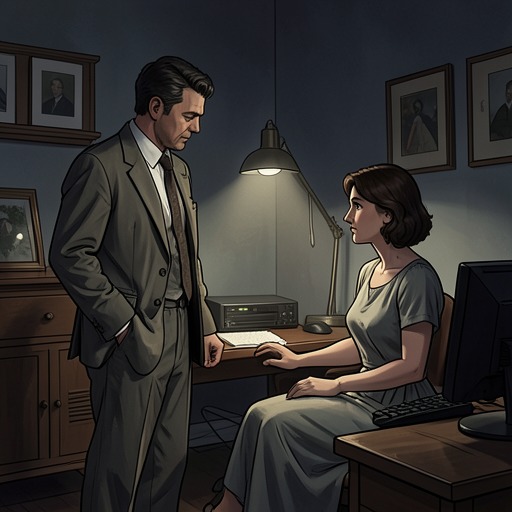
Andrew Dalziel tells Peter Pascoe that Kay Kafka is worried about her husband. Tony Kafka had travelled to London the previous day in order to catch a morning flight to America from Heathrow. Pascoe had seen him leave and recalled that Tony said he first had to go to Ash-Mac’s. The itinerary therefore appears ordinary and specific: a journey to London, a business-related stop, then a transatlantic flight. But the expected arrival never follows.
Kay expected Tony to contact her during the night. When no call came, she checked whether there had been a message on his answering service; there was neither a call nor a message. The silence prompts her to check the airport hotel where he usually stays. Tony had a booking there, but had not arrived. His flight was due to leave in half an hour, yet he had not checked in. Each fact narrows the expected route without explaining where he went: a reservation exists, but he did not use it; a flight is imminent, but he is not recorded as a passenger.
The search for a trace
Dalziel has the railway car park checked, and the report confirms that Tony’s car is still there. That detail complicates the apparent journey to America: Tony reached the point associated with travel, but the car’s presence does not establish whether he went on to London, boarded the flight, or changed his plans. The evidence confirms a vehicle left behind, not the circumstances of its abandonment.
When Pascoe asks what might be happening, Dalziel briefly raises the possibility that Tony could be in the boot, then says he doubts it. The remark is grim speculation rather than a finding. No body or other sign of an assault is reported in these passages, and Dalziel’s dark possibility does not settle the question of whether Tony is missing, has altered his arrangements, or has come to harm. The contrast between the precise checks already made and the absence of a reliable explanation keeps the status uncertain.
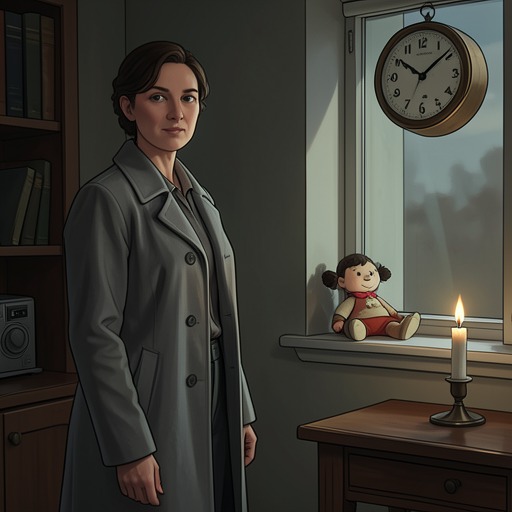
Kay Kafka waits at Cothersley Hall
That night, at Cothersley Hall, the telephone rings three times, and each time Kay Kafka snatches it up almost before it has begun to ring. The first caller is American. He says he had expected to meet Tony Kafka after his flight from London earlier that day, but Tony did not appear, and asks whether Tony might have changed his plans without telling anyone. His call independently confirms that someone in America was waiting for Tony and that the anticipated meeting did not take place.
Kay cannot supply a new itinerary or reassure the caller. She says she has no idea where her husband is and ends the conversation because she is hoping for a call either from Tony himself or from the authorities with information about his whereabouts. Her response makes the uncertainty personal as well as procedural: she is not simply relaying a report but waiting for news she does not possess. The rapidity with which she answers the phone gives that waiting a repeated, physical form, while the three calls establish a night organized around the possibility of contact.
Financial scrutiny and unresolved meaning
The American caller identifies himself as Hackenburg and explains that he is working with Joe Proffitt. He then clarifies that he works for the U.S. Securities and Exchange Commission, which is investigating apparent anomalies in Ashur-Proffitt’s accounts. Tony’s name, he says, has been mentioned as someone who might assist with its inquiries. The disclosure changes the context of the missed arrival: Tony is not only expected by a personal acquaintance but is also potentially relevant to a regulatory investigation.
The call does not establish that the inquiry caused Tony’s disappearance or that he intended to avoid it. Hackenburg sought him because he had expected to meet him, and Kay does not know where he is. The juxtaposition instead leaves two unanswered matters side by side: Tony has failed to appear on the journey expected of him, and his name has surfaced in scrutiny of Ashur-Proffitt’s accounts. Neither is explained by the other in the available evidence.
An absence without confirmation
The disappearance is constructed through records and expectations that fail to meet: a planned flight, a hotel booking, a missing check-in, a parked car, an unreturned call and an unkept appointment. These details make Tony’s absence increasingly difficult to dismiss as a simple communication lapse, but they do not confirm a cause or outcome. Dalziel’s speculation remains speculation; Hackenburg’s account supplies a reason Tony may be of interest to investigators, not proof of his whereabouts.
The episode consequently holds the story between domestic anxiety and institutional concern. Kay waits for word from Tony or the authorities, while the U.S. Securities and Exchange Commission is seeking him in connection with apparent irregularities. The evidence establishes that he has not arrived where others expected him and that his location is unknown to his wife; it leaves open what happened after he set out for London and whether his absence is connected to the financial inquiry.