Aether Docks with the International Space Station
Good Morning, MidnightAether’s docking with the International Space Station is the crew’s first physical arrival at Earth after two years in the solar system, but it offers neither a confirmed welcome nor a safe return. The spacecraft meet and lock together as Earth fills the windows; then the crew find an apparently deserted station and must face the consequences of having only one remaining Soyuz reentry pod, with three seats for five people.
Approach and Docking
The event begins when the crew are asked whether they are ready to go home. Sully cannot give a confident answer: the destination is close, but the prospect of return has not resolved what awaits them. On the control deck, Tal has the docking controls ready while Ivanov watches through the cupola. The station grows nearer in the window, its solar arrays extending from the central structure, while Tal follows the approaching port through the docking camera.
Harper joins them, and all five crew members watch Aether and the station approach, align, and connect. The slow maneuver ends in an improbable-seeming union of the two spacecraft. Its visual grandeur contrasts with the uncertainty inside the cabin: the crew have reached Earth’s vicinity, yet they cannot know whether anyone is waiting or whether the planet below is safe. Docking marks a change of setting, not the end of their ordeal.
The Return Is Not Yet Home
The approach follows a period in which Sully has worked to restore Aether’s communications after its main dish broke away. During the repair effort, she and Thebes bring the replacement system online and calibrate it, testing its reception and adjusting the gain and squelch. A probe signal from Europa returns, confirming that the repaired equipment can receive data, but it is not a message from Earth. Sully remains at the listening station after Thebes leaves, feeling less alone because she has done what she can to make contact possible and is ready to hear what comes next.
That hope gives the docking a particular tension. The crew are returning after two years away, but the evidence available to them has not established that Earth’s communication networks or its inhabitants are still there. Their arrival at the International Space Station is therefore a passage into another unknown, rather than a reunion with the world they left. The physical closeness of Earth and the absence of reliable news remain sharply opposed.
An Empty Station and a Limited Choice
Once aboard, the crew find a station that appears to have been left only moments earlier. Machines are still running, and partly used food packets float in the kitchen area. The missing equipment is more consequential: two of the three Soyuz reentry pods are gone. Aether’s crew know the station from earlier experience, but its equipment is archaic compared with their own spacecraft. When Sully checks its communications station, it receives no signals either. The silence at the station matches the silence aboard Aether; she tries the frequency on which she had found the man in the Arctic, but he is not there, and she has to resume searching for survivors.
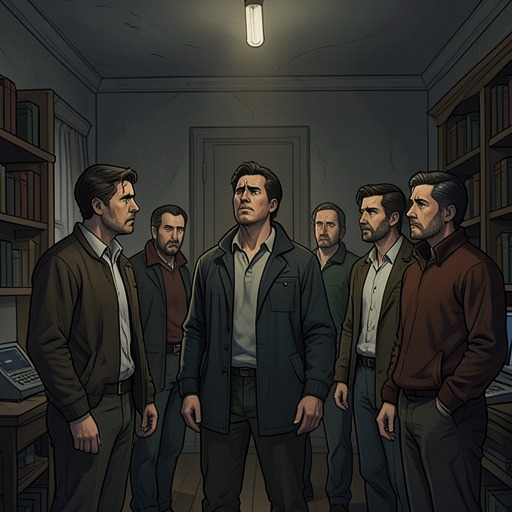
A sweep of the station produces neither other inhabitants nor clues to explain their absence. The five crew members gather beside the remaining reentry pod, which has three seats. Three can descend to Earth; two must stay aboard the International Space Station. Neither option is secure. With no ground team known to be waiting, a landing could end in the ocean or a desert, and the crew cannot tell whether the planet’s soil, air, or water have been poisoned. They also cannot know whether anyone has survived below. Staying in orbit is no certainty either: their resources are finite, and they do not know how long they will last.
Aftermath and Significance
The crew postpone the choice. Instead, they discuss docking procedures, supplies, and equipment, practical subjects that let them defer the question of who will leave and who will remain. They spend the night on Aether, attempting ordinary conversation over dinner, but the unresolved division shapes their first hours back near Earth. Their repeated calculations offer no solution that makes either route safe.
The docking consequently turns the apparent completion of a long voyage into a new test of care, risk, and separation. Aether and the International Space Station become one connected structure, but the crew cannot all take the same path onward. Their return has brought them close enough to see Earth and enter its orbit, yet the empty station and the three-seat limit expose how little that proximity guarantees. Home remains a possibility rather than an assured destination.