Augustine’s Final Moments with the Polar Bear
Good Morning, MidnightAugustine’s Final Moments with the Polar Bear is the closing encounter between Augustine and the animal that has followed him across the Arctic. Augustine sets out for the radio shed hoping to reach a woman and share one honest exchange, but tracks in the snow redirect him to the bear. Finding it near the lake and close to death, he abandons the radio for the immediate company of another living being. The scene ends with Augustine at peace beside the bear, making companionship, rather than communication at a distance, the final form of connection available to him.
The journey to the radio shed
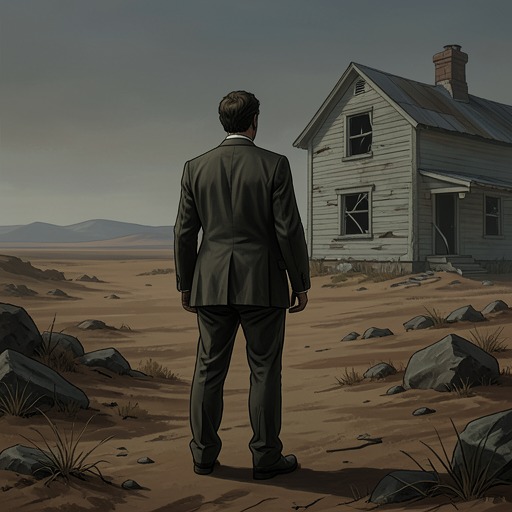
Augustine leaves his tent alone, dressing slowly in his scarf, hat, parka, boots, and mittens. The effort is difficult: he is already breathing hard when he reaches the door, and the cold makes the short journey demanding. The radio shed is visible beneath a narrow strip of moonlight. He has no clear plan for what to say over the radio; what matters to him is hearing the other person and being heard. After a long period of isolation, he seeks not a practical exchange but one moment of honesty.
Halfway to the shed, Augustine notices tracks in the snow and follows their direction toward the edge of the lake. There, a small snow-covered rise seems out of place. The tracks lead him to it, and he recognizes the shape as the bear that has been following him over many miles. The encounter changes the purpose of his journey. The radio remains nearby, but Augustine’s attention is now fixed on the animal in front of him.
Recognition and choice
Augustine approaches the bear cautiously, then touches its haunch. It responds with a soft chuff but does not move. He goes around to its other side and touches its shoulder, finding warmth beneath its snow-dusted fur. The animal’s stillness and condition make clear to him that it is dying. Its fur appears yellow in the moonlight, and Augustine sinks to his knees beside it. At that point, he decides that the radio can wait. The encounter itself has become the moment he needed.
The decision reverses the scene’s initial direction. Augustine had been moving toward a human voice and the possibility of being answered; instead, he stays with a bear that cannot speak to him and may not survive the night. This is not presented as a rescue or as a solution to his isolation. He cannot change the animal’s condition. What he can do is remain beside it, meeting its stillness with his own presence. As the wind rises and snow obscures the radio shed and the tents, the scene narrows to Augustine and the bear together.
The memories he carries
Beside the bear, Augustine thinks of Jean and recalls their first meeting at the research facility. He remembers her arriving in a dusty green El Camino with her bags, and the lasting force of his attraction to her. The recollection moves from their early relationship to a photograph she sent him: their daughter as a girl, standing in a pale yellow dress, barefoot, her arms crossed and her gaze defiant. Augustine attends to the details of the image, including the girl’s dark, jaw-length hair and straight bangs. The photograph brings the absent family into the scene without interrupting his immediate attention to the bear.
These memories place the encounter within Augustine’s history of separation. His final thoughts turn toward the people he has lost, while his final action is to stay with a vulnerable animal in the present. The narrative does not make the bear a replacement for Jean or their daughter, nor does it suggest that remembering them resolves what has happened between them. Instead, the memory and the encounter occupy the same moment: Augustine carries his human attachments with him as he accepts the companionship available beside the lake.
Ending and significance
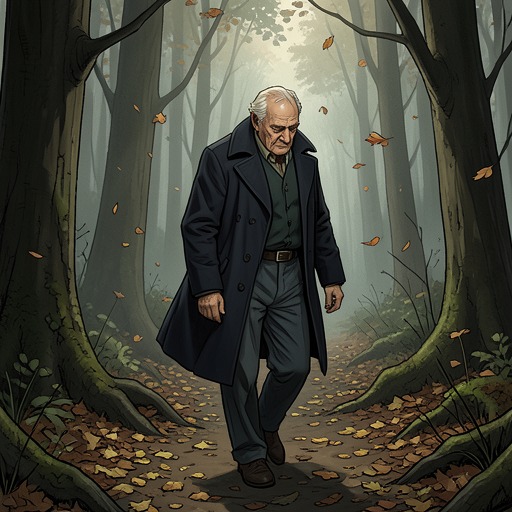
When the bear groans and rolls onto its side, Augustine moves closer. He is no longer afraid. He settles against the animal’s warm stomach as its massive arms close around him, turns his face from the wind, and rests against its fur. The scene’s last image is of Augustine listening to the bear’s slow heartbeat. The passage presents him as at peace and no longer an interloper in the landscape; the event is identified as his final moments beside the bear.
The ending also sets Augustine’s choice against the continuing search for communication elsewhere in the story. After Devi dies during a spacewalk, Sully is haunted by the sight of her drifting away and struggles to return to work. She and Thebes eventually bring Aether’s new communications system online, and Sully stays to listen, feeling less alone even though no signal has yet answered. Augustine’s scene offers a different, more immediate form of connection: he is on his way to speak across distance, but turns toward the presence beside him. Together, the episodes distinguish between reaching out and being able to restore what has been lost. Augustine cannot bring the bear back from death, just as Sully cannot undo Devi’s death; the final act available to him is to remain close. The bear’s dying presence, rather than the radio’s hoped-for reply, closes his story.